
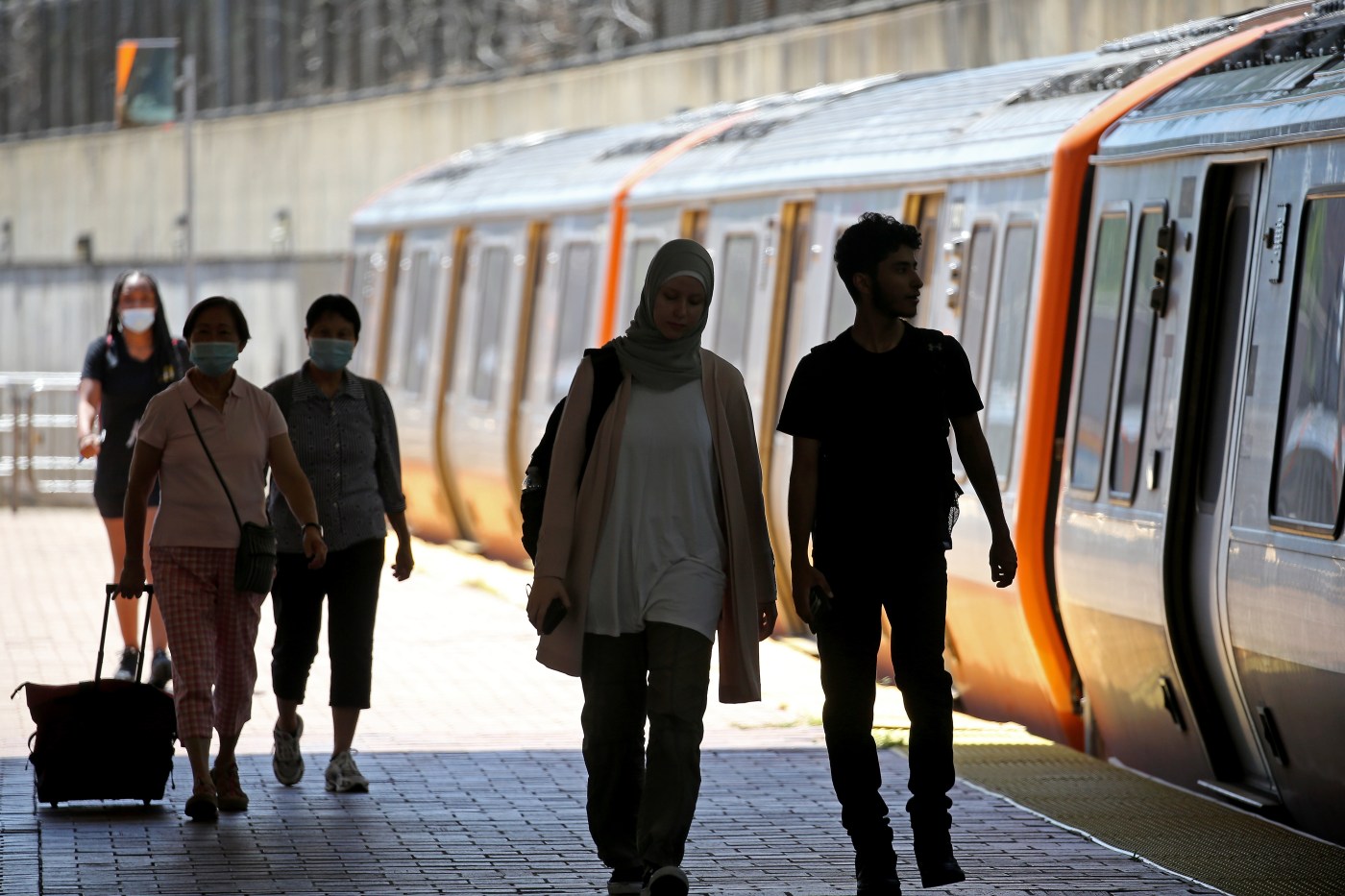
Study shows MBTA costs way up since spending control board disbanded

The cost of running the MBTA has climbed dramatically since the phase out of the agency’s Fiscal and Management Control Board, according to a new study by the Pioneer Institute.
While the study acknowledges that there have been notable improvements to the reliability of subway service and that many of the MBTA’s notorious “slow zones” have been repaired and removed, the system’s operating costs have nevertheless grown by leaps and bounds since the control board was eliminated four years ago.
The study found costs were up by more than 5% for both fiscal 2022 and 2023. From fiscal 2023 to 2024 alone, according to the study, costs soared by nearly 15%. At the same time, the MBTA had been staring down at a $700 million budget shortfall in fiscal 2026, and was only partially saved by the passage and success of the state’s Fair Share Amendment, which will see $535 million in extra funding for the T.
“MBTA costs have long been out of line with those of peer transit agencies, but when the Fiscal and Management Control Board was created in 2015, it represented a promising opportunity to control costs. After the FMCB’s term was not extended in 2021 T costs have reverted to increasing at an alarming rate,” the study authors wrote.
According to the study, from 2013 to 2023 on a per-passenger basis operating costs at the public transit agency outpaced most transit service providers in other major cities — only D.C. and Chicago cost more. At the same time, the MBTA’s ridership figures have yet to recover after cratering during the COVID-19 pandemic. While some of that is out of the agency’s control, the resulting fare losses “only increase the importance of moderating the growth in operating costs going forward.”
According to study authors, in the years since the FMCB was closed up the MBTA has not moderated that growth.
Bus passenger miles were way down, for example, even though costs have climbed substantially.
“In 2019, MBTA buses had total operating expenses per vehicle revenue hour of $153, compared to $220 at New York’s Metropolitan Transit Authority. By 2023, costs had risen slightly to $263 in New York, but the hourly cost of operating an MBTA bus nearly doubled, to $297,” the study showed.
Further, the transit agency has been paying much more in overtime since the end of the FMCB. In 2021 the MBTA paid out $85.3 million in overtime wages. By 2024, the figure had jumped to $126.4 million.
“In 2024, 117 MBTA employees earned more than $100,000 in overtime, and 76 were paid more in overtime than in base pay,” the study authors found.
In the three years FMCB was operating, the study showed that the board managed to find the T about $450 million in long-term savings. It did this via an exemption to the Massachusetts Taxpayer Protection Act, sometimes referred to as the “Pacheco Law,” which makes it much harder for public agencies to contract out the performance of government services to private entities.
That exemption allowed the agency to improve cash movement and counting through a contract with Brinks Security. The T was able to secure another contract to examine and recommend efficiency changes to their warehousing procedures. The exemption also led to a major negotiation with the service’s largest union, the Carmen’s Union.
The study concludes that “the T would benefit from the reinstatement of an entity such as the Fiscal and Management Control Board to focus on cost control.”
“One of the keys to the FMCB’s success at controlling costs was its exemption from the Pacheco Law. State policy makers should restore the MBTA’s exemption from the law and use the FMCB’s experience with private contractors to more effectively target accountability and cost control,” they wrote.
Former Baker Administration MBTA Chief Administrator Brian Shortsleeve, who is currently seeking the Republican Party’s nomination to the governor’s office, said that the agency has seen a remarkable backslide in the years since his departure.
“The last time the T was this financially broken, Governor Baker called me in. We brought a Marine’s discipline and a businessperson’s mindset. We cut waste, reined in overtime, reformed inefficient operations, brought the Green Line Extension project back from the dead, and balanced the budget for the first time in a decade,” he said in a statement shared by his campaign.
Shortsleeve blamed Healey for the T’s financial woes.
“Sadly, Maura Healey let it all unravel. Operating costs have skyrocketed. Overtime costs are setting new records. Administrative bloat is back. All of this, while taxpayers are footing the bill for a system that delivers fewer trips at a higher price,” he said.
An MBTA spokesperson said that the increase in costs found by the study comes as the T works to address years of well documented underperformance.
Healey’s MBTA boss, General Manager Phil Eng, has undertaken an “unprecedented effort” to address a long-standing employee shortfall and to tackle a long list of overlooked maintenance concerns, the spokesperson said.
“The Federal Transit Administration Safety Management Inspection report, issued under the previous Administration, clearly indicated that underinvestment in the MBTA impacted the safety of our operations – in order to accomplish the dramatic improvements at the T in safety, reliability, and service over the last several years, funding has been both necessary and critical,” they told the Herald.
The governor’s office had a similar response to the study, noting that the increase in costs in response to decades of underfunding, for which “our residents and economy have paid the price.”
“Governor Healey refused to kick the can down the road any longer. Under her leadership, the T has had a balanced budget every year and is finally on stable financial footing. Because of Governor Healey’s investments, we have faster and more reliable service, no slow zones, and a stronger workforce,” a Healey spokesperson said.
The study and resulting policy brief were authored by Pioneer Institute senior fellows Charles Chieppo and Andrew Mikula, as well as the Institute’s economic research associate, Aidan Enright.
MBTA GM Phillip Eng (Nancy Lane/ Boston Herald, file)

More Stories
Billionaire David Reuben leaves UK for Monaco
David Reuben, the property tycoon who shares second place on this year’s Sunday Times Rich List with his brother Simon,...
Deliveroo to roll out delivery robots in five UK locations
Deliveroo is to begin using pavement robots to deliver takeaways and groceries in the UK, with its first robot deliveries...
UAE threatens to pull billions from UK over Man City ruling
The United Arab Emirates has warned the government it could cancel billions of pounds of investment in the UK over...
Richard Megson on why people, not AI, will fix the home-moving process
Richard Megson is managing director of ASAP, the Pontefract-based business he co-founded with conveyancer Tony Hill to provide outsourced sales...
Dr Nilesh R. Parmar on the business of dentistry and delegating
Dr Nilesh R. Parmar is clinical director of Parmar Dental, the Essex dental group that the company says was founded...
Russian businessman accuses Biden of stealing his money
Moscow has opened a criminal case over the seizure of Konstantin Malofeev’s US assets and the transfer of some of...