
Kandrach: Cargo theft costing America billion$

Crime is not just retail smash-and-grabs these days. It increasingly features a highly organized effort: cargo theft. And it’s costing the American economy tens of billions of dollars annually, driving up prices on everything from electronics to household goods.
As Bob Costello, chief economist at the American Trucking Associations, recently told Congress, “Directly or indirectly, virtually all trucking companies are victims of cargo theft. Either they are victims of crime, or they are spending so much money to defend against being targeted that they are still victims.”
His warning made clear that theft is a systemic threat that spans the entire supply chain. The problem is costing the broader logistics network $35 billion annually.
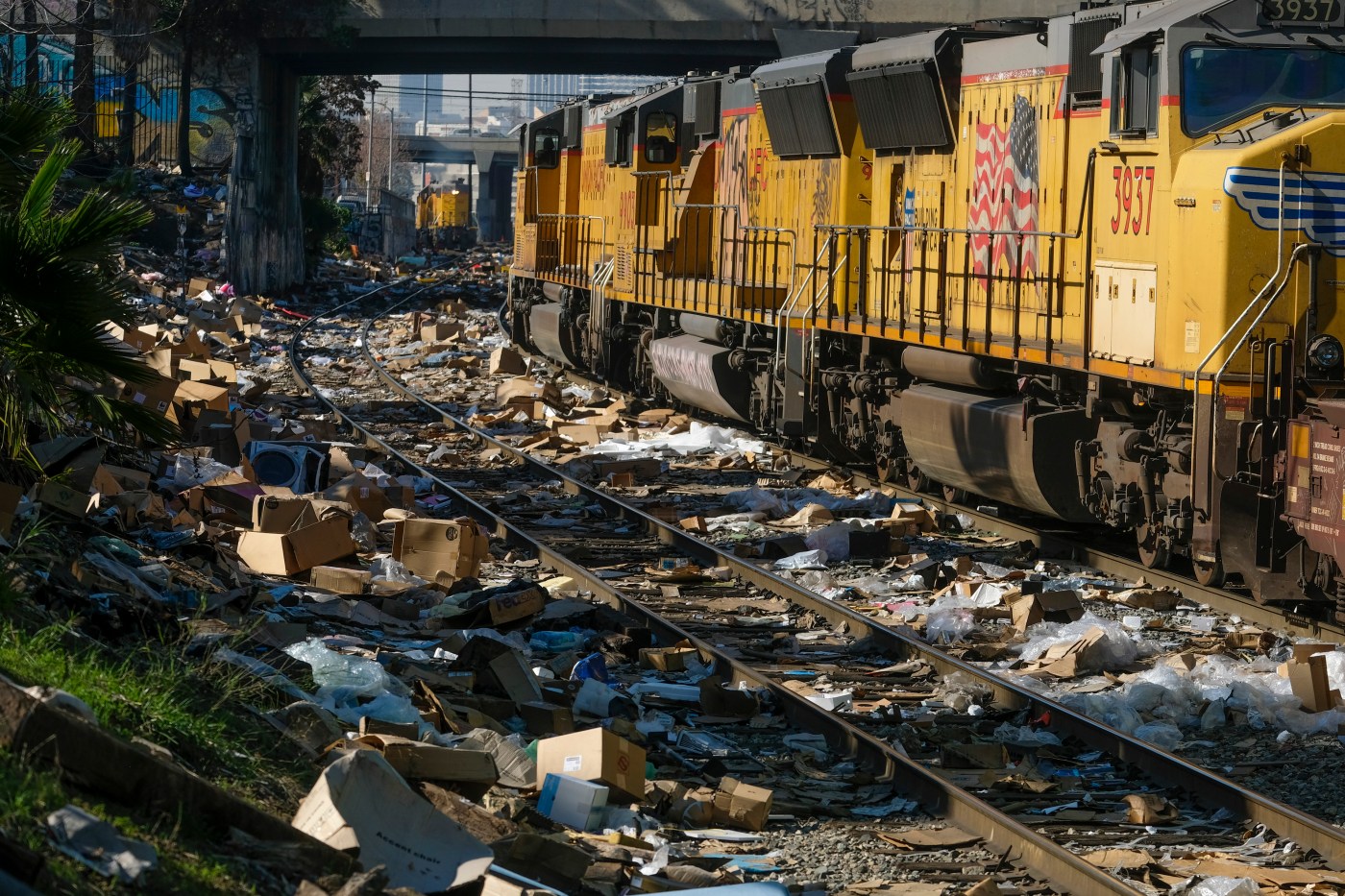
Freight railroads absorbed $100 million in losses in 2024, with cargo theft incidents up 40% compared to 2023. These crimes are no longer limited to parking lot break-ins or petty pilfering. As the Washington Examiner reported, “Cargo theft has become a sophisticated, coordinated threat impacting every link in the supply chain — not just railroads, but also truckers, retailers, manufacturers, and ports.”
Today’s criminals use cyber scams, identity fraud and drones to track and steal shipments. The Eno Center for Transportation has called out the alarming rise in “strategic theft,” which now accounts for one-third of all cargo thefts. In these cases, thieves pose as brokers or carriers, tricking shippers into delivering goods right to them.
Consumers are paying the price daily. When shipments are stolen or delayed, companies must increase spending on security, insurance and rerouting. These added costs are passed directly to families in the form of higher prices at the register, reduced product availability, and lower-quality service.
Cargo theft has metastasized because criminals are exploiting weaknesses across multiple jurisdictions, including lax enforcement by district attorneys. One trucking company had its identity stolen and repeatedly targeted, but despite reporting the crimes to local police, federal agencies and insurers, no help came. Without federal coordination, efforts to combat these crimes are fragmented and ineffective.
That’s why legislation in Washington — the Combating Organized Retail Crime Act of 2025 (CORCA) — is critical. CORCA would establish a federal coordination center within the Department of Homeland Security to improve data sharing, increase federal penalties for repeat offenders, and fund specialized prosecutors.
Supporters estimate that retail and cargo theft combined result in annual losses of $60 billion to $80 billion for businesses. And as the Washington Examiner noted, “The costs pencil out to higher prices for consumers, higher insurance premiums for those who move and sell the goods, higher security costs, and lower profits.”
It’s time for Washington to treat this issue with the urgency it deserves. Organized cargo theft is not just a nuisance; it’s a hidden tax. Congress should act now to pass CORCA and put a stop to the theft that’s quietly robbing families daily.
Matthew Kandrach is the president of Consumer Action for a Strong Economy


More Stories
Pension ULIP Explained: Why Sales Jumped 10x in FY26 and Should You Buy One?
This shift helps explain why pension ULIP sales reportedly rose nearly tenfold in FY26. A unit linked pension plan brings...
How to Choose the Best Multi Currency Account for Your Business
Yet, companies managing global cash flows through standard single-currency banking infrastructure routinely encounter severe friction: unexpected intermediary deductions, days-long settlement...
EU faces worst energy crisis since 2022 – Brussels
The bloc’c energy chief sounded the alarm as European gas prices nearly tripled from this year’s lows The EU could...
Gary Lineker nets £1m payout as Goalhanger profits more than double
Gary Lineker has received a payout of more than £1m after Goalhanger Podcasts, the company behind The Rest Is Football...
Dmitriy Misarenko: Building Consulting Practices That Outlast Any Single Market
Misarenko started his career in the financial sector with institutions such as Raiffeisen Bank, before moving into entrepreneurship and consulting...
The Story Behind INEZ: Where New York Design Meets Spanish Craftsmanship
That idea sits at the heart of INEZ. Founded in New York City in 2018 by Hannah Spinelli and Tony...