
GM Extends Factory ZERO Shutdown as EV Demand Stays Uneven

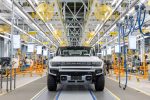
General Motors is keeping its Factory ZERO plant in Detroit-Hamtramck offline through April 13, extending a production pause that began on March 16 as the company works to better align EV output with current demand. The move temporarily affects about 1,300 workers and underscores a reality that has become harder for the industry to ignore: the EV market is still growing in some areas, but not nearly as smoothly or as quickly as many automakers once expected.
Factory ZERO has become one of GM’s most important electric vehicle plants, building headline products like the Chevrolet Silverado EV and GMC Hummer EV. But over the past year, the site has dealt with uneven production and softer demand for battery-electric trucks, and this latest shutdown extension suggests GM is still trying to find the right pace. The company had already cut output at the plant earlier this year, so this is not a one-off adjustment as much as it is another sign that the rollout of full-size electric trucks remains a tricky business.
What makes this especially interesting is that GM is not simply pulling back across the board. At the same time it is idling EV production in Detroit, the automaker is increasing heavy-duty truck output at its Flint Assembly plant starting in June by adding a sixth production day. That tells you where the market still looks strongest right now. Big gasoline and diesel-powered pickups continue to attract buyers, even with fuel prices elevated, and GM appears more than willing to lean into the products that are delivering steady demand and stronger margins.
There is a broader industry backdrop here too. GM has already taken significant writedowns tied to its EV programs, and like several other manufacturers, it is recalibrating in a policy and market environment that looks a lot different from what many executives were planning for just a couple of years ago. That does not mean the company is walking away from advanced technology, though. In fact, GM recently began supervised public-road testing of its next-generation automated driving system in California and Michigan, with more than 200 development vehicles gathering real-world data as the company continues pushing forward on autonomy.
The clearest takeaway is that GM is now managing two very different futures at once. On one side, it is slowing EV production to match a market that has cooled. On the other, it is ramping up conventional truck output and continuing to invest in next-generation autonomous systems. For consumers and the broader industry, that split says a lot about where the market stands today. Electrification is still part of the long game, but right now automakers are being forced to stay flexible, follow the demand that actually exists, and make hard decisions in real time.


More Stories
Transformative Solo Travel: How One Trip Changed My Daily Habits and Mindset
Solo travel has quietly become one of the most powerful tools for personal reinvention. Search interest in “solo travel” hit...
Knowing When to Repair or Replace Bike Parts
Keeping a bike in good condition rarely comes down to a single decision. It is more of an ongoing judgment...
China imports February 2026: Toyota Land Cruiser, BMW 7 Series stand out, sales off -18.3%
This content is for members only. Visit the site and log in/register to read.
Big Loads, Big Pay: How to Land Heavy Haul Work as an Owner Operator
If you drive your own truck and you want higher rates, heavy haul can look like the next level. You...
2027 Volkswagen Atlas Gets More Power, Smarter Tech, and a More Upscale Family-SUV Feel
Volkswagen is giving the Atlas a meaningful overhaul for 2027, and while the overall shape remains familiar, this second-generation version...
How to Experience London’s Most Exclusive Supercar Showcase on Sloane Street This April
This April, one of London’s most refined streets becomes a stage for world-class automotive design. Specifically, Sloane Street in Knightsbridge...