
Do Run Flat Tires Need TPMS? Everything You Need to Know

Yes, run flat tires absolutely require a functioning Tire Pressure Monitoring System (TPMS), and for good reason: you cannot tell a deflated run flat tire from a properly inflated one just by looking at it. Federal law mandates TPMS on all passenger vehicles sold after September 1, 2007, but for run flat-equipped vehicles, TPMS isn’t just a legal requirement, it’s a critical safety system that prevents you from unknowingly driving on a compromised tire beyond safe limits. While understanding how run flat tires work and the types of run flat tires available helps explain the technology, understanding why TPMS is non-negotiable could prevent serious vehicle damage or a dangerous breakdown.
The Federal Law: TPMS Is Required on All Modern Vehicles
The TREAD Act, signed in 2000 and implemented September 1, 2007, requires TPMS on all passenger vehicles under 10,000 lbs GVWR. This legislation followed the Firestone recall crisis that resulted in over 100 deaths from tire-related rollovers.
NHTSA data shows tire issues contribute to approximately 11,000 crashes annually, resulting in over 600 fatalities. The law mandates TPMS must alert drivers when tire pressure drops 25% or more below manufacturer recommendations (applies to all four tires, spare excluded).
For conventional tires, TPMS is important. For run flat tires, it’s essential.
Why Run Flat Tires Specifically Need TPMS
Here’s the critical difference that surprises most drivers: a deflated run flat tire maintains its normal appearance. Unlike conventional tires, which visibly sag and bulge at the contact patch when air pressure is lost, run flat tires are specifically engineered to maintain their shape at zero pressure.
The Invisible Deflation Problem
Conventional tires with zero pressure visibly sag and bulge at the bottom. The sidewall collapses under vehicle weight—easily seen from several feet away. Drivers feel immediate handling changes: pulling to one side, heavier steering, rhythmic thumping.
Run flats work oppositely. Self-supporting designs use reinforced sidewalls that stay rigid without air. Support ring systems (like Giti’s GitiControl P10) use internal structures bearing vehicle weight when pressure is lost. Self-sealing systems plug punctures before significant air loss.
All types maintain structural shape. A deflated run flat looks identical to a properly inflated one. No pulling, no unusual sounds, no visible indication.
Real-World Scenario
You pick up a nail during your commute. Over 20 minutes, the tire loses all pressure. With conventional tires: steering pulls, unusual noise, visible sagging. With run flats: tire maintains shape, steering feels normal, car drives identically. Without TPMS, you could drive days or weeks unaware, exceeding the 50-mile/50-mph limit that prevents permanent damage.
Consequences of Exceeding Run Flat Operating Limits
Run flats allow temporary extended mobility, not continuous operation without pressure. Manufacturers specify maximum 50 miles at 50 mph after pressure loss. Exceeding these limits causes:
Heat damage: Without air cushioning, friction creates extreme internal temperatures, degrading rubber compounds irreversibly.
Structural failure: Layer separation between components, steel belt micro-fractures, bead deformation where tire meets rim.
Wheel damage: Excessive compression lets the rim contact pavement during impacts—converting a $300 tire problem into $800+ wheel replacement.
Vehicle stress: Affects suspension, brakes, and alignment, potentially damaging components beyond the tire.
Damage remains invisible externally. The tire appears normal while internally compromised.
How TPMS Works with Run Flat Tires
Two distinct types of TPMS systems exist, and both function effectively with run flat tires. The difference lies in accuracy and the information they provide to drivers.
Direct TPMS
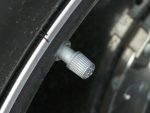
Direct TPMS uses physical pressure sensors inside each tire (integrated into valve stems or mounted separately). Each sensor contains a pressure transducer, microprocessor, radio transmitter, and battery.
Sensors measure actual air pressure in real-time, transmitting data wirelessly to the vehicle computer. When pressure drops 25% or more below specification, the TPMS warning illuminates. Advanced systems display specific pressure readings for each tire.
Advantages: Pinpoint accuracy identifying which tire lost pressure, real-time monitoring of sudden punctures and slow leaks, works in all conditions. Most factory run flat vehicles (BMW, Mercedes, Mini) use direct TPMS.
Maintenance: Sensors have sealed batteries lasting 5-10 years. Entire sensor requires replacement when battery depletes ($50-$80 per sensor plus installation).
Indirect TPMS
Indirect TPMS uses existing ABS wheel speed sensors rather than dedicated pressure sensors. An underinflated tire has smaller effective diameter, so it rotates faster to cover the same distance. The system compares wheel speeds continuously. When one wheel rotates noticeably faster (indicating underinflation), TPMS triggers.
Advantages: No sensors to maintain, lower costs, works with run flats despite early skepticism.
Limitations: Can’t identify which specific tire is low, can’t detect simultaneous four-tire underinflation, requires recalibration after tire service, less precise than direct measurement.
Both meet federal requirements and work with run flats. Direct TPMS predominates on run flat vehicles due to precision.
What Happens If You Drive Run Flats Without TPMS
Older pre-2007 vehicles or aftermarket installations might lack TPMS. While technically possible, every manufacturer strongly discourages this due to safety risks.
Unknowingly exceeding limits: You pick up a nail Monday. Tire deflates. Daily driving accumulates, work (15 mi), errands (10 mi), home (15 mi), dinner Tuesday (12 mi) = 52 miles. You’ve exceeded the 50-mile safe limit unknowingly. Internal structure compromised.
Permanent damage: Manufacturers state tires driven deflated often can’t be repaired. Pirelli: never repairable. Continental/Bridgestone: only if NOT driven deflated plus professional inspection confirms no damage. Michelin: similar strict conditions. Without TPMS, you can’t confirm deflation history. Shops recommend replacement for safety.
Wheel and vehicle damage: Deflated highway driving bends rims, damages suspension, throws off alignment, stresses brakes, expensive cascading repairs.
Safety hazards: Structurally compromised tire plus emergency situation (hard braking, evasive maneuver, wet roads) = unpredictable performance, reduced safety margins.
TPMS Maintenance for Run Flat Tire Owners
Monthly Pressure Checks: TPMS triggers at 25%+ underinflation, but optimal performance requires proper pressure always. Tires lose 1-2 PSI monthly naturally. Check when tires are cold (before driving or 3+ hours after). Find spec on door jamb sticker. Don’t rely solely on TPMS, 10-15% underinflation (pre-trigger) still reduces efficiency and increases wear.
Immediate TPMS Response: When warning illuminates: reduce speed to ≤50 mph, avoid hard braking/aggressive maneuvers, drive directly to nearest tire shop, don’t exceed 50 miles. The light means ≥25% underinflation, serious for any tire.
TPMS Malfunctions: Separate malfunction indicator means system failure, not tire underinflation. Causes: dead sensor battery (5-10 year life), sensor damage during mounting, wireless interference, software issues. Get diagnosed immediately, run flats without TPMS defeat the primary safety feature.
Sensor Replacement: When replacing run flats (~40,000-50,000 miles), shops should inspect sensors, test battery life, replace if 5+ years old, recalibrate system. Cost: $50-$80/sensor plus labor cheaper than wheel damage from unknowingly driving on a flat.
Frequently Asked Questions
Can I install run flat tires on a vehicle without TPMS?
Technically possible but strongly discouraged by all manufacturers. Run flats should only be installed on vehicles with functioning TPMS. Without it, no reliable deflation detection, defeats tire safety design. If your vehicle lacks TPMS, conventional tires with a spare provide safer option.
Will my TPMS work if I switch from conventional tires to run flats?
Yes. Any vehicle manufactured after September 2007 includes TPMS by federal law. System functions with both conventional and run flat tires. Inform the tire shop during installation to verify sensor compatibility and recalibrate properly.
How quickly does TPMS detect a puncture?
Depends on deflation rate. Sudden punctures: direct TPMS detects within seconds to minutes. Indirect TPMS needs 5-20 minutes driving for diameter change detection. Slow leaks may take hours or a full day.
What if my TPMS sensor battery dies?
Sensor stops transmitting. TPMS malfunction indicator illuminates, signaling system failure. Sensors use sealed batteries, entire sensor requires replacement, not just battery. Cost: $50-$80 per sensor plus labor.
Can I reset TPMS myself after fixing a tire?
Many vehicles provide driver-accessible reset via dashboard menu or physical button (often under steering column). Direct TPMS typically self-resets once proper pressure restored after short driving. Indirect TPMS often requires manual recalibration. Consult owner’s manual for vehicle-specific procedures.
Key Takeaways: Run Flats and TPMS
Federal Requirements: All vehicles sold after Sept 1, 2007 with GVWR under 10,000 lbs must include TPMS. System must warn when pressure drops ≥25% below specification. Applies to conventional and run flat tires.
Why Run Flats Need TPMS: Deflated run flats maintain normal appearance, cannot be identified visually. Without TPMS, drivers could unknowingly exceed 50-mile/50-mph safe limits. Exceeding limits causes invisible internal damage. Extended deflated operation risks wheel damage, suspension stress, brake issues.
How TPMS Works: Direct TPMS uses pressure sensors in each tire, real-time monitoring, pinpoint accuracy. Indirect TPMS uses ABS wheel speed sensors, detects underinflation through diameter changes, lower maintenance costs, less precision. Both meet federal standards and work with run flats.
Maintenance Requirements: Check pressure monthly with gauge, don’t rely solely on TPMS. Respond to warnings immediately, max 50 miles @ 50 mph to service facility. Replace sensors every 5-10 years as batteries deplete. Get malfunctions diagnosed immediately, system failure eliminates primary run flat safety feature.
The Bottom Line: TPMS Is Non-Negotiable for Run Flats
Run flat technology provides genuine benefits, maintaining vehicle control and driving to safety after air loss eliminates dangerous roadside tire changes. This works through reinforced sidewalls, internal support rings, or self-sealing compounds maintaining tire function without air.
However, this engineering that keeps passenger car tires functional also makes deflation invisible. You cannot see a deflated run flat. You cannot feel abnormal handling. Your TPMS warning light becomes your only indication you’re operating on a compromised tire with limited remaining safe distance.
Federal law requires TPMS on modern vehicles because the technology saves lives by alerting drivers to dangerous underinflation before catastrophic failure. For run flat vehicles specifically, TPMS transcends regulatory compliance, it’s the difference between minor inconvenience and expensive repairs.
Maintain your TPMS properly. Check tire pressure monthly rather than waiting for warnings. Respond to alerts immediately, driving no more than 50 miles to service. Replace sensors at end of life. Your run flat tires provide designed safety benefits only when paired with functioning tire pressure monitoring.
Looking for advanced run flat technology with superior ride comfort? Giti Tire’s GitiControl P10 RunFlat uses support ring technology rather than reinforced sidewalls, combined with GitiSilent noise reduction for improved cabin quietness. Proven across 675+ OEM vehicle models and validated through Nürburgring 24-hour endurance racing, Giti RunFlat delivers extended mobility with reduced ride harshness. Learn more at giti.com/technology-in-motion.


More Stories
Why Short Drives Are Harder on Your Engine Than You Think
Short drives often feel harmless to many drivers. A quick trip to the store or a short commute does not...
2027 Chevrolet Equinox Finally Drops the CVT for an Eight-Speed Automatic
For a lot of compact crossover shoppers, this is the kind of update that will matter more than any new...
EPA’s Summer E15 Approval Could Bring Slight Fuel Relief, but Drivers Should Read the Fine Print
The EPA has approved a temporary nationwide waiver allowing broader summer sales of E15, a gasoline blend made up of...
The Ultimate Enthusiast Guide to Dash Cams and Accident Evidence in 2026
You pour thousands of dollars and countless hours into building, tuning, or restoring your vehicle. In a split second, an...
Why Durable Tires Are Essential for Truck Owners
To truck owners, tires are not an extension of the truck but the basis of the safety, performance, and reliability...
U.S. Auto Sales Could Slip in 2026 as Tariffs, Global Tension, and EV Slowdown Reshape the Market
The U.S. auto market looks like it is heading into a tougher stretch in 2026, even if the year did...