
Trump Signals Potential Military Action Coming Against Cuba

By Jack Phillips
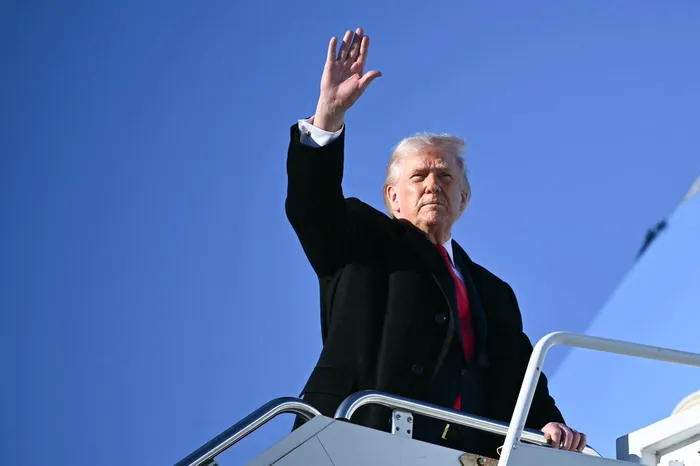
President Donald Trump again suggested that U.S. military action could be coming against Cuba as his administration has placed economic pressure on the communist-ruled island nation.
“I built this great military. I said, ‘You’ll never have to use it.’ But sometimes you have to use it. And Cuba is next by the way,” Trump told Future Investment Initiative summit in Miami on March 27. He then added, “But pretend I didn’t say that. Pretend I didn’t.”
After that, Trump said, “Cuba’s next.”
The Trump administration has opened up negotiations with elements of Cuba’s leadership in recent weeks, and the president has previously hinted that military action could be possible.
Cuban leader Miguel Diaz-Canel has acknowledged that the country is in talks with the U.S. military in a bid to avert potential military confrontation. Cuba’s economy has been battered by disruptions in oil imports, which it relies on to run power plants and transportation.
Díaz-Canel said in an address that the purpose of the talks was “to determine the willingness of both parties to take concrete actions for the benefit of the people of both countries,” coming after Cuba said it would release 51 people from prison.
Prior to the U.S. operation to capture then-Venezuelan regime leader Nicolás Maduro in January, Venezuela had provided much of Cuba’s oil needs, but Caracas’ new government has ended those shipments. Earlier in March, Trump had said Cuba may be subject to a “friendly takeover,” before saying, “It may not be a friendly takeover.”
“They have no money. They have no anything right now,” Trump also said outside the White House in February, referring to Cuba. “Maybe we’ll have a friendly takeover of Cuba.”
Trump has said that he would turn his attention to Cuba once the U.S. military operation in Iran is concluded.
“We could do them all at the same time,” Trump said in remarks on March 6. “But bad things happen. If you watch countries over the years, you do them all too fast, bad things happen.”
Cuba has been an adversary of the United States for decades, although there has been intermittent periods of engagement between the two countries. The United States has kept in place a trade embargo on the island for decades, prohibiting American businesses from engaging with Cuban interests, in part because the country held Soviet-made nuclear missiles during the 1962 Cuban Missile Crisis.
Diaz-Canel, 65, took over as Cuba’s leader in 2021 after the resignation of 89-year-old Raul Castro, whose brother Fidel had led the regime from 1959 until 2011. Fidel Castro died in 2016.
In January, Maduro was taken to the United States during the military operation, and he currently faces federal drug-related charges. During an initial court hearing two months ago, Maduro and his wife, Cilia Flores, pleaded not guilty to the charges.
Since then, the U.S. government has moved to open up trade with Venezuela, including the easing of sanctions against the country’s state-run petroleum company earlier this month. The U.S. Treasury Department in February also issued a license for the exploration, development, and production of oil and gas reserves in Venezuela.
Reuters contributed to this report.

More Stories
Border Czar: ICE to Assist at Airports Until They Are 100 Percent, TSA Pay Coming This Week
By Tom Gantert White House border czar Tom Homan said Sunday that ICE agents will be used to help out...
US Monitoring Surge in China’s Detention of Panama-Flagged Vessels
By Aldgra Fredly The U.S. Federal Maritime Commission on March 26 accused China of detaining Panama-flagged vessels in response to...
FBI Director Kash Patel Hacked by Iran-Linked Group
By Jacki Thrapp FBI Director Kash Patel’s personal email inbox was accessed by Iran-based hackers. “The FBI is aware of...
Block CFO Defends Job Cuts Due to AI Adaptation; Silicon Valley Executives Predict Increased Mass Layoffs
By Dylan Morgan Block’s Chief Financial Officer and Chief Operating Officer Amrita Ahuja defended the San Francisco-based payments company’s mass...
Houthis Enter Iran War With Missile Attack on Israel
By Tom Ozimek A spokesman for the Iran-aligned Houthi terrorist organization in Yemen said on March 28 that the group...
Wall Street Review: Stocks Fall for 5th Week; Dow, Nasdaq Slip Into Correction
By Panos Mourdoukoutas U.S. stocks declined for a fifth consecutive week, marking the longest losing streak since 2022, as higher...