
Congress Working to Enact Trump’s Prescription Drug Price Plan

By Lawrence Wilson
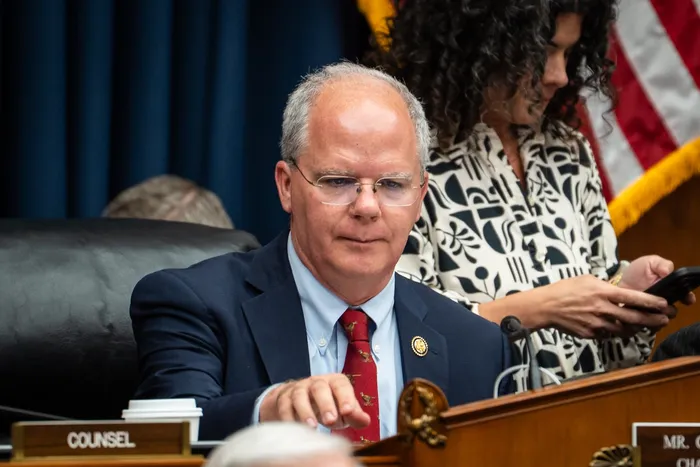
Congress is collaborating with the White House to enact a version of President Donald Trump’s Most Favored Nation drug price policy, Rep. Brett Guthrie (R-Ky.) confirmed on March 17.
“We’re still working with the White House to see where we can go,” Guthrie, chairman of the House Energy and Commerce Committee, told The Epoch Times on March 16.
Guthrie said there had been several meetings with White House staff members to work out details for enacting legislation that would advance the president’s goal of creating affordable drug prices.
Trump called on Congress to codify his prescription drug price reforms into federal law during the State of the Union address on Feb. 24.
Guthrie’s comments provide the first clear acknowledgement that the Energy and Commerce Committee, which holds jurisdiction over the matter, is actively working on the issue.
In May 2025, Trump announced the Most Favored Nation policy, which is intended to ensure that Americans pay no more for prescription drugs than do consumers in other developed nations.
Drugmakers have long charged U.S. customers more than triple the prices charged in other wealthy countries, many of which have leveraged the buying power of national health plans to reduce their costs.
The White House has so far announced price-reduction agreements with 16 major drug manufacturers.
“Under my just-enacted Most Favored Nation Agreements, Americans, who have for decades paid by far the highest prices of any nation for prescription drugs, will now pay the lowest price for drugs, anywhere in the world,” Trump said.
However, not all drugs are currently covered by the agreements, according to statements from some drugmakers.
When specific drug discounts have been announced, they have been significant, ranging up to 70 percent. Most details of the pricing agreements are confidential.
Pricing deals announced by the White House appear to be in effect for three years, according to statements from several drugmakers.
If the Most Favored Nation plan were enacted into law, the policy would not be subject to change by a future president.
Some drugmakers have said that the possibility creates uncertainty for future business prospects.
“The specifics of these proposals and policies are evolving, and as a result, there is uncertainty as to how these and other potential legal and regulatory changes may impact our business,” Gilead Sciences wrote in a Feb. 24 filing with the Securities and Exchange Commission.
Nathan Worcester contributed to this report.


More Stories
Warner Bros CEO to Collect $667 Million in Paramount Deal
By Andrew Moran Warner Bros. Discovery CEO David Zaslav will collect about $667 million in compensation after the entertainment empire...
US Has Flown 8,000 Flights, Struck 7,800 Iranian Targets, CENTCOM Says
By Jack Phillips The United States has flown more than 8,000 combat flights and struck more than 7,800 targets in...
Jerome Powell Plans to Remain Fed Chair Until Kevin Warsh Is Confirmed
By Andrew Moran Federal Reserve Chair Jerome Powell plans to remain as head of the U.S. central bank until his...
Trump Waives US Shipping Law to Mitigate Rising Fuel Prices
By Andrew Moran President Donald Trump granted a 60‑day Jones Act waiver to lower shipping costs and support fuel supply...
Israel Says It Killed Iranian Intelligence Chief in Overnight Strike
By Tom Ozimek Israel said it killed Iran’s intelligence minister, Esmail Khatib, in an overnight airstrike in Tehran, stating that...
Karen Mendoza: Age, Relationship, and Social Media Influence
Have you heard of Karen Mendoza? She is popularly known by her social media handle KAED. She is a social...