
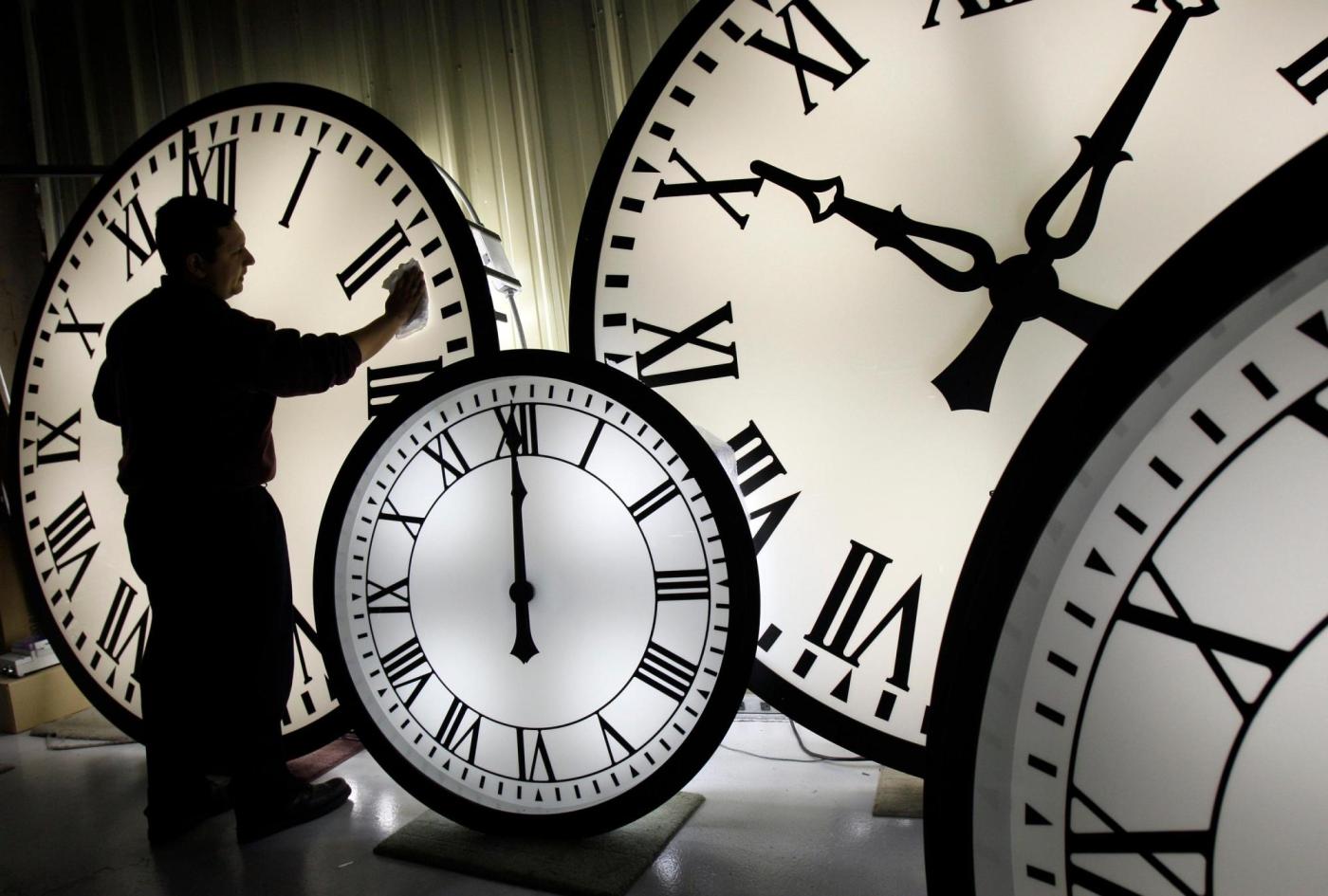
Daylight Savings Time: Remember to ‘spring forward’

It’s that time of year when we lose an hour of sleep to gain an hour of daylight.
Daylight Savings Time begins Sunday at 2 a.m. local time and will last until Nov. 1. That means the clocks will roll from 1:59 a.m. to 3 a.m., losing the entire 2 a.m. hour, and making alarm clocks seem to ring a little too early.
In exchange, the day will seem longer. The National Weather Service’s published sunrise and sunset table shows Boston’s sunset moving from 5:45 p.m. before the change to 6:45 p.m. after the change.
Daylight Savings Time was first adopted in the U.S. in 1918 via the Standard Time Act to conserve fuel during the first World War and repealed a year later, according to the University of Colorado Boulder. It came back in WWII and then was permanently adopted during the energy crisis of 1974.
But it has long been controversial.
Last year saw a flurry of legislation in Congress that would do anything from permanently implementing the time (the Sunshine Protection Act) to multiple bills that would allow states to choose for themselves (Hawaii and Arizona have already opted for year-round standard time). And this year saw the introduction of Florida Republican Rep. Greg Steube’s Daylight Act of 2026 in February. That bill seeks a more novel change: splitting the difference and changing the clocks permanently by half an hour. Congress has not yet done anything with any of them.


More Stories
Anthropic sues US government after being labelled a ‘supply chain risk’ in AI dispute
Artificial intelligence company Anthropic has filed an unprecedented lawsuit against the United States government after being formally labelled a “supply...
UK job vacancies fall at slower pace as service sector picks up
The decline in UK hiring may be beginning to stabilise after new data showed a slowdown in falling job vacancies...
More companies paying ransoms as AI-powered cyberattacks intensify
A growing number of businesses are paying cybercriminals after ransomware attacks, as hackers deploy artificial intelligence to make their tactics...
China exports surge despite Trump tariffs as global demand strengthens
China’s exports surged in the first two months of 2026 despite escalating trade tensions with the United States, highlighting the...
Royal Mail faces scrutiny as 219 million letters arrive late despite rising stamp prices
Royal Mail is facing renewed scrutiny over the reliability of Britain’s postal service after figures revealed that around 219 million...
Government-funded mobile mast upgrades reach 50 milestone in Wales
Fifty government-funded mobile mast upgrades have now been activated across Wales as part of the UK’s Shared Rural Network (SRN)...