
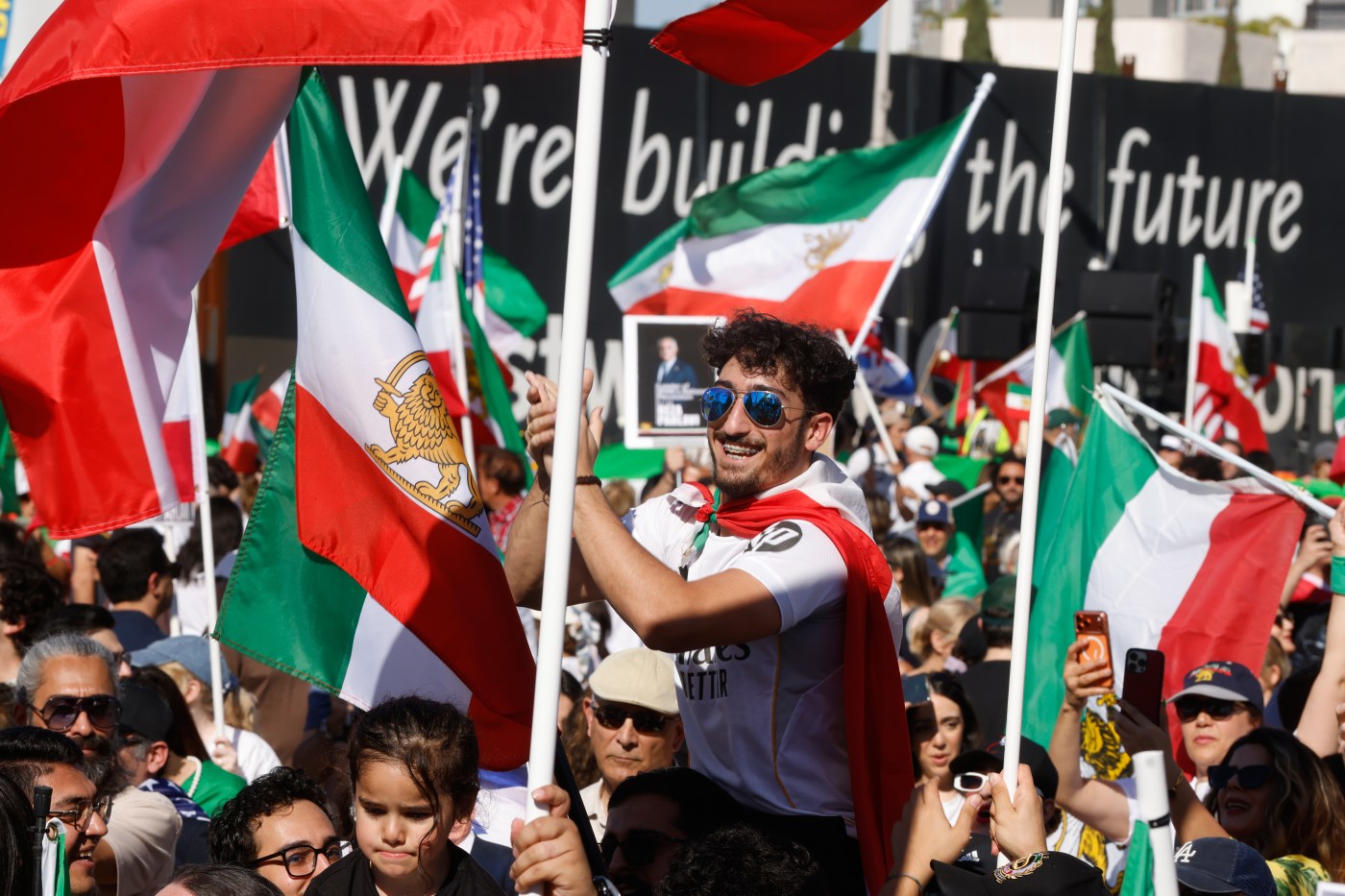
Iranian-Americans fear for relatives

Many in the Iranian-American diaspora spent the weekend glued to their televisions, watching news of U.S. and Israeli bombs falling on Iran, some clinging to hopes of a brighter future for their motherland but terrified their relatives might suffer from the collateral damage of war.
Ayatollah Ali Khamenei, who for decades ruled the country while violently crushing dissent, was killed early in the attack. In the United States, many celebrated, some taking to the streets to cheer the toppling of the man they considered a tyrant.
“We are happy, we are happy that he is gone and he can’t kill our innocent people anymore,” said Ava Farhadi, 33, an electrical engineer in Indiana. In January, Farhadi’s family participated in protests against the government, which were met with a brutal crackdown by the regime.
While her immediate family was unharmed, Farhadi said, friends and close loved ones were among the thousands killed when Khamenei’s armed guard opened fire on peaceful protesters.
But many said, despite relief that Khamenei was killed, they are worried for their families still there and about what happens next in the country.
Shahed Ghoreishi, 34, a foreign policy analyst whose parents both fled Iran, called it an “impossible situation” for many, who hated Khamenei and are happy he is gone, but whose families remain in danger.
Ghoreishi said it’s been difficult to reach relatives still living in Iran. Phone and internet connections aren’t reliable, so it’s sometimes impossible to find out if they’re OK.
“It’s eerie, it’s very eerie to see these terrible scenes of Iranians crying over dead relatives and their destroyed homes,” he said. “And you’re like, wait, does that family live on that street? How close are they to that bomb?”
He said he felt helpless as he doomscrolled the news all weekend, skeptical that the violence would yield lasting change.
“I don’t see a clear strategy and I see a lot of violence, and those two things make me pessimistic for this moment,” he said. “I’m willing to be surprised. I’m desperate for Iran to have a bright, stable future. So I am hopeful long term, but in this immediate moment, I don’t see a clear solution after the bombs.”

More Stories
Aston Martin y Adrian Newey se apresuran a arreglar un fiasco al iniciar la F1
Por JAMES ELLINGWORTH ¿Qué se obtiene cuando el diseñador de autos más exitoso de la Fórmula 1 toma el control...
Bank of England rate cuts at risk in 2026 as Middle East conflict sparks inflation fears
Expectations of further Bank of England base rate cuts this year have been thrown into doubt after escalating conflict in...
Capturan cocodrilo en un arroyo a 2.000 km de su hábitat en Australia
Por ROD McGUIRK MELBOURNE, Australia (AP) — Stephanie Kirsop no le creyó a su hijo cuando la llamó por teléfono...
Pakistan says its forces killed 67 Afghan troops in cross-border clashes. Kabul rejects the claim
By MUNIR AHMED and ABDUL QAHAR AFGHAN ISLAMABAD (AP) — Afghan forces attacked Pakistani military positions along the border early...
Pakistan says its forces killed 67 Afghan troops in cross-border clashes. Kabul rejects the claim
By MUNIR AHMED and ABDUL QAHAR AFGHAN ISLAMABAD (AP) — Afghan forces attacked Pakistani military positions along the border early...
Investigan presunto intento de incendio provocado en el estadio de Macclesfield
MACCLESFIELD, Inglaterra (AP) — El Macclesfield de la sexta división del fútbol inglés denunció que alguien intentó incendiar su estadio...