
Pols & Politics: Boston city councilor calls for cuts to $2M program that gives 11-year-olds budgetary power

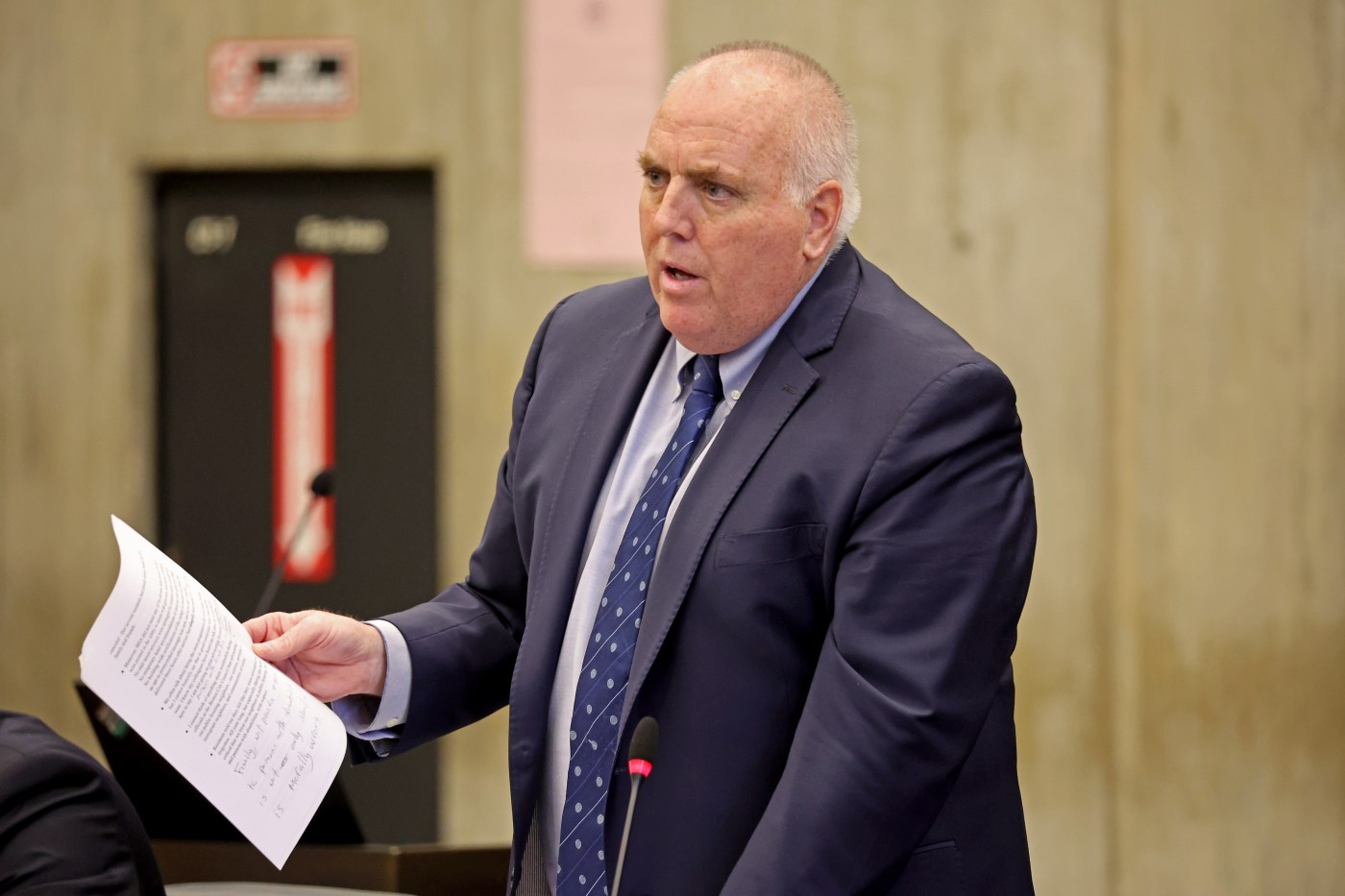
Boston City Councilor Ed Flynn is calling for the participatory budget to be slashed, saying that 11-year-old children shouldn’t be dictating how millions of taxpayer dollars are spent each year in the city budget.
Flynn said the city should reduce its participatory budgeting allocation, which is voted on by residents as young as 11 years old regardless of citizenship status, from roughly $2 million to $100,000 or $200,000.
“I do think during these challenging times some of those programs and some of that spending does have to be on the table,” Flynn said last Thursday at a City Council committee hearing on the fiscal year 2027 budget.
“I know it’s politically incorrect to say that, but I don’t support 11- and 12-year-old kids making major decisions on millions of dollars in the budget. This is taxpayer money, and we have to be accountable for it,” Flynn added.
When making his pitch, Flynn cited the city’s financial crunch, which is driven by declining commercial property values and revenue that has Mayor Michelle Wu directing all department heads to trim their FY27 budgets by 2%.
“Residents want us to be fiscally disciplined, fiscally responsible, and transparent, and I do think that department should be significantly cut,” Flynn said.
Flynn separately told the Herald, “I just don’t think we are able to continue to keep spending money that we don’t have.”
Wu announced last month that she used nearly a third of the city’s $2.2 million FY26 participatory budget to beef up protections for illegal immigrants.
The city has opted to earmark $400,000 of the funds for an immigrant legal defense fund, and $300,000 to support immigrant career pathways programming that focuses on “bridging language and employment.”
Other projects include $500,000 for neighborhood fresh food access; $200,000 for housing stability assistance; $100,000 for an initiative that aims to plant trees in city-owned spaces; $300,000 for workforce training programs focused on trades; $250,000 for youth financial literacy workshops; and $150,000 for a small business development program.
“Participatory budgeting continues to demonstrate what is possible when residents have a direct voice in shaping Boston’s future,” Wu said in a statement last month.
Participatory budgeting was approved by a ballot measure back in 2021, and the relevant office and board was created via a city ordinance that was passed by the Council in 2023.
While Flynn has called for cuts to participatory budgeting since it began in Boston two years ago, other councilors have been more receptive to the process, which the city is bound to carry out due to the approved ballot initiative.
Progressive councilors have touted the greater civic engagement and deepened democracy that participatory budgeting aims to achieve.
Several community groups have petitioned the mayor to allocate 1% of the city budget, or roughly $40 million, for participatory budgeting.
Road to recovery
You can’t keep a good PR man down.
Public relations guru George Regan and his wife Elizabeth had just returned from the Super Bowl when George suffered a medical crisis. He was rushed to Mass. General for emergency treatment for what turned out to be a very serious illness. Thanks to the intervention of an outstanding medical team at MGH, George was stabilized after spending more than 10 days in intensive care, and is now recuperating.
He expects to be back at the helm of his namesake company before long, perhaps as soon as the end of next week.
Herald file photo
George K. Regan, Jr., the founder and CEO of Regan Communications, in his North End office. (Chris Christo/Boston Herald)


More Stories
US court rules against Pentagon in killer AI dispute
The Department of War had ordered contractors to drop Anthropic after it refused to allow military use of its technology...
Which Interior Flooring is Best?
Where do you start when choosing new flooring? When shopping for new flooring a good place to start is to...
Petrol set to top £1.50 a litre as Iran war drives fuel price surge
UK drivers are bracing for a sharp rise in fuel costs, with petrol prices expected to exceed £1.50 per litre...
Dyson hit by £440m sales drop as Trump tariffs bite
Dyson has reported a £440 million drop in annual sales after being hit by US trade tariffs, although the group...
Octopus Investments to cut 20% of staff as AI reshapes asset management
Octopus Investments is set to cut around a fifth of its workforce as it accelerates the adoption of artificial intelligence,...
Next to invest £300m in UK logistics as new warehouse set to deliver £2.5bn boost
Next has unveiled a major expansion of its UK logistics network, committing more than £300 million to new warehouse infrastructure...