
What to know about US-Israel attacks on Iran

By BRIAN MELLEY
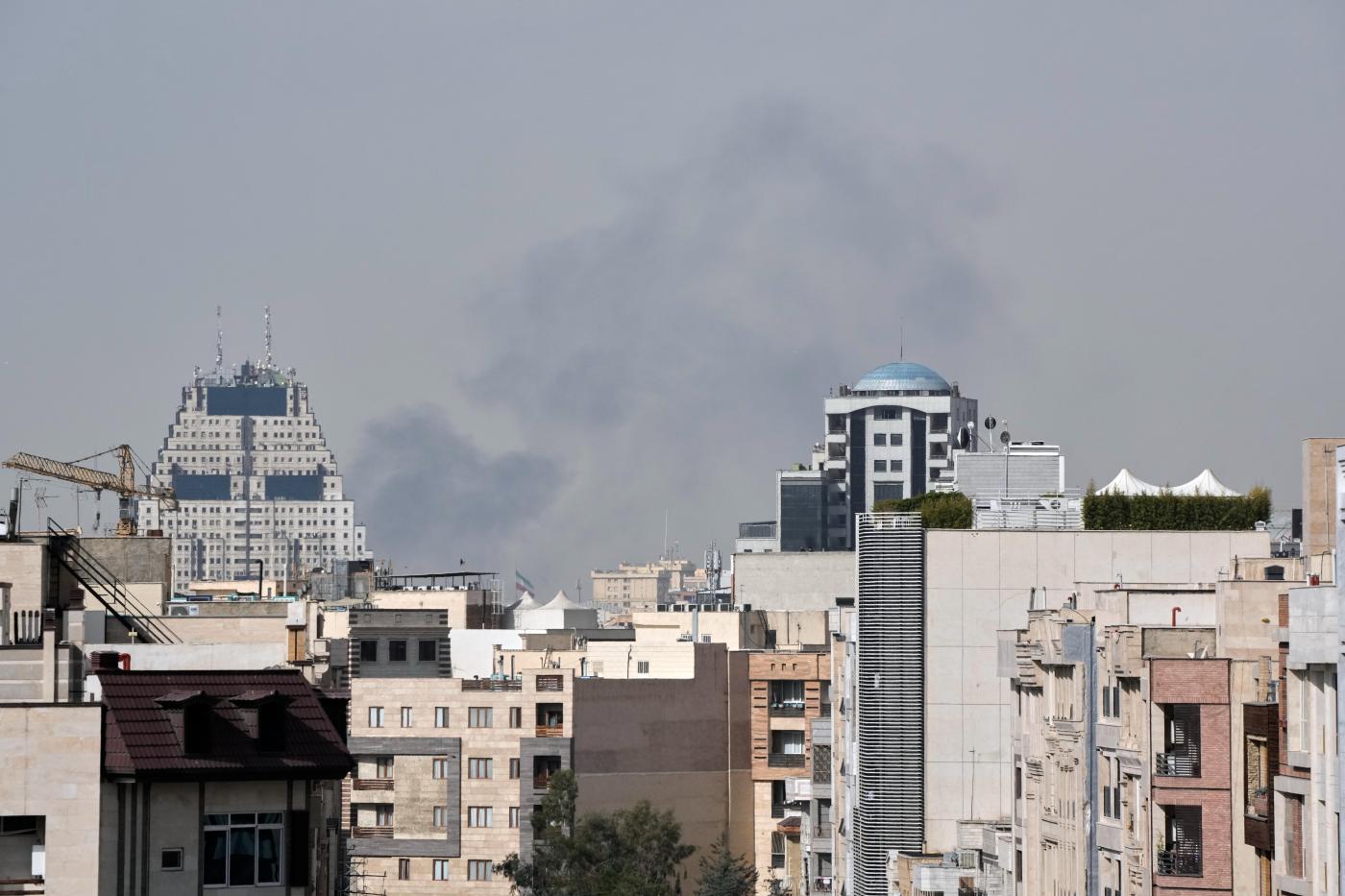
The U.S. and Israel attacked Iran on Saturday in what President Donald Trump said was a massive operation to destroy the country’s military capabilities and eliminate the threat of it creating a nuclear weapon.
Iran’s Foreign Ministry said it would defend its homeland and its Revolutionary Guard said it launched counterattacks, firing drones and missiles at Israel and strikes aimed at U.S. military installations in Bahrain, Kuwait and Qatar. The exchanges of fire continued into the night, and Iranian state media, citing the Red Crescent, said on Saturday evening that at least 201 people had been killed and more than 700 injured.
The strikes came after Trump has pressured Tehran for a deal to constrain its nuclear program, building up a fleet of American warships in the region as the country struggles with growing dissent following nationwide protests.
More than 80 people were reported killed and dozens wounded at a girls’ school in southern Iran in the Israeli-U.S. strikes, the local governor told Iranian state TV. Shrapnel from an Iranian missile attack on the capital of the United Arab Emirates killed one person, state media said.
Ayatollah’s compound was one of the first targets
Israel announced it had launched an attack on Iran shortly after explosions were heard in Tehran on Saturday morning. The U.S. military said targets in Iran included Revolutionary Guard command facilities, air defense capabilities, missile and drone launch sites, and military airfields.
One of the first strikes hit near the offices of Supreme Leader Ayatollah Ali Khamenei. Later Saturday, Israeli Prime Minister Benjamin Netanyahu said in a nationally televised address that there were “growing signs” that Khamenei had been killed.
Earlier, Iranian Foreign Minister Abbas Araghchi told NBC News that Khamenei and President Masoud Pezeshkian are alive “as far as I know.”
Iran strikes back at Israel and U.S. bases
Bahrain said a missile attack targeted the U.S. Navy’s 5th Fleet headquarters in the island kingdom. Witnesses heard sirens and explosions in Kuwait, home to U.S. Army Central. Explosions could also be heard in Qatar, where Al Udeid Air Base hosts thousands of service members.
Saudi Arabia said on state-run media that it had repelled attacks by Iran on its capital and eastern region, and sirens sounded in Jordan.
An apartment building in northern Israel was damaged and shrapnel fell in multiple sites, according to media and police. But Lt. Col. Nadav Shoshani said there had been no significant hits in Israel and rescue services said there were no serious injuries reported from missile barrages across the country.
Kuwait’s health ministry said a dozen people were injured in strikes.
Iranian-backed Houthis in Yemen, meanwhile, have vowed to resume attacks on Red Sea shipping routes and on Israel, according to two senior Houthi officials who spoke on condition of anonymity because there was no official announcement from leadership.
Trump tells Iranians it’s time to topple their government
It took over an hour for Trump to make an official announcement on the U.S. involvement in what he termed “major combat operations.”
Related Articles
More than 200 Minnesota service members currently deployed to area that includes Mideast
Today in History: February 28, Benedict XVI becomes first pope to resign
Read President Trump’s statement on Iran in full
US and Israel launch a major attack on Iran. Trump urges Iranians to ‘take over’
With only 3 women left, an Amazon tribe faced extinction. An unexpected birth now brings hope
In an 8-minute video on social media, Trump indicated the U.S. was striking for reasons far beyond the nuclear program, listing grievances stretching back to the beginning of the Islamic Republic following a revolution in 1979 that turned Iran from one of America’s closest allies in the Middle East into a fierce foe.
Trump told Iranians to take cover but urged them to later rise up and topple the Islamic leadership.
“When we are finished, take over your government,” Trump said. “It will be yours to take. This will be probably your only chance for generations.”
The attacks came a day after Trump voiced frustration over lack of progress in negotiations to stop Iran’s ability to develop nuclear weapons.
U.S. military has been building up its war machinery in the area
Israel said it had worked with the U.S. for months to plan the attacks.
Before U.S.-Iran negotiations were underway in Geneva, the U.S. had assembled a vast fleet of fighter jets and warships in the region to try to pressure Iran into a deal over its nuclear program.
The aircraft carrier USS Abraham Lincoln and three guided-missile destroyers arrived in January to bolster the number of warships in the region. The world’s largest aircraft carrier, the USS Gerald R. Ford, and four accompanying destroyers later were dispatched from the Caribbean to head to the Middle East and are now in the Mediterranean.
The fleet has added more than 10,000 U.S. troops to the region.
Fighting grounds flights and disrupts commercial air travel
The fighting disrupted air travel in the region.
Major airlines based in the Middle East canceled hundreds of flights while many other travelers were unexpectedly diverted to airports across Europe or flown back to departure airports.
It was unclear how long the disruption to flight operations could last, and airlines urged passengers to check their flight status online before heading to the airport.
More Stories
Ejército israelí afirma que sus ataques mataron a ministro de Defensa de Irán y al comandante de Guardia Revolucionaria
JERUSALÉN (AP) — Ejército israelí afirma que sus ataques mataron a ministro de Defensa de Irán y al comandante de...
Miller anota 26 y Hornets vencen 109-93 a Trail Blazers para cuarta victoria seguida
Associated Press CHARLOTTE, Carolina del Norte, EE.UU. (AP) — Brandon Miller anotó 26 puntos y capturó ocho rebotes, y los...
Familias inmigrantes relatan duras condiciones de vida en centro de detención de Texas
Por GARANCE BURKE, ADAM GELLER y VALERIE GONZALEZ LAREDO, Texas (AP) — Un mes después de que agentes de ICE...
State swim and dive: St. Thomas Academy dominates en route to Class A repeat
St. Thomas Academy left no doubt in its repeat bid at the Class A state swim and dive meet Saturday...
Why Baz Luhrmann can’t help thinking about Elvis
LOS ANGELES — Baz Luhrmann’s startling new movie about Elvis Presley began, the director says, with an accident. As he...
Cher and Gregg Allman’s son arrested on assault charges in New Hampshire
Police in Concord, New Hampshire, arrested the son of musicians Cher and Gregg Allman on assault charges. In a brief...