
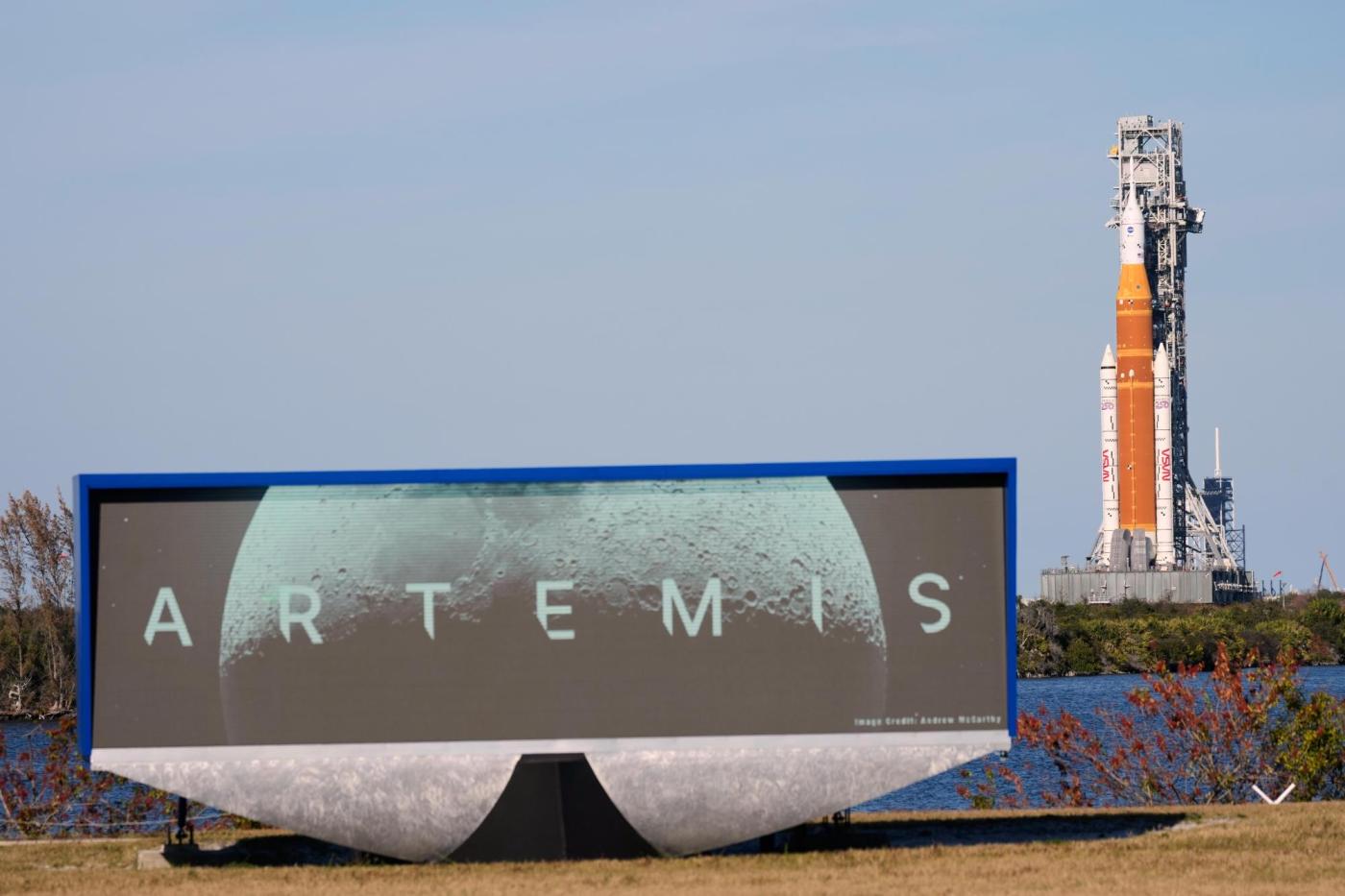
NASA revamps Artemis moon landing program to reduce flight gaps and risk

By MARCIA DUNN
NASA said Friday it’s adding an extra moon mission by Artemis astronauts before attempting a high-risk lunar landing with a crew.
Related Articles
NASA’s Mike Fincke identifies himself as the ailing astronaut who prompted space station evacuation
NASA moves its Artemis II moon rocket off the launch pad for more repairs
NASA will return its moon rocket to the hangar for more repairs before astronauts strap in
NASA delays astronaut moon mission again after new rocket problem
NASA boss blasts Boeing and space agency managers for Starliner’s botched astronaut flight
The shake-up in the flight lineup and push for a faster pace came just two days after NASA’s new moon rocket returned to its hangar for more repairs and a safety panel warned the space agency to scale back its overly ambitious goals for humanity’s first lunar landing in more than half a century.
Artemis II — a lunar fly-around by four astronauts — is off until at least April because of rocket problems.
The follow-up mission — Artemis III — had been targeting a landing near the moon’s south pole by another pair of astronauts a year or two later. But with long gaps between flights and concern growing over the readiness of a lunar lander and moonwalking suits, NASA’s new administrator Jared Isaacman announced that mission would instead focus on launching a lunar lander into orbit around Earth for docking practice by Orion capsule astronauts in 2027.
The new plan calls for a moon landing — potentially even two moon landings — by astronauts in 2028.
“This is going to be our pathway back to the moon,” Isaacman said.
NASA’s Artemis II SLS (Space Launch System) moon rocket with the Orion spacecraft slowly rolls back towards the Vehicle Assembly Building at the Kennedy Space Center, Wednesday, Feb. 25, 2026, in Cape Canaveral, Fla. (AP Photo/John Raoux)
The first Artemis test flight was plagued by hydrogen fuel leaks and helium flow problems before liftoff without a crew in 2022, the same things that struck the Space Launch System rocket on the pad at NASA’s Kennedy Space Center earlier this month.
Isaacman stressed that “it should be incredibly obvious” that three years between flights is unacceptable and that he’d like to get it down to one year or even less.
During NASA’s storied Apollo program, he said, astronauts’ first flight to the moon was followed by two more missions before Neil Armstrong and Buzz Aldrin landed on the moon. What’s more, he said, the Apollo moonshots followed one another in quick succession, just as the earlier Projects Mercury and Gemini had rapid flight rates, sometimes coming just a few months apart.
“No one here at NASA forgot their history books,” Issacman said. “We shouldn’t be comfortable with the current cadence. We should be getting back to basics and doing what we know works.”
NASA’s Artemis II SLS (Space Launch System) moon rocket with the Orion spacecraft slowly rolls back towards the Vehicle Assembly Building at the Kennedy Space Center, Wednesday, Feb. 25, 2026, in Cape Canaveral, Fla. (AP Photo/John Raoux)
To pick up the pace and reduce risk, NASA will standardize Space Launch System moon rockets moving forward, Isaacman said.
The Aerospace Safety Advisory Panel recommended this week that NASA revise its objectives for Artemis III “given the demanding mission goals.” It’s urgent the space agency do that, the panel said, if the United States hopes to safely return astronauts to the moon. Isaacman said the revised Artemis flight plan addresses the panel’s concerns and is supported by industry and the Trump administration.
The Associated Press Health and Science Department receives support from the Howard Hughes Medical Institute’s Department of Science Education and the Robert Wood Johnson Foundation. The AP is solely responsible for all content.


More Stories
Josh Sargent deja Norwich City por Toronto de la MLS
TORONTO (AP) — Josh Sargent se incorporó el viernes al Toronto FC de la MLS procedente del Norwich City de...
Why Minnesota United didn’t say more about local ICE raids
Amid the federal immigration raids in Minnesota to start this year, Minnesota United remained quiet on the subject. Loons supporters,...
Palou y Ganassi cierran disputa contractual con McLaren tras fallo de 12 millones de dólares
Por JENNA FRYER ST. PETERSBURG, Florida, EE.UU. (AP) — Alex Palou y Chip Ganassi Racing llegaron a un acuerdo para...
Filial de empresa portuaria hongkonesa denuncia allanamientos y “grave” toma de documentos en Panamá
Associated Press CIUDAD DE PANAMÁ (AP) — La filial del conglomerado hongkonés CK Hutchison, que perdió la concesión de los...
Renee Good’s parents remember her love and laughter in interview with AP
DENVER — Renee Good loved sparkles and laughter and any excuse for a celebration. She loved pretty much everyone she...
Trump plantea la posibilidad de una “toma amistosa de Cuba” tras conversaciones con La Habana
Por WILL WEISSERT WASHINGTON (AP) — El presidente Donald Trump señaló el viernes que Estados Unidos está en conversaciones con...