
BMW Bringing Humanoid Robots to a German Factory Marks a Big Shift for the Future of Car Building

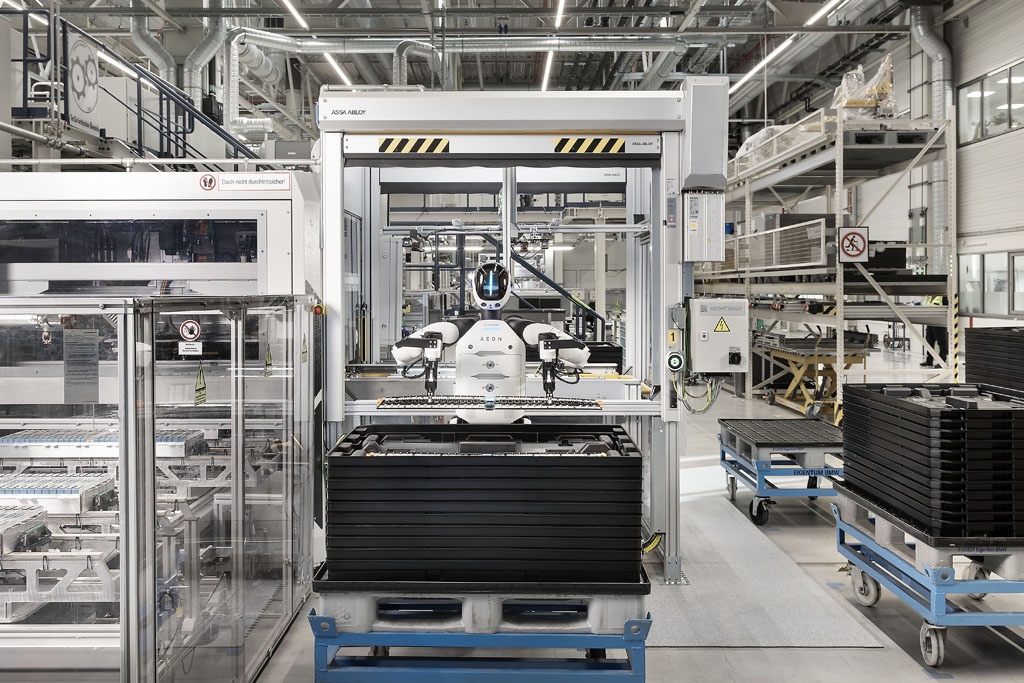
BMW Group is taking the next step into what it calls “Physical AI,” and this time it’s happening on home turf. The company says it will deploy humanoid robots in production in Germany for the first time, launching a pilot project at BMW Group Plant Leipzig. The goal is not just to show off a sci-fi headline, but to see how AI-powered robots can plug into real, existing vehicle production, along with battery and component manufacturing.
If that sounds like a big leap, BMW is framing it as the natural progression of a production system that already leans heavily on data, automation, and intelligent monitoring. The company points to everything from digital twins and AI-supported quality checks to autonomous transport solutions used for moving parts around the plant. The key ingredient, BMW says, is having one unified IT and data model instead of scattered data silos, because that consistency lets AI agents learn faster, make decisions in complex environments, and work alongside machines in a way that actually scales.
To speed things up, BMW is also launching a new “Center of Competence for Physical AI in Production,” basically a dedicated hub meant to consolidate what the company learns from testing, integration, safety processes, and real-world use cases across its global network. BMW’s approach is structured: evaluate technology partners, test in a lab with real manufacturing scenarios, do an initial deployment at a plant, then move into a full pilot phase once everything proves it can operate safely and reliably.
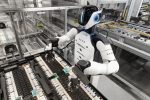
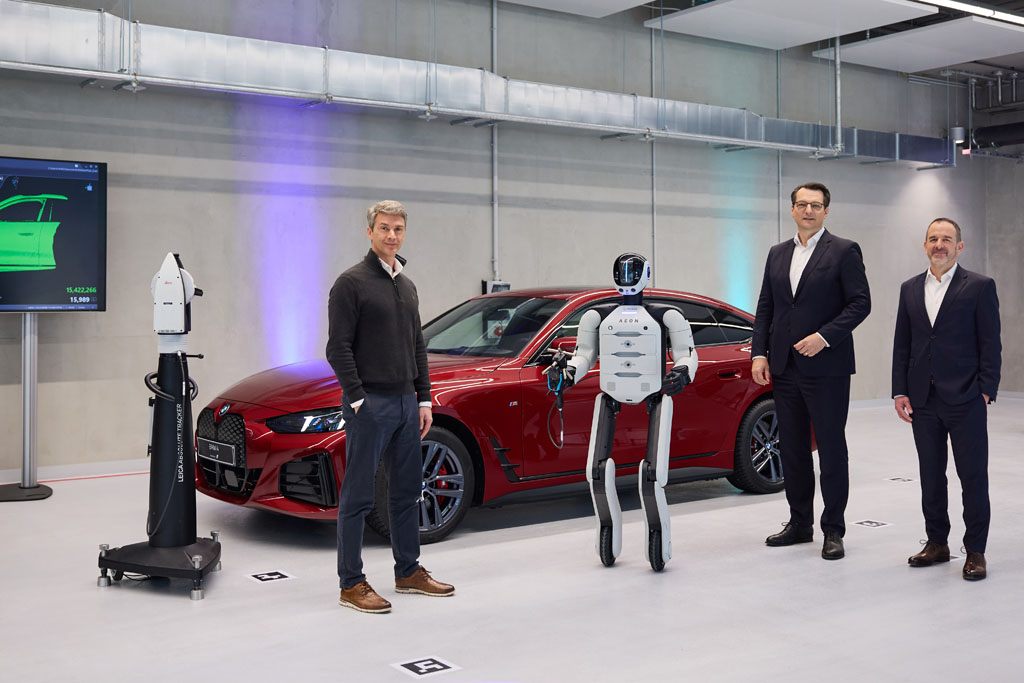
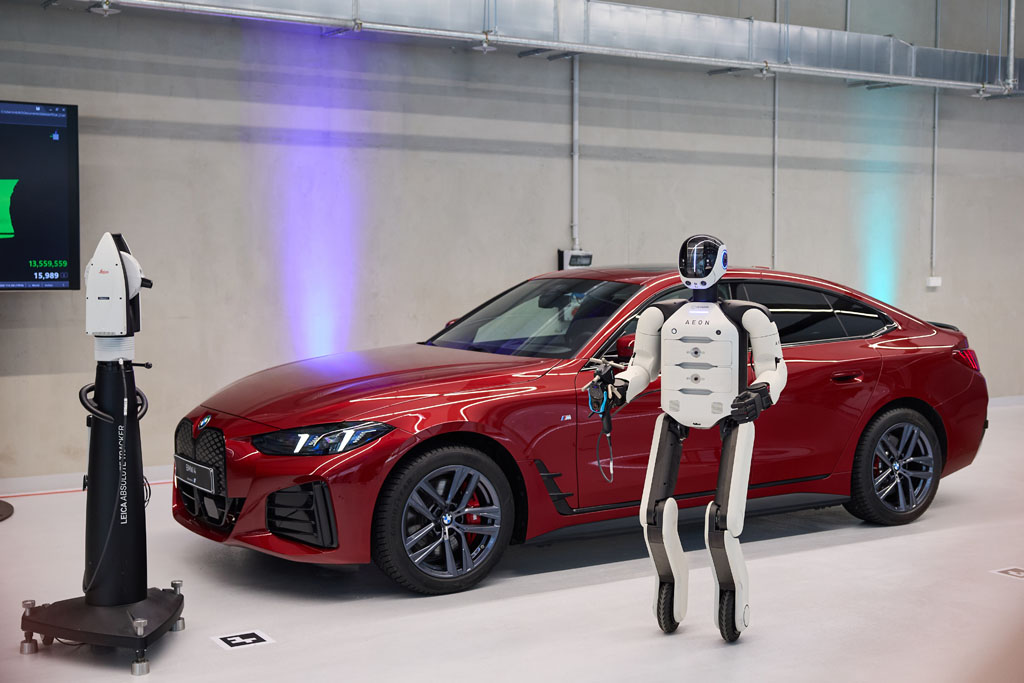
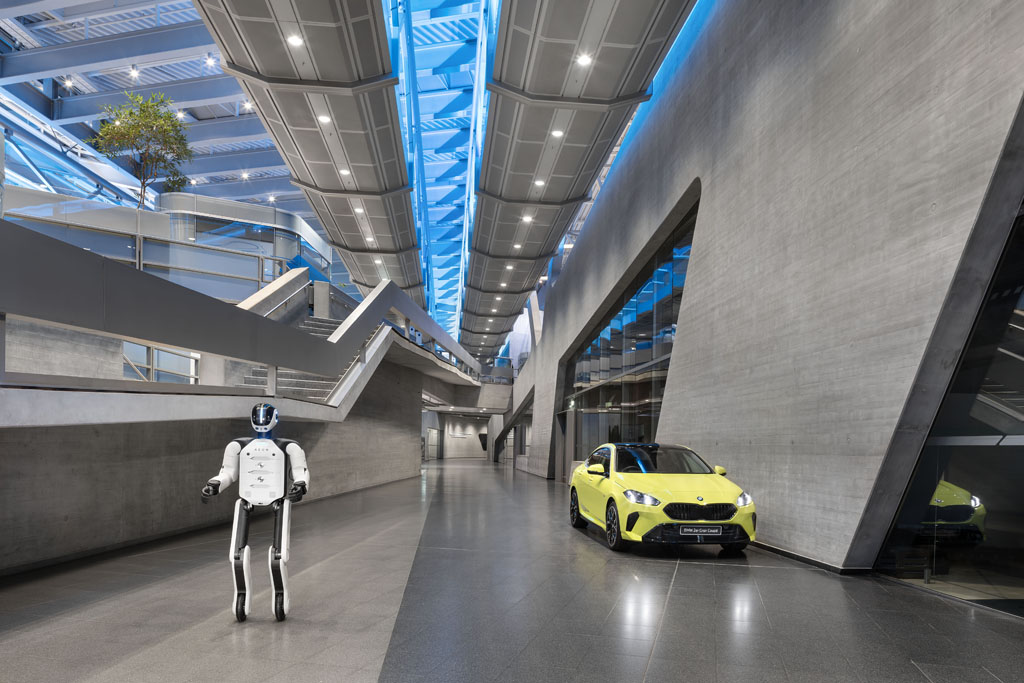
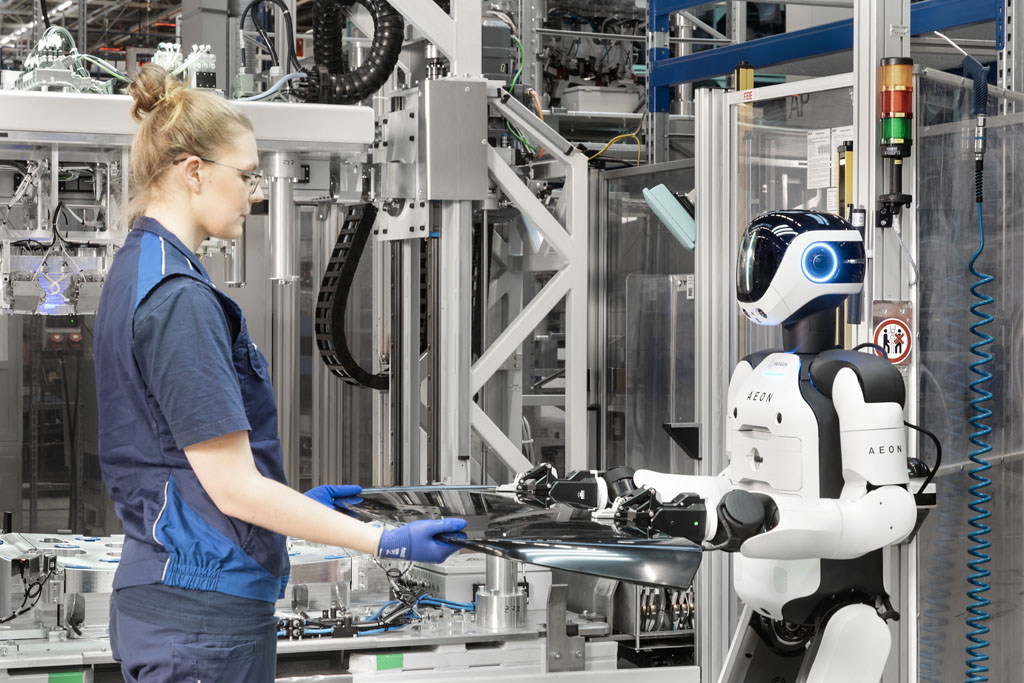
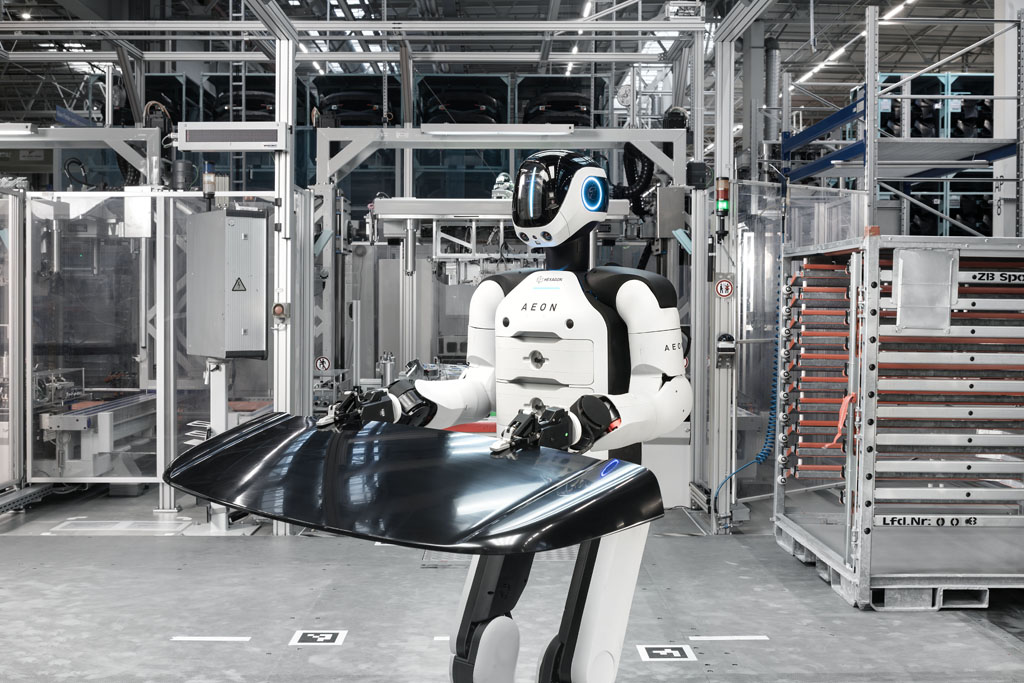
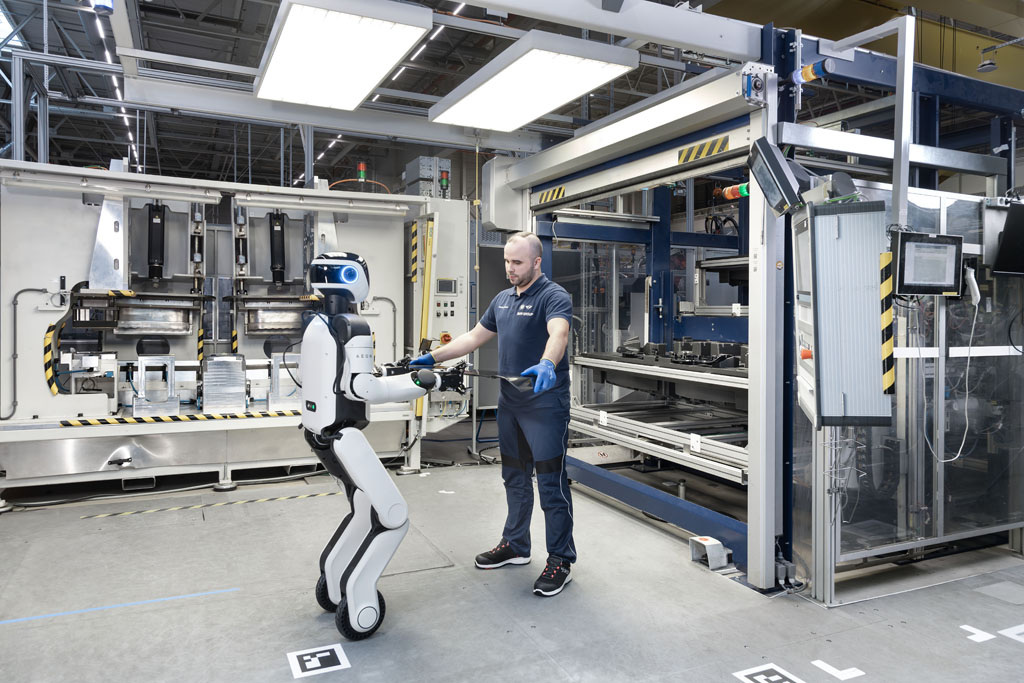
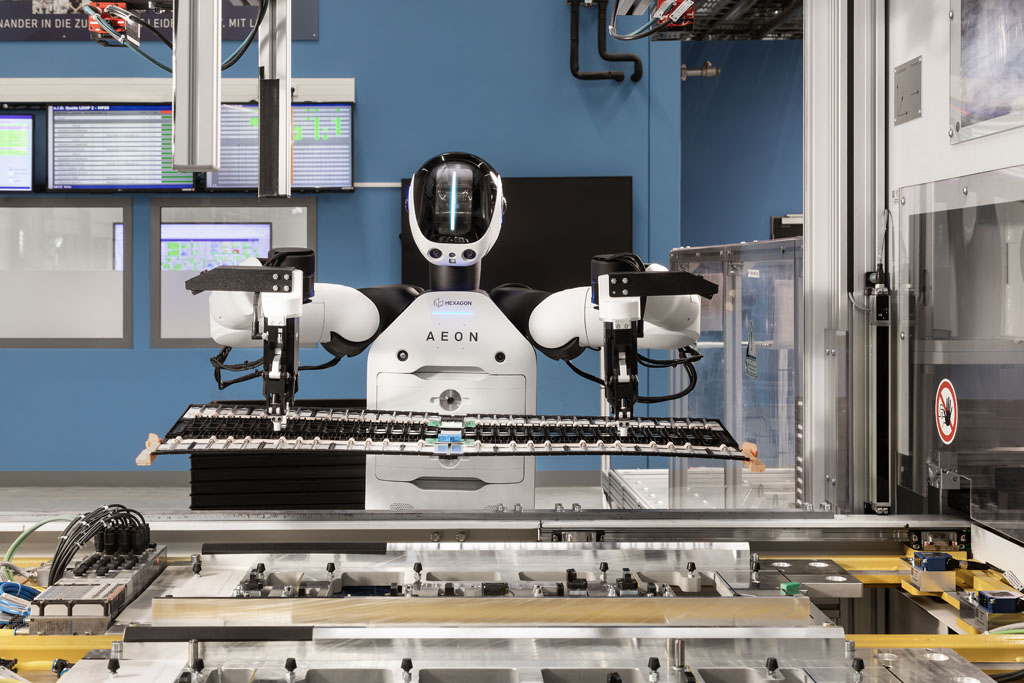
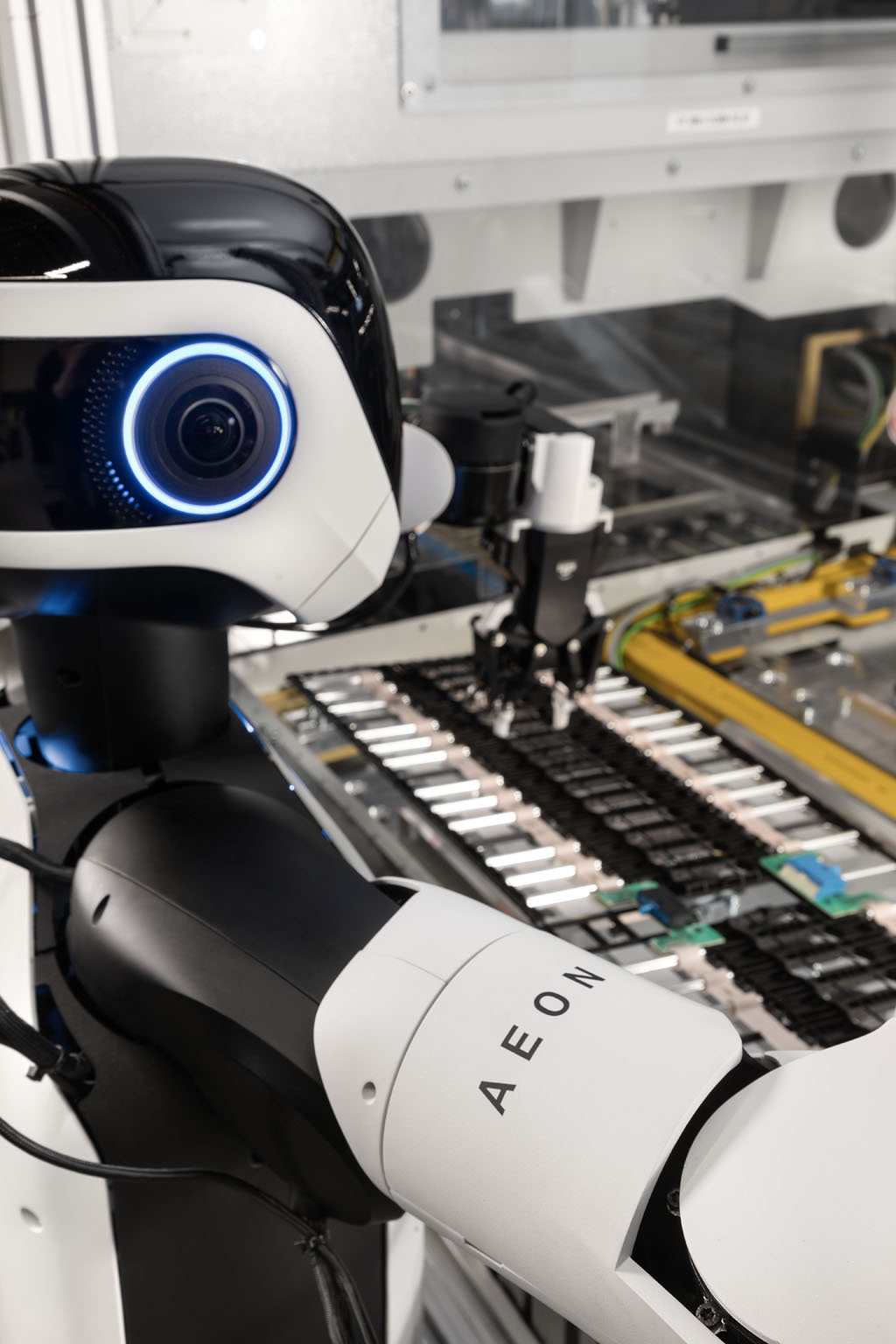
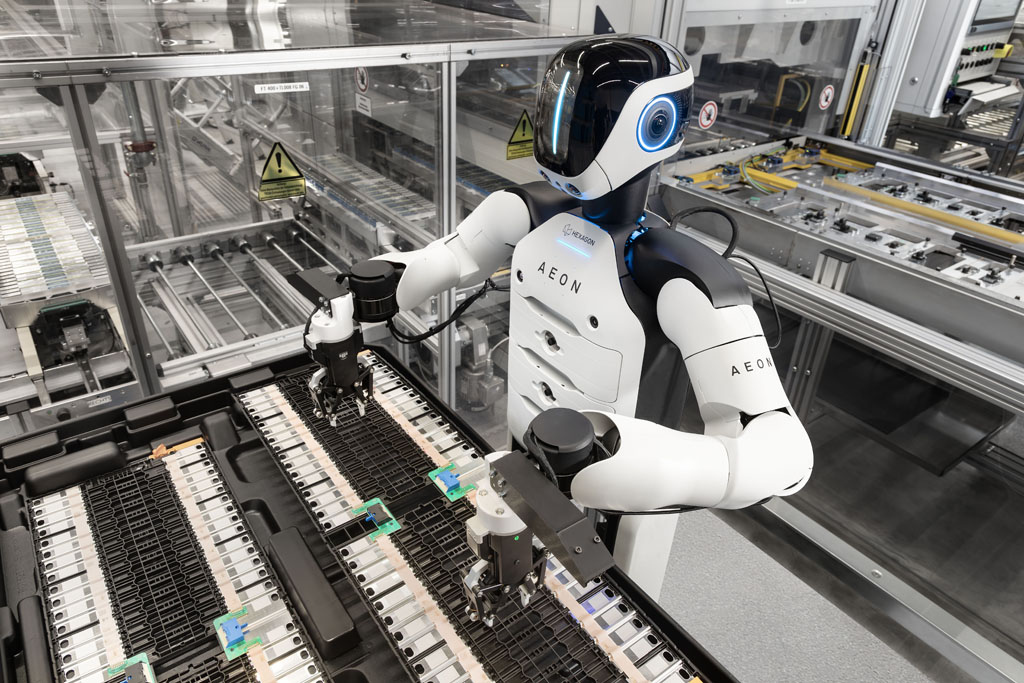
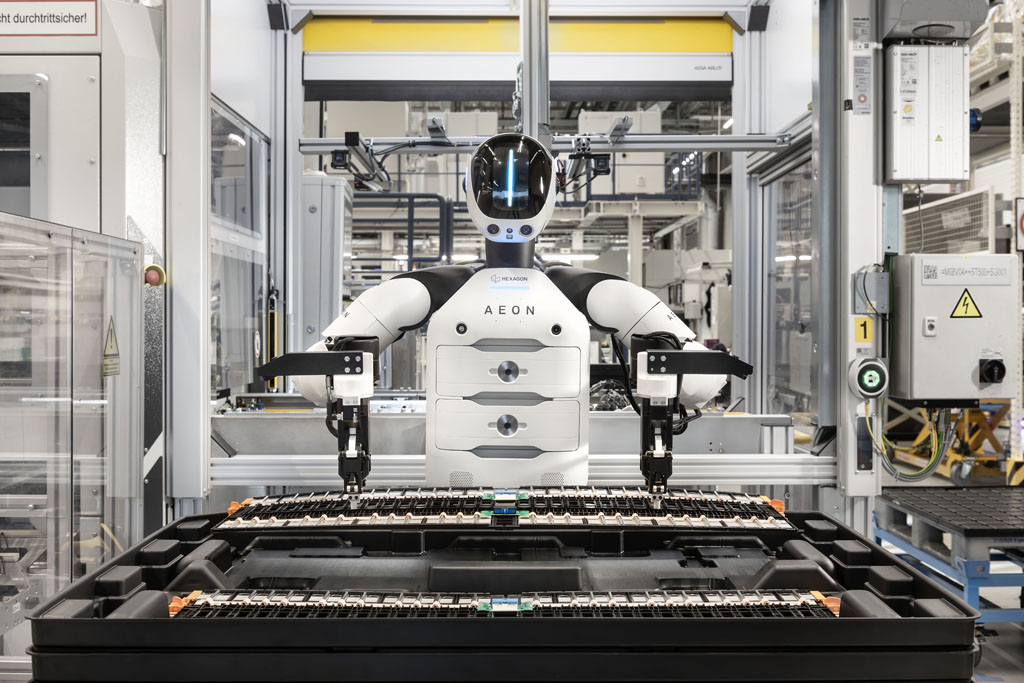
For Europe’s first humanoid pilot, BMW is working with Hexagon, and specifically Hexagon Robotics out of Zürich. Hexagon’s humanoid robot, called AEON, was introduced in June 2025, and BMW says it already went through early evaluation and lab work before a test deployment at Leipzig in December 2025. The next step is another test deployment planned for April 2026, with the full pilot phase targeted for summer 2026. BMW expects the robot to be used for multifunction work, including tasks tied to high-voltage battery assembly and component manufacturing, helped by a human-like form that can take different grippers and scanning tools while moving around on wheels.
BMW is not starting from zero, either. The company says its first pilot deployment of humanoid robots was completed at Plant Spartanburg in the United States in 2025, done in collaboration with Figure AI. BMW describes the results as measurable in a real production environment, noting that the Figure 02 robot supported X3 production by handling the removal and positioning of sheet metal parts for welding. BMW also emphasizes a few lessons learned: bring IT infrastructure, occupational safety, process management, and shop floor logistics in early, and focus on clean integration through standardized interfaces so the robots can coexist with existing automation.
BMW is also careful to present humanoid robots as a complement, not a replacement, for what factories already do well with traditional automation. The company highlights areas where humanoids could shine, like repetitive tasks, ergonomically demanding jobs, or safety-critical work where consistency matters and physical strain is real. The underlying pitch is familiar: relieve employees, improve working conditions, and keep production flexible as vehicles and powertrains continue changing.
Zooming out, it’s hard not to see this as a sign that we’ve crossed into another world with technology. AI and robots are here, they’re being trained in the real world, and they will only get “better” as manufacturers feed them more data and more repetition. Whether that future feels exciting or unsettling probably depends on your perspective, but BMW’s message is clear: the era of humanoid robots moving from lab demos to everyday factory life is no longer a distant concept, it’s showing up on the production line.





More Stories
Mystery Toyota Rally Coupe Spotted Testing Could Hint at a New Celica Return
Toyota fans have been living in a bit of a golden era lately, and the rumor mill says there may...
Why Upgrading to LED Headlights is Essential for Your Vehicle
When it comes to vehicle lighting, switching from traditional halogen bulbs to LED headlight bulb is a game-changer. Lasfit’s LED...
How to Turn That Eyesore in Your Idaho Driveway Into Instant Cash
Photo Credit Idaho property owners often watch their once-reliable vehicles transform into permanent lawn ornaments as the harsh mountain winters...
United Arab Emirates January 2026: Jetour (+63.1%), Mitsubishi (+12.6%) impress in market off -1.8%
This content is for members only. Visit the site and log in/register to read.
Saudi Arabia January 2026: Haval (+147.5%), Isuzu (+51.9%) can’t prevent sinking market (-13.3%)
This content is for members only. Visit the site and log in/register to read.
Best Size-Limited Game Mechanics: Innovative Ideas That Worked
Why Size Limits Create Better Mechanics Size-limited coding contests ask developers to fit a complete game into a tiny file,...