
Poll finds support for rent control, tax cut

Beacon Hill leaders have made it clear they oppose potential ballot questions capping annual rent increases and reducing the state’s income tax, but new poll results show voters support the proposals.
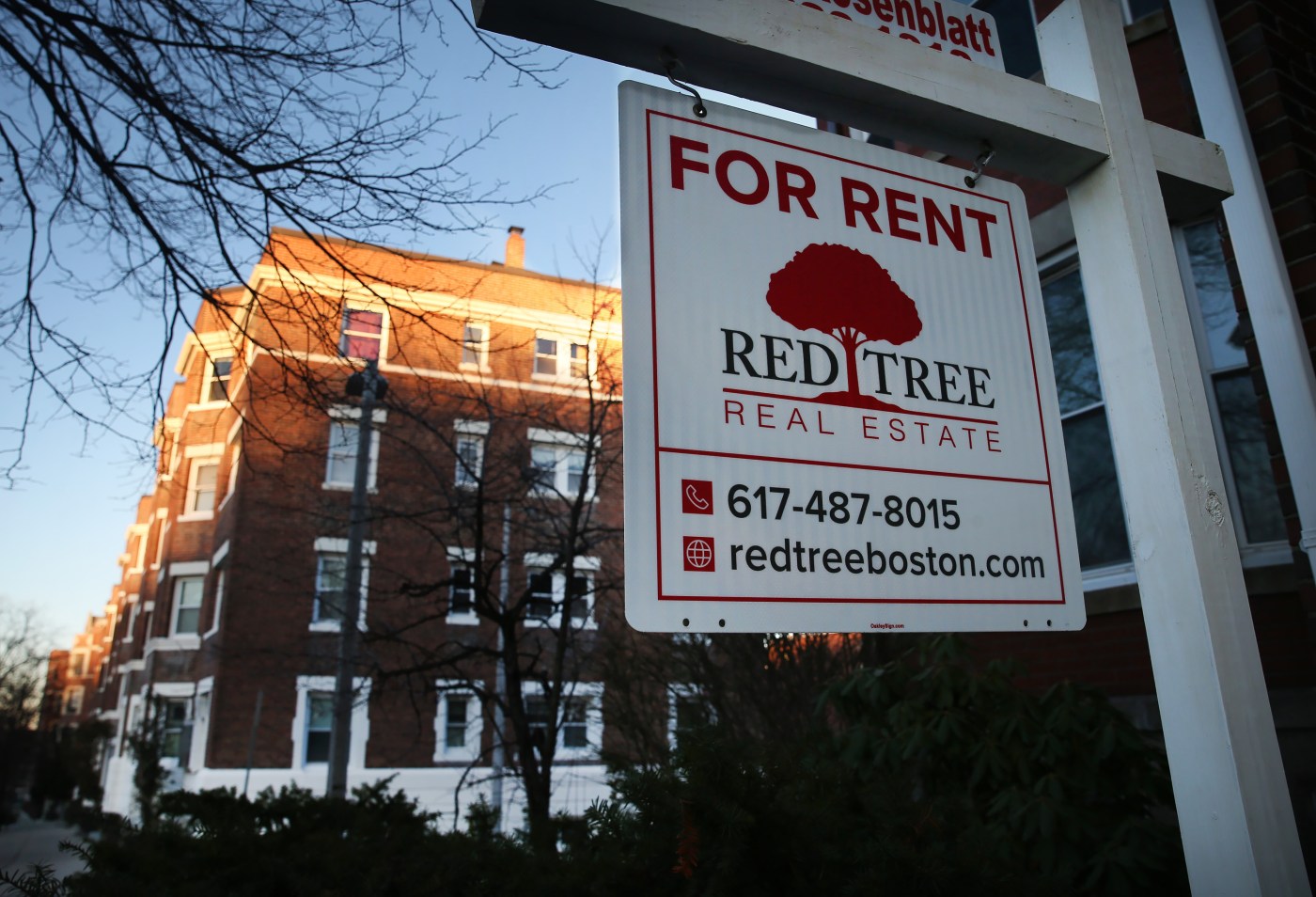
The Bay State Poll conducted by The University of New Hampshire Survey Center and released Tuesday found 56% of respondents either somewhat or strongly support a proposed ballot question that would cap annual rent increases in most rental units to no more than 5% across the state. The poll found 17% of residents were neutral on the topic or not sure and 26% strongly or somewhat opposed the measure.
In December, Gov. Maura Healey said rent control is not going to solve the state’s housing affordability crisis.
“I’m a no, because if you look at the studies — if you look at the studies, you effectively halt production. I will tell you that investors in housing have already pulled out of Massachusetts because they’re concerned about rent control,” Healey said when asked if she’d support the measure during a Dec. 23 appearance on “Boston Public Radio.”
House Speaker Ron Mariano said in September rent control opponents “don’t see it as a solution to the housing crisis” and do not believe its passage will spur housing construction or investments.
Healey is also concerned about a ballot proposal to lower the income tax rate from 5% to 4%, saying it could take $5 billion out of the state budget. Tax policy think tank MassBudget speculated that balancing the state budget with about $5 billion less tax revenue “would require deep cuts to a wide range of public programs and infrastructure investments, such as local aid, higher education, health care, and public safety.”
Tax cut supporters say it addresses affordability problems facing workers and would spark consumer spending.
The poll found 58% somewhat or strongly support the tax cut. About 21% expressed opposition to the proposal with another 21% reporting they were neutral or were not sure.
Pollsters collected survey responses on six of 11 potential 2026 ballot questions. They found the highest level of support (62%) for a proposal providing same-day voter registration. The proposed reform has failed to make it through the Legislature; 21% opposed the measure with 17% saying they were not sure or neutral.
Just 20% of respondents expressed support for a proposed ballot initiative repealing the laws allowing the sale of recreational marijuana, with 63% opposed and 16% not sure or neutral.
Lawmakers face a May 5 deadline to enact initiative petitions. Before the deadline, petitioners and lawmakers could come up with a compromise. If lawmakers don’t address the measures by then, petitioners must collect 12,429 more signatures and file them with the Secretary of State by July 1 to make it onto the Nov. 3 ballot.
The poll was based on survey responses from 670 members of a probability-based web panel of Massachusetts residents, between Feb. 12 and Feb. 16. The margin of the survey’s sampling error is plus or minus 3.8%.
The poll found strong support for a bill that would ban federal immigration agents from entering a variety of spaces, with 71% strongly or somewhat supporting the legislation. Around 1% of respondents were neutral on the proposed legislation, 23% strongly or somewhat opposed to the measure and 5% were unsure.
Poll results show Healey beating all three Republican gubernatorial candidates in one-on-one matchups by at least 25 points. In a contest between Healey and former MBTA administrator Brian Shortsleeve, 58% of respondents say they’d vote for Healey and 28% favored Shortsleeve. Mike Minogue received support from 27% of respondents to Healey’s 56%. And 28% of respondents said they would vote for former Secretary of Housing and Economic development Mike Kennealy with 55% preferring Healey.
Fifty-one percent of respondents approved of Healey’s job performance with 40% disapproving and 8% neither approving or disapproving.
The poll also found that U.S. Sen. Edward Markey leading challenger U.S. Rep. Seth Moulton in the race for Markey’s seat. The results showed 35% of respondents who are likely to vote in a Democratic primary said they would choose Markey and 23% said they would vote for Moulton while 30% of voters were undecided.
Pollsters found cost of living was a top concern among respondents, with 28% citing it as the most important issue facing Massachusetts. Housing was second with 24% of respondents naming it the most pressing problem.
Katie Castellani is a reporter for State House News Service and State Affairs Pro Massachusetts. Reach her at kcastellani@statehousenews.com.


More Stories
Memorial services for Jesse Jackson begin at Chicago headquarters of his civil rights organization
By SOPHIA TAREEN CHICAGO (AP) — Cross-country memorial services for the Rev. Jesse Jackson Sr. are set to begin Thursday...
Memorial services for Jesse Jackson begin at Chicago headquarters of his civil rights organization
By SOPHIA TAREEN CHICAGO (AP) — Cross-country memorial services for the Rev. Jesse Jackson Sr. are set to begin Thursday...
Fuerzas del gobierno sirio y combatientes drusos intercambian reos capturados en choques de verano
Por GHAITH ALSAYED AL-MATUNA, Siria (AP) — Las fuerzas del gobierno sirio y milicianos drusos que controlan zonas de la...
Ecuador anuncia otro incremento de aranceles aduciendo inacción de Colombia en seguridad fronteriza
Associated Press QUITO (AP) — El gobierno de Ecuador anunció el jueves un nuevo aumento de los aranceles para Colombia...
Third victim dies from wounds suffered in Rhode Island ice rink attack, police say
PROVIDENCE, R.I. (AP) — A deadly shooting during a youth hockey game in Rhode Island last week has claimed a...
Cristiano Ronaldo compra el 25% del Almería de la segunda división de España
ALMERÍA, España (AP) — Cristiano Ronaldo adquirió una participación en el club Almería, de la segunda división española, informó el...