
America’s vanishing cattle herd drives beef prices up 15%

While US inflation has cooled from its pandemic-era peak, prices at grocery store meat counters are skyrocketing with no relief in sight.
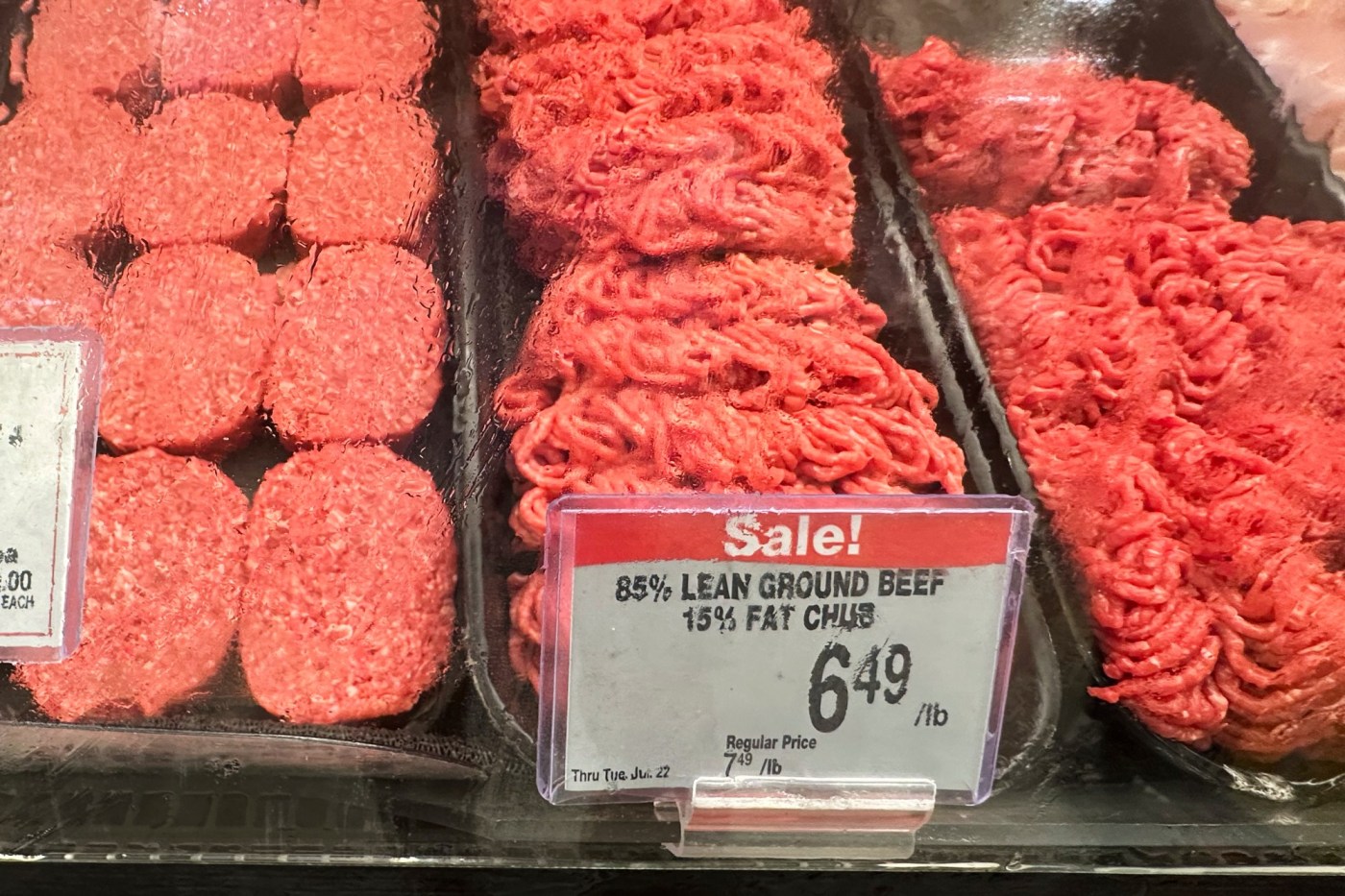
Beef costs have risen faster than most other items in the consumer price index, with the broad beef and veal category up 15% over the past year as of January.
Uncooked ground beef reached a fresh record after soaring by the most since June 2020 in government data released Friday. The gains are a standout from the rest of the consumer grocery basket where things have broadly improved. Chicken prices rose only by 1.1% in the past 12 months, while milk was little changed.
The blame game for what’s behind the beef price surge has pressured the White House to respond. President Donald Trump has vowed to increase competition in beef processing and boosted Argentinian beef import quotas to ease supply.
But it’s not that simple: The nation’s cattle herd has shrunk in recent years to the smallest since the early 1950s because droughts and higher production costs, including elevated interest rates, have made raising the animals more expensive.
While the cattle industry is cyclical, the current contraction has lasted longer than expected because there’s a lot more money to be made selling animals for slaughter while very young rather than keeping them to expand herds.
At current levels, any expansion in the US herd would at the earliest make it to the retail counter in 2028, keeping beef prices elevated for longer, said Don Close, a senior animal protein analyst at Terrain Ag.
The ongoing cattle shortage has been a boon for ranchers, particularly the so-called cow-calf producers at the start of the supply chain who sell young animals to other ranchers. “In my opinion, you should be profitable right now as a cow-calf operation,” said Brandi Buzzard, a rancher in Kansas.But even they see their conditions as precarious. Oklahoma-based Kacie Scherler, a fifth-generation rancher, says she’s being squeezed by an inflationary environment, with costs for equipment, repairs and land rent all soaring in tandem.
“It actually feels extremely fragile,” said Scherler, who with her husband Zach Abney runs a 5,000-acre cow-and-calf enterprise. “So even though cattle are worth more than they have ever been, it costs a lot more to stay in business.”
Meanwhile, the US has halted shipments of live cattle from Mexico after the reemergence of the New World screwworm, a deadly parasite.
Imports from South American countries are slated to benefit consumers, but those supplies go primarily into ground beef and don’t mark a quick fix for the cattle shortages.
While beef burger prices won’t alter the broader trajectory for inflation or the outlook for the Federal Reserve’s monetary policy, they illustrate the remnants of persistent price pressure that have lingered years after households were burned by the worst outbreak of inflation in four decades in the wake of the pandemic. The industry also shows how high borrowing costs exacerbate pressures throughout a supply chain, with consumers eventually picking up the tab.
The sticker shock comes in a pivotal year for Trump, with voters seeing high costs of living as a central issue in Congressional mid-term elections.


More Stories
F1 set to cancel Bahrain and Saudi Arabian Grands Prix amid Middle East conflict
Formula 1 is expected to cancel the Bahrain and Saudi Arabian Grands Prix as the escalating conflict in the Middle...
UK and Ireland strengthen economic partnership as £937m investment set to create 850 jobs
The UK and Ireland have strengthened their economic partnership as leaders gathered in Cork for the second UK-Ireland Summit, where...
UK economy stalls in January as hospitality slowdown drags growth to zero
The UK economy stalled at the start of the year as households cut back on discretionary spending, with restaurants and...
US-Israeli war on Iran wipes billions off Gulf energy revenues – FT
The Middle East escalation has cut off a number of American allies from the vital Strait of Hormuz Oil producers...
Maersk halts operations at Oman port after drone strike widens Iran conflict disruption
Global shipping giant Maersk has suspended operations at the Port of Salalah in Oman after a drone attack struck oil...
Savills agrees $1bn deal to buy Eastdil Secured in major US expansion push
Savills has agreed a deal worth close to $1 billion to acquire US property investment bank Eastdil Secured, marking a...