
Trump Calls for New Nuclear Arms Control Treaty as New START Expires

By Ryan Morgan
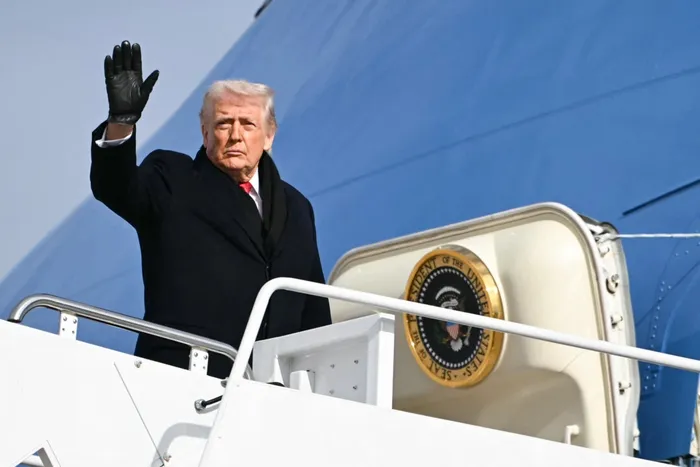
U.S. President Donald Trump called for a new nuclear arms control treaty on Feb. 5, as the last such treaty between the United States and Russia officially expired.
The New Strategic Arms Reduction Treaty (New START) had been in force between the United States and Russia since Feb. 5, 2011. It expired on Feb. 5 after 15 years.
As the existing arms control framework sunset, Trump took to his Truth Social platform to urge for negotiations on a new deal.
“Rather than extend ‘NEW START’ (A badly negotiated deal by the United States that, aside from everything else, is being grossly violated), we should have our Nuclear Experts work on a new, improved, and modernized Treaty that can last long into the future,” Trump wrote.
New START was the last legally binding nuclear arms control treaty in force between Russia and the United States. It required both countries to cap their number of deployed nuclear warheads at 1,550.
Under New START, Russia and the United States also agreed to limit their deployed nuclear-armed missiles and bombers to 700. Both countries also agreed to keep no more than 800 nuclear-capable missile launchers or bombers.
In September, Russian President Vladimir Putin offered to extend New START by one year. By October, Trump had responded, saying that the proposal sounded “like a good idea.”
But by January, Washington and Moscow had signaled little progress in advancing the one-year New START extension.
In an interview with The New York Times, published on Jan. 8, Trump said: “If it expires, it expires. We’ll do a better agreement.”
Speaking to reporters on Feb. 5, Kremlin spokesman Dmitry Peskov expressed regret that New START could not be extended.
“In any case, Russia maintains a responsible and careful approach to the issue of strategic stability in the field of nuclear weapons and will, as always, be guided primarily by its own national interests,” Peskov said in comments shared by the Russian state-run TASS news agency.
As he reiterated his calls for a new nuclear deal on Feb. 5, Trump hailed his efforts to boost the U.S. military.
“The United States is the most powerful Country in the World,” he wrote. “I completely rebuilt its Military in my First Term, including new and many refurbished nuclear weapons. I also added Space Force and now, continue to rebuild our Military at levels never seen before.”
Trump also touted his efforts to settle conflicts between nuclear-armed powers.
“I have stopped Nuclear Wars from breaking out across the World between Pakistan and India, Iran and Israel, and Russia and Ukraine,” he wrote.
In May, Trump helped mediate a cease-fire between Pakistan and India after two weeks of fighting between the two nuclear-armed countries.
After Israeli forces launched attacks on Iran in June, Trump ordered a round of U.S. strikes that targeted three Iranian nuclear facilities. Iran, after giving the United States advance warning to evacuate troops, then launched an ineffectual salvo of missiles at a base in Qatar hosting U.S. forces, after which tensions subsided.
In recent weeks, Trump has pressured Iran to make a deal to constrain its nuclear ambitions. U.S. and Iranian delegations are scheduled to hold talks in Oman on Feb. 6.
U.S., Russian, and Ukrainian delegations have also held talks in the United Arab Emirates, as the fourth anniversary of the Russian invasion of Ukraine approaches.
Evgenia Filimianova contributed to this report.


More Stories
Wall Street Review: Stocks Fall for 5th Week; Dow, Nasdaq Slip Into Correction
By Panos Mourdoukoutas U.S. stocks declined for a fifth consecutive week, marking the longest losing streak since 2022, as higher...
Tiger Woods Involved in Florida Rollover Crash, Arrested on Suspicion of DUI
By Haika Mrema Tiger Woods was involved in a rollover crash Friday afternoon near his home in Jupiter Island, Florida,...
US Company Produces Critical Rare Earth Material Domestically, First in Decades
By Jill McLaughlin Mining company Energy Fuels announced March 26 it had successfully produced its first kilogram of terbium oxide...
Trump Extends Pause on Iranian Energy Strikes to April 6
By Ryan Morgan WASHINGTON—President Donald Trump has decided to delay potential strikes on Iranian energy sites, citing progress in talks...
Trump to Sign Order to Pay TSA Agents
By Jacki Thrapp President Donald Trump plans to sign an order that will pay Transportation Security Administration (TSA) agents who...
The Amazing Digital Circus: Release Date of The Last Episode is Out
If you also like to watch animated series and shows, Good News ahead! In this blog, you will get to...