
Four takeaways from Brad Stevens’ Celtics trade deadline breakdown

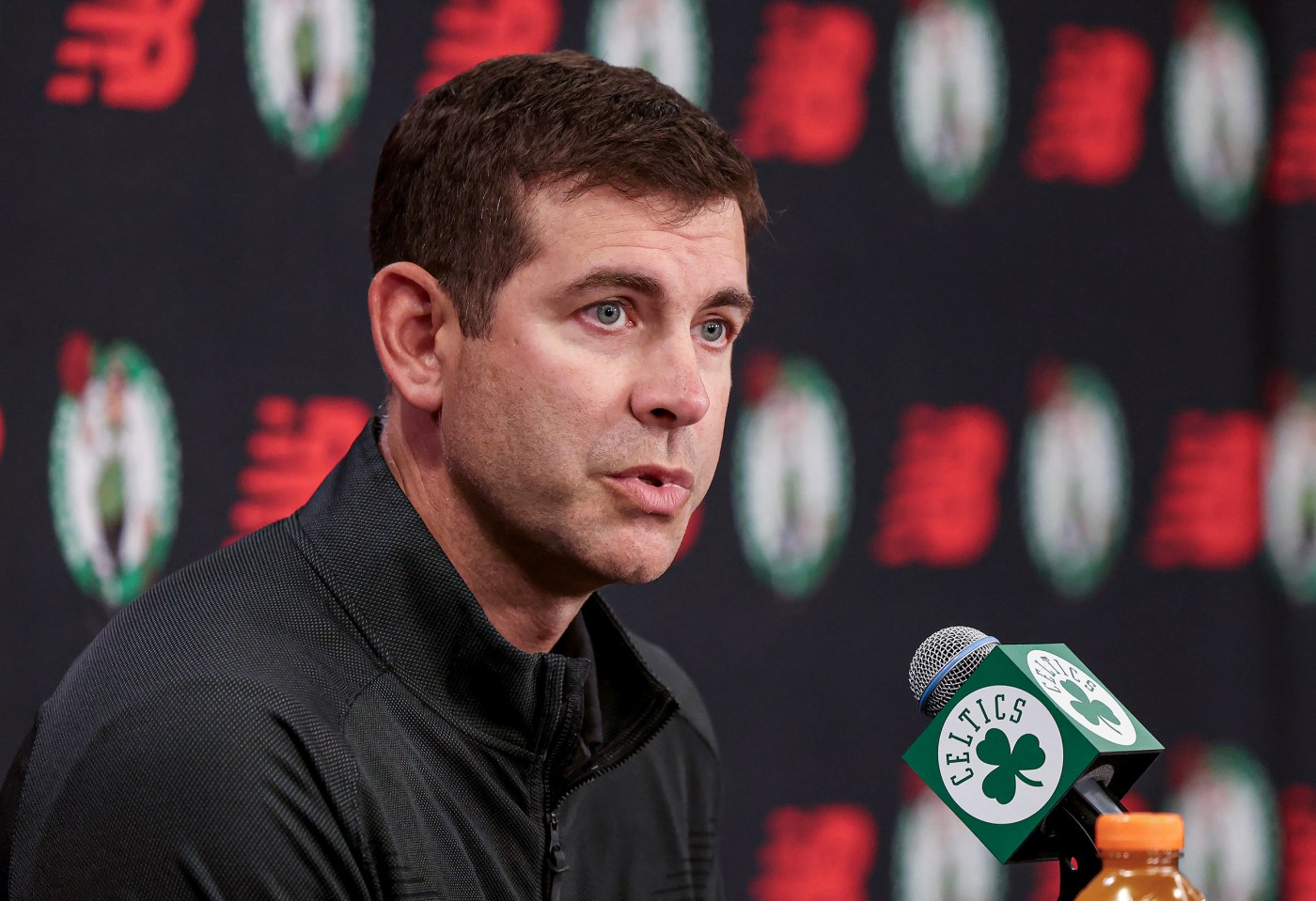
The Celtics pulled off four trades ahead of Thursday’s NBA trade deadline. On Friday, president of basketball operations Brad Stevens explained the rationale behind those deals and how Boston plans to fill its lingering roster holes.
Here are four takeaways from Stevens’ post-deadline news conference:
1. Why the Simons-for-Vucevic trade happened
The Celtics’ biggest deadline deal — sending productive sixth man Anfernee Simons to Chicago to land veteran center Nikola Vucevic — was driven by a desire to balance out their roster.
“I think first and foremost, that was a move done in large part to balance out our positional needs,” Stevens said. “And it’s a hard decision when you have to move a person like Ant who’s been so good, such a great teammate. I thought we had a little more depth and opportunity at the guard to cover that, and if we were able to get a big that had a similar impact from the standpoint of, I guess, filling different statistical needs and gave us a little more insurance in case of any depth issues, I felt like that was the right thing to do.”
Stevens said starting center Neemias Queta and backup Luka Garza, both unproven entering the season, have been “outstanding” for Boston. But the team is excited to add a player with Vucevic’s skill set and track record to that position group.
The 35-year-old is a talented 3-point shooter and should further improve the Celtics’ defensive rebounding, which has been far better of late after a rough start to the season. Though protection is not Vucevic’s strong suit, Stevens likes the size he’ll add to Boston’s frontcourt.
“We weren’t able to get another guy with that kind of size (during the offseason),” Stevens said after referencing the Celtics’ failed attempts last summer to re-sign Al Horford and Luke Kornet. “When Vuc walks into the room, it looks different. He’s big and long and strong, and can be standing next to anybody in this league and not look small, right? Maybe there is a guy, but not very many guys.”
Related Articles
Celtics swing three trades to duck luxury tax on busy NBA deadline day
Celtics reportedly trade away veteran forward in luxury tax move
Celtics trade rumors: Boston deals young wing to Nets
After trade, Celtics fill open roster spot through internal promotion
Celtics trade rumors: Boston trades big man to Jazz ahead of deadline
2. Ducking the luxury tax was not compelled by ownership
After acquiring Vucevic, which dropped Boston below the first apron of the NBA’s luxury tax, Stevens made three additional moves that were motivated by financial flexibility, not immediate on-court improvement.
The Celtics traded Chris Boucher, Josh Minott and Xavier Tillman — the only three non-rotation players on their 15-man roster — to escape the tax entirely and remove some of the roster-building restrictions the team has been subject to in recent years.
Stevens said the Celtics did not anticipate being in a position to duck the tax, but when they realized they could do so without compromising their roster, they capitalized. He insisted there was “no directive” from first-year team owner Bill Chisholm to get beneath the luxury tax line.
“After the Vuc trade, then we saw that as an opportunity,” Stevens said. “But next year, if there’s something we look at and we say we’ve got to take advantage of it right now, then we’re going to try to take advantage of it. Bill’s been really clear with that. The tax, for me, there was an opportunity with two days left before the trade deadline that we didn’t necessarily think would be there.”
3. Plan for the remaining roster spots
The deadline moves left the Celtics with four open roster spots, one of which has been vacant since the start of the season. They filled one by converting two-way rookie center Amari Williams’ contract to a standard NBA deal. Stevens said Williams, who’s seen increased minutes of late behind Queta and Garza, has “a real chance to be a player.”
Per NBA rules, Boston must fill at least two of its remaining three vacancies within the next two weeks. Another internal promotion seems likely; Stevens spoke highly of the team’s other three two-way players (Ron Harper Jr., Max Shulga and John Tonje, who was acquired from Utah in the Boucher trade). He had especially lofty praise for Harper, who made his first NBA start Wednesday against Houston and impressed at both ends in a blowout win.
“We all think Ron is one of the best players in the G League,” Stevens said. “Whenever his opportunity was going to come, he was going to take advantage of it, so I don’t think any of us are surprised at Wednesday night’s game. He’s a stud. He’s a really good player, and he’s been great for us for the better part of two years, somewhere within our system.”
Stevens did confirm the Celtics will “ultimately fill a roster spot with at least one more ball-handler,” since they’re now light on those following Simons’ departures. They could explore the buyout market to add a veteran, as they did last year when they signed Torrey Craig post-deadline, but don’t expect any big-name, starting-caliber pickups.
“I would say that what we will be looking for will not be somebody that we’re going to ask to come in and be a part of the everyday rotation when we’re fully healthy,” Stevens said. “But we also need people that can come in and accept that and be ready to help us move this thing down the hill and forward. Anybody that comes in here will know that, because that will be well communicated. Sometimes that actually eliminates maybe people with bigger reputations or whatever the case may be, but it brings in the right person for your team. So that’s what we’ll look for, and I think we’ll evaluate in-house, as we always do.”
The Celtics also must time and structure their signings carefully to avoid breaching the tax line. They currently sit less than $1 million under it.
4. The latest on Tatum
The decision to trade Simons, who was one of Boston’s best pure scorers, raised questions about whether Jayson Tatum’s return from Achilles surgery was imminent. That is not the case, according to Stevens, who said the superstar wing “still has a ways to go” in his recovery.
“I would say (Tatum’s potential return) had very little impact on that singular decision,” Stevens said, referring to the trade for Vucevic. “Just because at the end of the day, if you kind of look at who you have to go through, the paths you might have to take, you just can’t get worn down physically. And we were going to be much smaller. And now, we at least have big options.
“Obviously, any team with Jayson Tatum’s going to be better, so if that happens, that happens. And if it doesn’t, it doesn’t. But we just thought that redistributing our positional needs was probably the most important thing. You hope that that doesn’t necessarily cost you a person of Anfernee’s caliber, both as a person and a player. But obviously to get a guy that’s as accomplished as Vuc, you have to give something.”
Tatum recently acknowledged that a midseason comeback could cause “challenges” for a Celtics team that’s excelled without him, and he reportedly has been “reevaluating” whether he wants to return or sit out until the fall. Stevens was asked whether the team has an internal deadline for that decision.
“When we feel 100%, it’ll be a group getting together and talking,” he said. “I’m not trying to — I think our medical people are really good. I think his doctors are really good. So we’re going to listen to them. He’s listening to them. I think (trainer) Nick (Sang) and him have had an amazing work ethic throughout this whole recovery. When it’s right, then we’ll all sit down and talk about it.
“There’s still no force from us. There’s no pressure from us. But there’s also not going to be any of us saying, ‘Well, why doesn’t he just take another week?’ When he’s ready, he’s ready.”
More Stories
The consumer-friendly Energy Star program survived Trump. What about other efficiency efforts?
By ALEXA ST. JOHN Energy Star, the program that helps guide consumers to more energy-efficient appliances and electronics, has survived...
Karnišovas inicia reconstrucción de Bulls con varios intercambios al cierre del mercado
Por ANDREW SELIGMAN CHICAGO (AP) — Arturas Karnisovas finalmente decidió que había visto suficiente. El principal ejecutivo de baloncesto de...
Mangione se opone a juicios consecutivos por asesinato del CEO de UnitedHealthcare
Por MICHAEL R. SISAK NUEA YORK (AP) — Luigi Mangione se pronunció el viernes en el tribunal contra la perspectiva...
Chris Pratt and Jon Bon Jovi to introduce teams at Super Bowl LX
The Seattle Seahawks and the New England Patriots will get star-studded introductions before hitting the field at Levi’s Stadium to...
Super Bowl history lesson: Our Top 5 games, teams, upsets and much more
The Super Bowl turns 60 on Sunday. What started as the AFL-NFL World Championship Game in 1967 and officially became...
Actor Michael Keaton to be honored as Man of the Year by Harvard’s Hasty Pudding theater group
By MICHAEL CASEY BOSTON (AP) — Actor Michael Keaton is set to be honored Friday as the 2026 Man of...