
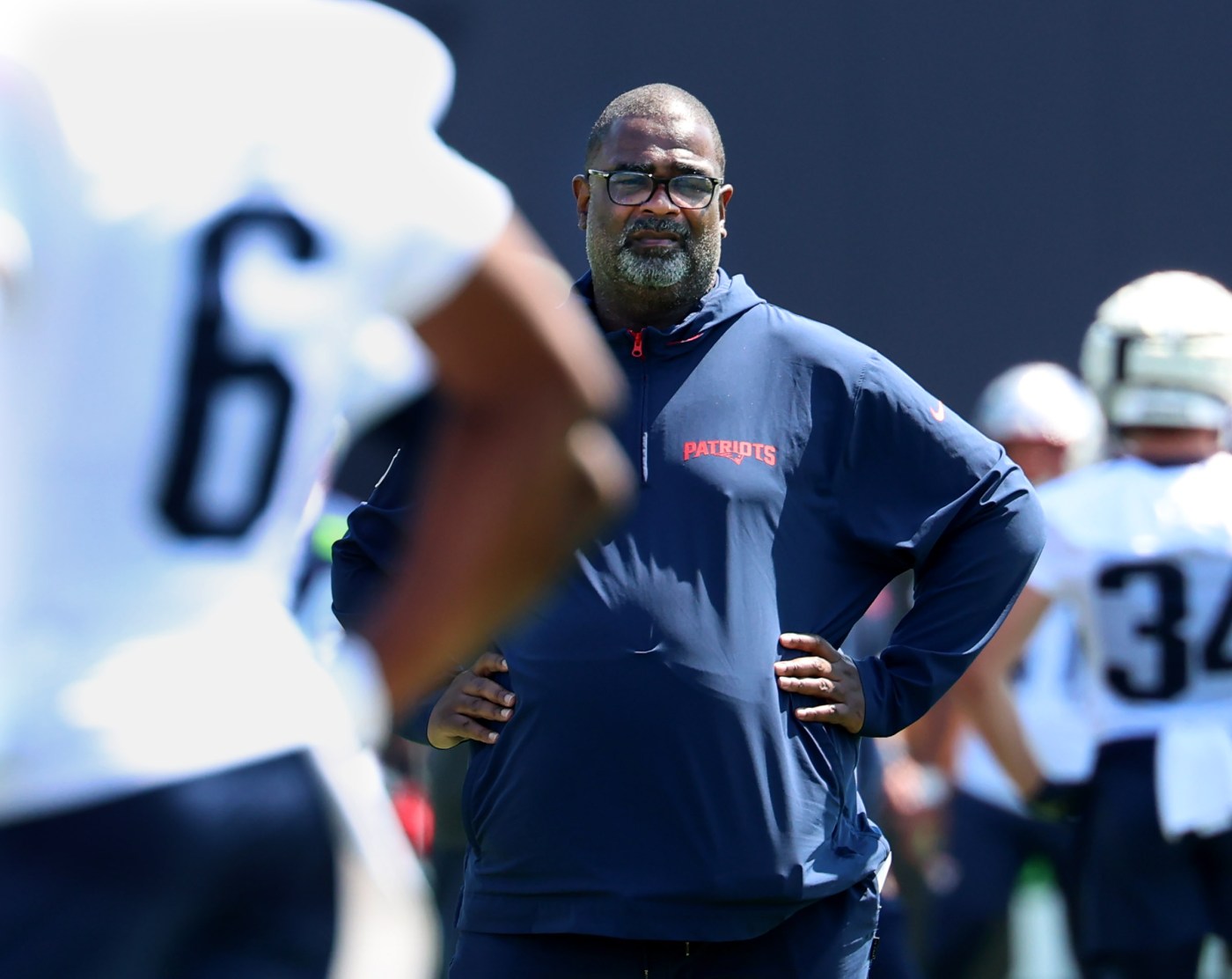
Patriots DC Terrell Williams is saving lives with prostate cancer win: Doctors

Patriots defensive coordinator Terrell Williams is in Santa Clara, soaking in Super Bowl week, after winning his biggest battle as prostate cancer experts say his perseverance will help save lives.
Williams, 51, traveled to the Bay Area with the Patriots, who are set to take on the Seahawks in Super Bowl LX on Sunday, after he learned during the team’s playoff run that he beat prostate cancer.
Dr. Anthony V. D’Amico, who oversees the prostate cancer group for Mass General Brigham, says he finds Williams’ story “very inspiring.”
The defensive coordinator, who has been away from the team for most of the season, received a clean bill of health in January after a four-month battle with prostate cancer, which started with his diagnosis on Sept. 11.
“I attribute it to the circles in which he walks,” D’Amico told the Herald about Williams being cancer-free. “He’s around professional athletes. He was probably similar in his own time when he was a younger man. That gives you a mindset of ‘can do,’ and the ‘can do’ mindset is what you need when you’re fighting cancer.”
“What it does is it helps others and encourages others to feel the same,” the doctor added. “You work with the doctors and medical team to be realistic about what’s going on, but a positive attitude goes a long way.”
Doctors advise men of color and men who have a family history of prostate cancer, the two populations most at risk of diagnosis, to be screened annually, earlier than the average of 50, between the ages of 40 and 45.
“About one in eight men will be diagnosed with prostate cancer in their lifetime,” Atish Choudhury, a medical oncologist at Dana-Farber Cancer Institute, told the Herald, “And for African American men who face a higher risk, that number is closer to one in six.
“The good news,” Choudhury added, “is that most men who are diagnosed with prostate cancer do not die of the disease, especially when it is found early.”
Five rounds of chemotherapy treatments at Mass General Hospital and a month-long regimen of medications eliminated all cancer from his body after it was discovered during an urgent care visit for flu-like symptoms on Sept. 8.
Williams originally sought medical attention the day after the Patriots lost their season opener to Las Vegas, as the coach reported nausea and flu-like symptoms had persisted from the night before, when he was up for hours vomiting at home.
Williams sat with the possibility of lymphoma for three days until his biopsy results came in three days later, revealing an aggressive form of prostate cancer. Doctors reported that the cancer threatened his life, though his recovery would depend on how his body responded to the treatment plan.
During his recovery, Williams frequently visited team headquarters, sitting in on meetings and staying in touch with players, who have told the Herald that they found their coach an enduring inspiration this season.
While visiting the team, Williams often walked around with a smile, giving gifts to defenders who recorded takeaways in New England’s last game.
Studies have shown something prostate cancer experts say is “very interesting”: People who have cancer and include exercise in their treatment plan typically fare better than those who do not, D’Amico told the Herald.
“You have a higher chance of cure, which is really fascinating,” the doctor said. “We think … that exercise improves people’s outlook, makes them more positive, makes them more able to tolerate treatment. … Someone like the coach who just went through this really arduous treatment, he must have that mentality, too.”
Speaking with the Herald in an exclusive interview last week, Williams offered a message for those battling cancer: “Don’t worry about the things that you can’t control, because you can’t control what might happen a month from now. You can’t control what might happen tomorrow. Just take it truly day by day, and accept support.”
William Dahut, chief scientific officer for the American Cancer Society, said prostate cancer is one of the most common cancer diagnoses in men, and many do “quite well” with treatment. But over 36,000 die a year, making the diagnosis still serious, he added.
The Massachusetts Prostate Cancer Coalition educates, connects, and supports individuals who are at-risk, diagnosed, and treated for prostate cancer. The group congratulated Williams for winning his battle.
“It highlights some of the advances in prostate cancer treatment in recent years,” MPCC board chairman Dr. Jacques Carter told the Herald. He highlighted how those improvements are mostly in the areas of “newer chemotherapeutic agents, anti-androgens such as enzalutamide, and some targeted therapies.”
D’Amico is emphasizing the importance of screenings and early detection. He usually sees an uptick in people wanting to be tested for prostate cancer after stories like Williams’ become public.
“I’m sure this will also do the same thing in this area,” the doctor said, “that it really raises awareness of how prevention and early detection can save a life, and a good attitude gets you through when you need to.”
Dahut agrees: “That is definitely the case because all of a sudden, you think about it, or your partner tells you to go get screened because they heard about it.”


More Stories
Vance llega a Milán para los JJOO de Invierno antes de viajar a Armenia y Azerbaiyán
Por MICHELLE L. PRICE MILÁN (AP) — El vicepresidente de Estados Unidos, JD Vance, aterrizó el jueves con su familia...
Dining Diary: Inexpensive eats, and a pop-up that could become a permanent restaurant
This week’s dining adventures include a mish-mash of places. I’m still doing my best to support local immigrant-owned restaurants, but...
Primer ministro de Reino Unido pide disculpas a víctimas de Epstein por nombrar a Peter Mandelson embajador en EEUU
LONDRES (AP) — Primer ministro de Reino Unido pide disculpas a víctimas de Epstein por nombrar a Peter Mandelson embajador...
Dos muertos en choque de helicóptero de cuerpo estatal que respondía a un tiroteo en Arizona
Associated Press FLAGSTAFF, Arizona, EE.UU. (AP) — Un helicóptero del Departamento de Seguridad Pública de Arizona movilizado para asistir a...
Weeknight dishes: A quick stew with slow weekend vibes
We were snowed in over the weekend, like millions of others, and cooking anything quickly was very far from my...
Seahawks edge rushers evaluate Patriots rookie Will Campbell ahead of Super Bowl
SAN JOSE — Rookie left tackle Will Campbell’s gauntlet of a postseason doesn’t get any easier in Super Bowl LX...