
Farley: Public safety and privacy can co-exist

For almost 15 years, I had the privilege of leading the Massachusetts State Police Violent Fugitive Apprehension Section. My job was simple in theory and complex in reality: find dangerous people who did not want to be found. Murder suspects. Kidnappers. Violent offenders on the run. The kinds of cases where every hour — sometimes every minute — can mean the difference between life and death.
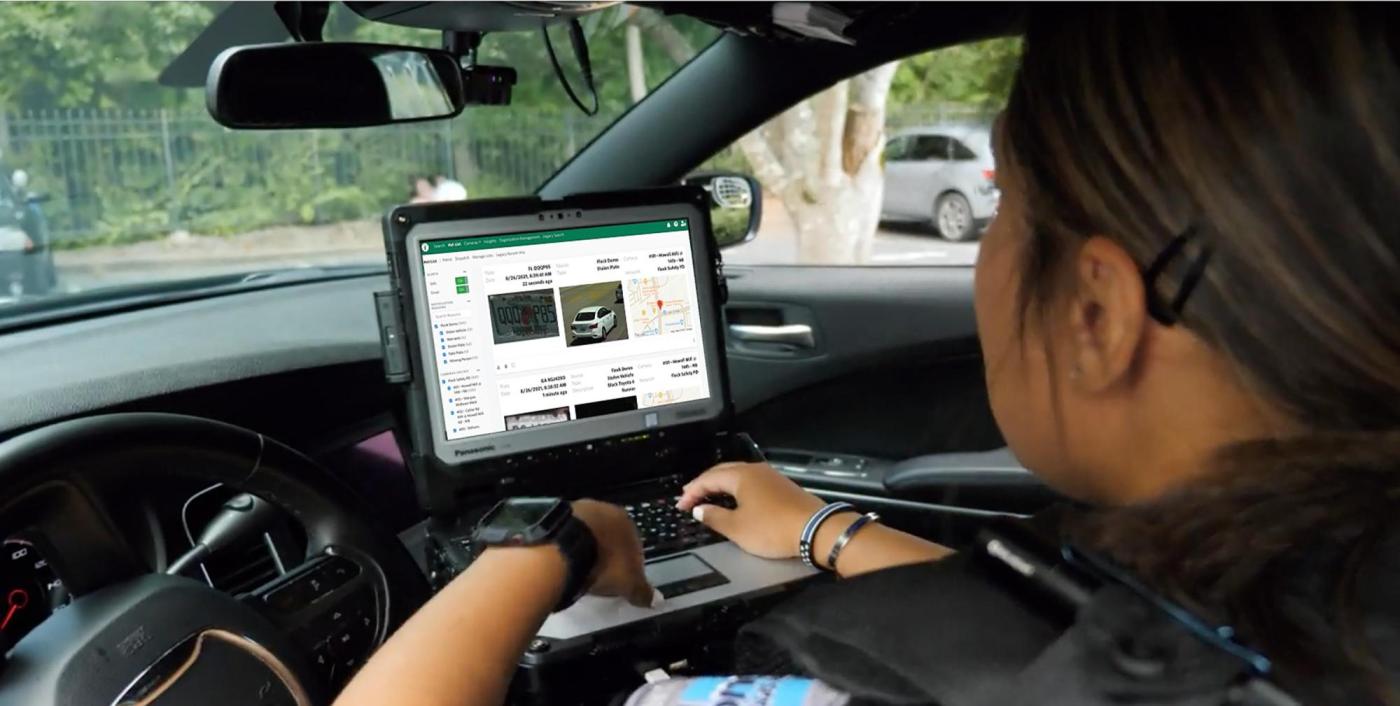
During my career, technology changed policing in profound ways. One of the most effective tools we used was automated license plate reader technology, as was recently used to track down the alleged Brown University gunman. I’ve seen firsthand how this tool helps law enforcement protect the public — quickly, responsibly, and under strict oversight.
Let me be clear about something: this is not about surveillance for the sake of surveillance. It’s about solving serious crimes and finding people who pose real threats to our communities.
When you’re tracking a fugitive who has already shown they are willing to hurt someone, speed matters. Before tools like this, investigators relied heavily on tips, hours of surveillance, lengthy interviews, and slow manual processes. While those techniques are still utilized, today, when a vehicle connected to a violent crime enters a community with camera coverage, officers can receive real-time information that helps them act quickly and safely.
Working with our local law enforcement partners, we used this kind of technology multiple times during Amber Alerts. When a child is abducted, time is everything. Every lead matters. Being able to identify where a suspect vehicle was seen — sometimes within minutes — is essential so that law enforcement can locate that vehicle as quickly as possible and bring the child home safely. These are not hypothetical scenarios. These are real lives, real families, real outcomes.
Another important point that often gets overlooked: this technology is not a free-for-all.
There are strict controls and clear policies governing how it is used. Access is not unlimited. Officers must be trained. They need secure login credentials. In many departments, a supervisor’s authorization is required before searches can be conducted. Systems are password-protected and activity is logged, creating accountability trails. If someone misuses the system, there are consequences. That’s how professional policing works.
In my experience, the officers using this technology understand the responsibility that comes with it. It is an essential tool — one that has to be used properly, documented carefully, and justified by legitimate law enforcement needs.
There’s also a practical reality communities should consider: this technology is both cost-effective and time-effective. Police departments everywhere are stretched thin. Tools that help officers work more efficiently allow resources to be deployed more effectively.. They allow departments to focus on what matters most — preventing harm and protecting the public.
Some worry that using technology like this means sacrificing privacy. I understand that concern and believe we should always ask hard questions about how these tools are deployed in the community. But we should also look at the safeguards, the oversight, and the purpose. This is not about tracking ordinary people going about their daily lives. It is about identifying vehicles connected to crimes and serious threats.
Communities that choose to install these systems are not choosing between safety and freedom. With the right policies, training, and accountability, they can have both.
From where I stood — leading teams trying to apprehend the most dangerous and violent offenders— tools like Flock Safety license plate readers made a real difference. They helped us find people faster. They helped us bring victims home. And yes, they helped save lives.
That’s not theory. That’s experience.
Michael Farley is a retired major in the Massachusetts State Police.
E-ZPass readers and license plate-scanning cameras are seen in New York city last year. (Photo by Michael M. Santiago/Getty Images)


More Stories
Melania Trump will preside over a UN Security Council meeting in a first for a first lady
By EDITH M. LEDERER UNITED NATIONS (AP) — U.S. first lady Melania Trump will preside over a U.N. Security Council...
Hallan 171 cuerpos en fosas comunes en la República Democrática del Congo, dice funcionario
Por JEAN-YVES KAMALE y MARK BANCHEREAU KINSHASA, República Democrática del Congo (AP) — Las autoridades y un grupo de la...
Warner Bros. Discovery considera superior la oferta de compra de Paramount que acuerdo con Netflix
Por WYATTE GRANTHAM-PHILIPS NUEVA YORK (AP) — Warner Bros. Discovery ha determinado que la más reciente oferta de adquisición por...
Bruins notebook: Charlie Coyle returns home
The consummate local-boy-makes-good, Charlie Coyle was a fan favorite in his six-plus years in Bruins. In his return to the...
Source: Patriots rated bottom-10 franchise by 2026 NFLPA report card
The grades are in for the Patriots. Once again, they aren’t pretty. The Patriots ranked 26th out of 32 franchises,...
Samuel Basallo, receptor domimicano de Orioles, sale de juego tras jugada en el plato
Associated Press SARASOTA, Florida, EE.UU. (AP) — El receptor dominicano de los Orioles de Baltimore, Samuel Basallo, abandonó el juego...