
Musk’s SpaceX Acquires xAI to ‘Accelerate Humanity’s Future’

By Troy Myers
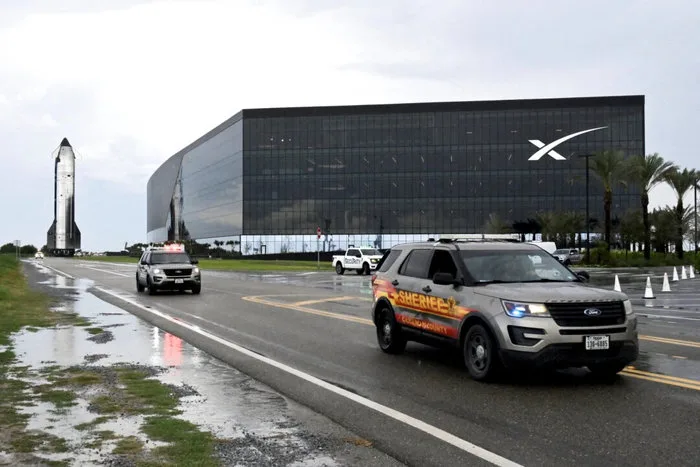
Two of entrepreneur Elon Musk’s most pioneering companies, SpaceX and xAI, merged Monday with a combined goal of launching a “constellation of a million satellites” to operate as orbital data centers to power artificial intelligence (AI) innovations back on Earth.
SpaceX acquired xAI to accelerate humanity’s future, according to a news release, by developing the most ambitious, vertically integrated innovation engine on and off Earth, with AI, rockets, space-based internet, direct-to-mobile device communications, and Musk’s social media platform X.
“This marks not just the next chapter but the next book in SpaceX and xAI’s mission: scaling to make a sentient sun to understand the Universe and extend the light of consciousness to the stars!” Musk said in the SpaceX news release.
Current advances in AI are largely dependent on building data centers, which need immense amounts of power and cooling. Global electricity demand for AI innovations cannot be met with earthly solutions, Musk said, especially in the near future without placing hardships on communities and the environment.
The SpaceX, xAI, X, and Tesla owner said space-based AI is needed to help spur progress.
“The only logical solution therefore is to transport these resource-intensive efforts to a location with vast power and space. I mean, space is called ‘space’ for a reason,” Musk said, accompanied by a laughing emoji in the news release.
The “constellation of a million satellites” that Musk plans to launch will use solar power with little operating or maintenance costs, he said, adding, “It’s always sunny in space!”
The plan would transform humanity’s capabilities while getting one step closer to fully harnessing the power of the sun, according to the news release. Meanwhile, the millions of satellites would also support AI-driven applications for billions of people on the planet and ensure humanity’s multi-planetary future.
Terrestrial data centers are massive undertakings requiring large amounts of land, power, and cooling. Space-based data centers will require significantly more effort, Musk explained.
There’s never been a flying vehicle in history capable of launching and transporting the megatons of material needed to create space-based data centers or permanent bases on the moon or Mars, Musk noted.
This year, SpaceX’s Starship will begin transporting more powerful V3 Starlink satellites into orbit, adding 20 times the capacity to the constellation of satellites compared to current Falcon launches of the V2 Starlink. In addition, Starship will be launching the newest direct-to-mobile satellites to deliver full cellular coverage anywhere on the planet, the news release said.
The requirement to launch these satellites will facilitate continual improvement, Musk said.
“The sheer number of satellites that will be needed for space-based data centers will push Starship to even greater heights. With launches every hour carrying 200 tons per flight, Starship will deliver millions of tons to orbit and beyond per year,” Musk said in the news release.
He said that launching a million tons per year of satellites generating 100 kilowatt of compute power per ton would add 100 gigawatts of AI compute capacity annually. There is a path to launching 1 terawatt from Earth per year, Musk said.
He estimated that within two to three years, the lowest cost way to generate AI compute will be in space.
“The capabilities we unlock by making space-based data centers a reality will fund and enable self-growing bases on the Moon, an entire civilization on Mars and ultimately expansion to the Universe,” Musk said.


More Stories
Kevin Warsh Wants an Overhaul of the Fed—Here’s What That Could Look Like
By Andrew Moran Former Federal Reserve Governor Kevin Warsh has been nominated by President Donald Trump to be the new...
US Forces Shoot Down Iranian Drone Over Arabian Sea
By Ryan Morgan A U.S. fighter jet shot down an Iranian drone as it approached a U.S. aircraft carrier in...
Ex-Husband of Jill Biden Arrested and Charged With Murder
By Zachary Stieber The ex-husband of former First Lady Jill Biden has been arrested in Delaware for allegedly murdering his...
Groundhog Day 2026: Punxsutawney Phil Spots His Shadow, and You Know What That Means
By Elma Aksalic Punxsutawney Phil, the Pennsylvania groundhog and central figure to the Feb. 2 tradition, delivered a disappointing weather...
Trump Launches $12 Billion ‘Project Vault’ Critical Minerals Stockpile
By Catherine Yang President Donald Trump announced on Feb. 2 a new strategic private sector critical minerals stockpile. “Project Vault”...
Gabbard Defends Presence at Fulton County Election Warrant Execution
By Zachary Stieber National Intelligence Director Tulsi Gabbard on Feb. 2 defended her presence at a Fulton County elections office...