
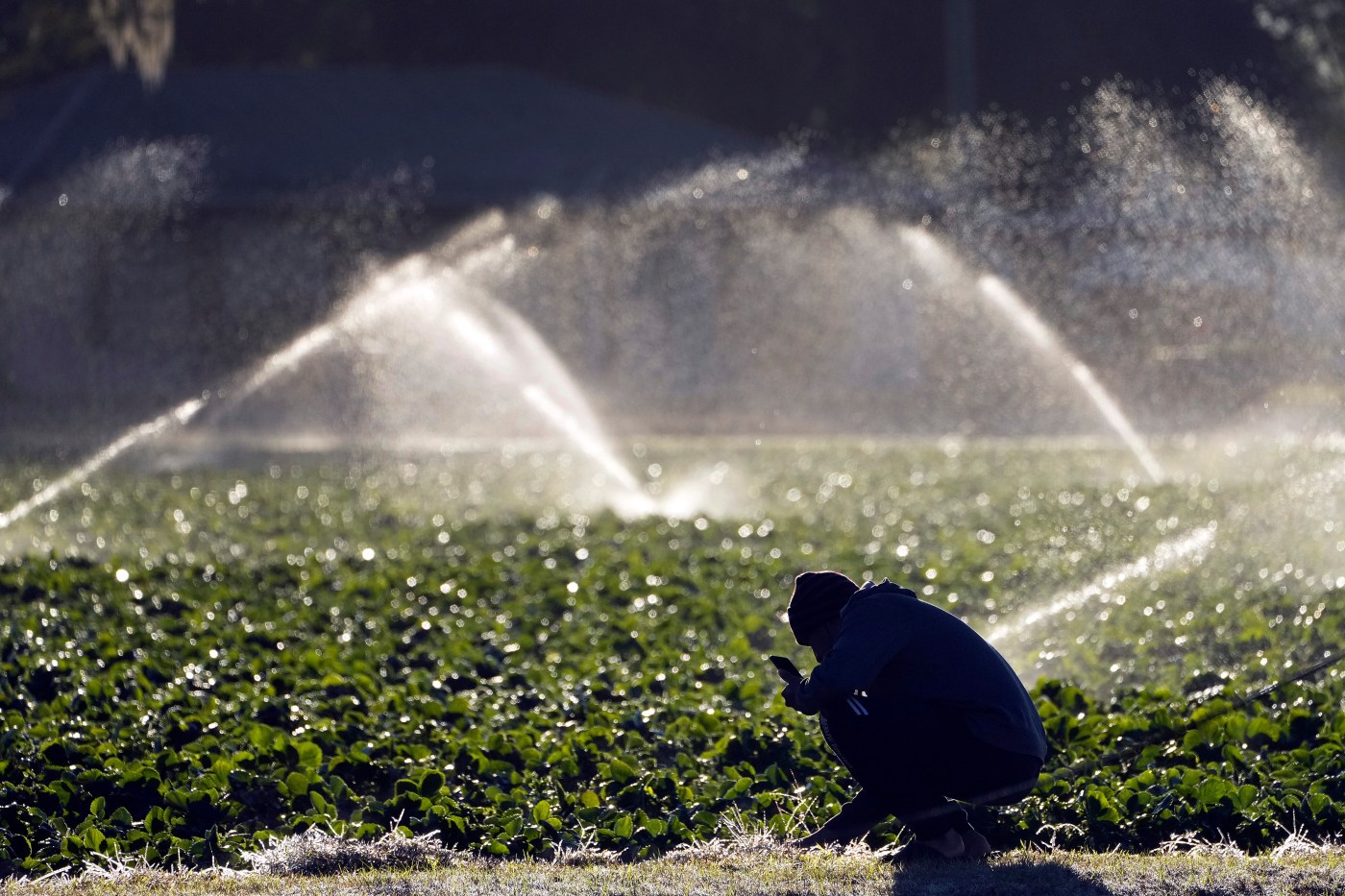
Landrith: FL Farm Bill leads way for agricultural security

States are increasingly becoming laboratories for President Trump’s “America First” agenda to unleash prosperity and break regulatory shackles. Nowhere is that more evident than in Florida, which is quickly emerging as a national model for how states can align public safety, immigration enforcement, consumer protection and economic policy with a broader vision of national strength.
Florida is also taking the lead in Trump’s “agriculture first” policies that treat food security as national security.
In early January, Florida Agriculture Commissioner Wilton Simpson linked border enforcement to agricultural protection, noting that specially trained local law enforcement officers working alongside federal immigration authorities helped apprehend more than 10,000 undocumented immigrants and emphasized the integration of border security and agricultural safety.
The state is one of the nation’s farming powerhouses, with agriculture as the state’s second-largest industry, generating more than $180 billion in revenue and supporting 2.5 million jobs in the state.
This domestic food supply produces food for 179 million Americans relying on citrus, corn, lettuce, cabbage, green beans, celery, and other vegetables that keep American stomachs full for more than seven months of the year.
Florida agriculture feeds our families when few other states can. This makes its crops a vital strategic asset; if removed, they would deplete the U.S. food supply during the winter months and increase the U.S. reliance on foreign countries for food.
All of this must be protected, and Simpson’s Florida Farm Bill was written not just for Florida’s interests but with the national America First agenda in mind. The legislation protects the state’s food supply, strengthens its economy, and puts food security on equal footing with national security.
The Florida Farm Bill expands protections across all agricultural commodities produced in the state, as well as perishable and non-perishable products. It also modernizes these protections to combat damaging social media campaigns that can quickly erode consumer and purchaser trust by either originating or amplifying false claims.
The bill also shows other states how to support their agricultural industry.
It would expand land-conservation partnerships between the state government and landowners, helping farmers retain more acreage for agricultural production and protect it from other forms of land development. It would also free farmers from local regulations that prevent them from using gas-powered tools, allowing them to produce food more productively and cost-efficiently.
Although this bill was written for Florida agriculture, it will have a strong national effect if replicated in other farming states.
Food independence is national independence. A country that cannot defend its farmers cannot secure its economy or sovereignty.
George Landrith is the president of Frontiers of Freedom, a public policy think tank, and the author of “Let Freedom Ring… Again: Can Self-Evident Truths Save America from Further Decline?”/InsideSources

More Stories
Freedom Holding Corp.: Moody’s Rates Freedom Bank on Stability, Growth and Ecosystem Model
Moody’s assignment of a Ba3 rating with a stable outlook to Freedom Bank Kazakhstan serves not only as an assessment...
Why SME Growth stalls when Managers are promoted but don’t have support
It’s common for SMEs to experience a structural shift due to growth before their brand identity changes. Rather than an...
From Cafés to Kitchens: Why Are New Coffee Rituals Moving into Our Homes?
Gone are the days when, to enjoy a creamy cappuccino, you had to pick out an outfit, smooth out your...
Fuel price crisis risks pushing small firms to brink as pressure mounts on chancellor
The sharp rise in fuel prices triggered by the global energy shock has reached what campaigners describe as a “critical...
British Business Bank backs Dexory with £8.5m to scale AI warehouse tech
The British Business Bank has invested £8.5 million into Dexory, as part of a wider Series C funding round aimed...
Iran war drives up costs and disrupts supply for London’s food markets
The impact of the Middle East conflict is now being felt far beyond energy markets, with London’s food supply chain...