
Gaskin: Community needs White Stadium traffic study now

After more than two years of proposals, revisions, public meetings and technical memos, one thing is clear: Boston has more than enough information to justify an independent, professionally conducted transportation impact study for the White Stadium redevelopment — and every reason to do it now, while the city still has time to adjust course.
Transportation will determine whether White Stadium functions as a community asset or becomes a recurring source of congestion, neighborhood disruption, and political backlash. This is not a secondary issue or a technical footnote; it is the central operational question facing the project. City officials have described transportation planning as “a work in progress,” but that phrase is not a planning standard — it is an acknowledgment that key assumptions have not yet been validated.
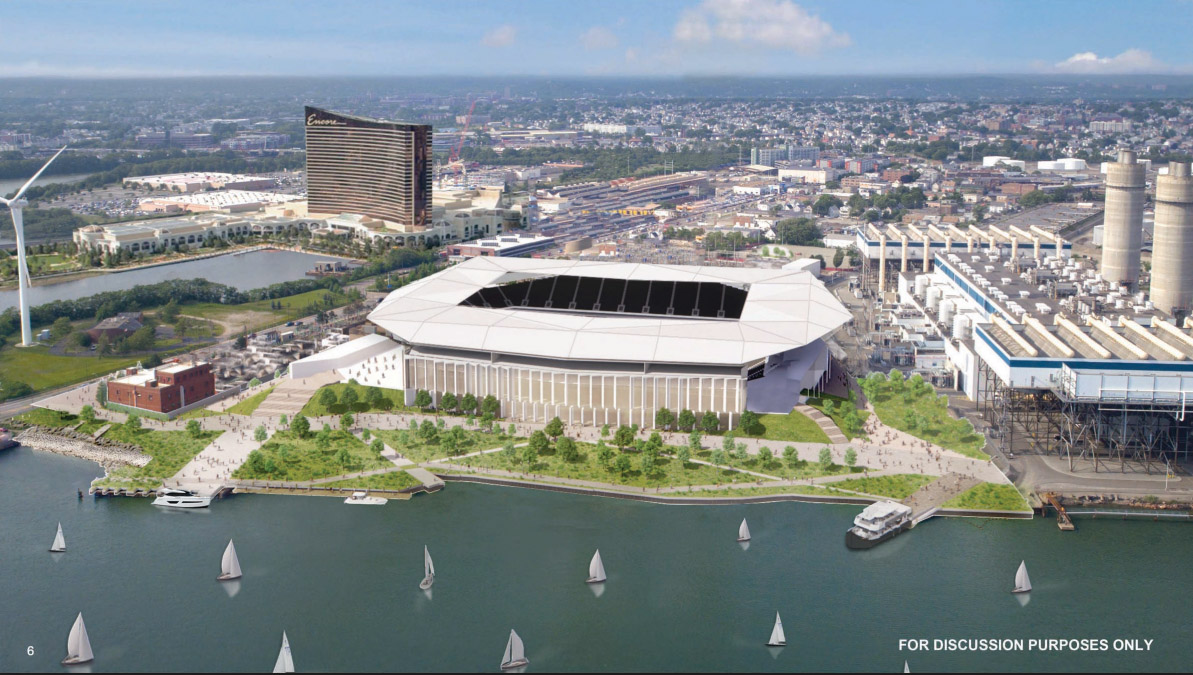
The city’s most recent transportation update asserts that an 11,000-seat stadium in the middle of Franklin Park can operate with minimal traffic impacts by relying heavily on shuttle buses, remote parking, and unusually high transit use. Yet those assumptions have not been tested through a new Traffic Impact and Access Study — the standard tool for evaluating projects of this scale — nor through a consistent analytical framework.
Instead, the public record reflects shifting trip-generation estimates, incomplete modeling of surrounding corridors such as Blue Hill Avenue, Columbia Road, Walnut Avenue, the Arborway, and Morton Street, and no disclosed locations for the satellite parking lots essential to the plan. Traffic counts were taken during off-peak periods that do not reflect summer park use or event conditions, and core operational assumptions — shuttle volumes, curb capacity, pedestrian crossings, and rideshare demand — remain unvalidated by independent analysis.
None of this means the project cannot work. It does mean the city has not yet demonstrated that it will. Proceeding without independent validation shifts risk from the project onto surrounding neighborhoods — and onto the city itself.
At this stage, an independent transportation analysis is not an extraordinary demand. It is the natural next step in responsible planning — the same step Boston routinely requires for projects of far smaller scale and far lower impact. This is not a call to pause indefinitely, but to validate assumptions before they harden into facts.
Transportation planning is inherently technical, but public trust is inherently political. When the same agencies advancing a project are also responsible for validating its assumptions, skepticism is inevitable — especially when surrounding neighborhoods are asked to absorb the consequences. An independent study, conducted by a firm with no financial or institutional stake in the outcome, would test assumptions rather than defend them, model real-world conditions rather than idealized scenarios, and give decision-makers meaningful options before problems occur— when fixes are cheaper, less disruptive, and more equitable.
Without this step, Boston risks discovering transportation failures the hard way: on summer weekends, with gridlocked streets, blocked driveways, emergency adjustments, and residents told after the fact that restrictions are “temporary.” The cost of an independent study is trivial compared to the cost of emergency enforcement, retrofits, and reactive fixes once problems surface. In infrastructure planning, early clarity is always cheaper than late correction.
Funding should not be an obstacle. Boston should seek state support to fund an independent transportation study that also includes a comprehensive parking plan for Franklin Park as a whole — not just for stadium events. Such an analysis would examine park-wide parking capacity, neighborhood spillover, seasonal and weekend use, and coordination with transit and shuttle operations. A state-supported study would reflect Franklin Park’s regional significance, reduce pressure on city operating budgets, and ensure that parking decisions are made holistically rather than piecemeal, after problems emerge.
Everett offers a useful process precedent. When the city evaluated a professional soccer stadium proposal involving the Kraft Group, transportation was treated as a gating issue from the outset, not something to refine later. Everett required formal Traffic Impact and Access Studies, independent third-party analysis, modeling of event-day conditions, evaluation of shuttle operations and parking supply, and coordination with MassDOT and regional agencies. The reasoning was straightforward: stadiums are event-driven traffic generators, and once approvals are granted and construction advances, a city’s leverage to require meaningful transportation changes largely disappears.
That precedent matters. If Boston proceeds without independent validation here, it risks normalizing a lower standard for future park, stadium, and infrastructure projects. If Everett applied this level of discipline to a stadium proposal, Boston should apply at least the same standard to White Stadium — a venue proposed in the middle of a historic park, with no on-site parking and access through residential streets.
Calling for an independent transportation study is not a rejection of women’s professional soccer. It is not an attempt to relitigate every aspect of the project. It is a recognition that transportation impacts are the most complex, consequential, and under-validated element of the proposal — and that moving forward without independent analysis places both the city and surrounding communities at unnecessary risk.
Projects that bypass rigorous upfront analysis often end up relying on emergency mitigation, enforcement-heavy solutions, and costly redesigns, eroding public trust along the way.
If the transportation plan is sound, an independent study will confirm it and build confidence. If it is not, Boston will have the information it needs to adjust — before problems become permanent.
Pay for the traffic study now — before the community pays later.
Ed Gaskin is Executive Director of Greater Grove Hall Main Streets and founder of Sunday Celebrations


More Stories
Freedom Holding Corp.: Moody’s Rates Freedom Bank on Stability, Growth and Ecosystem Model
Moody’s assignment of a Ba3 rating with a stable outlook to Freedom Bank Kazakhstan serves not only as an assessment...
Why SME Growth stalls when Managers are promoted but don’t have support
It’s common for SMEs to experience a structural shift due to growth before their brand identity changes. Rather than an...
From Cafés to Kitchens: Why Are New Coffee Rituals Moving into Our Homes?
Gone are the days when, to enjoy a creamy cappuccino, you had to pick out an outfit, smooth out your...
Fuel price crisis risks pushing small firms to brink as pressure mounts on chancellor
The sharp rise in fuel prices triggered by the global energy shock has reached what campaigners describe as a “critical...
British Business Bank backs Dexory with £8.5m to scale AI warehouse tech
The British Business Bank has invested £8.5 million into Dexory, as part of a wider Series C funding round aimed...
Iran war drives up costs and disrupts supply for London’s food markets
The impact of the Middle East conflict is now being felt far beyond energy markets, with London’s food supply chain...