
Trump Orders New Tariffs on Any Nations Selling Oil to Cuba

By Jacob Burg
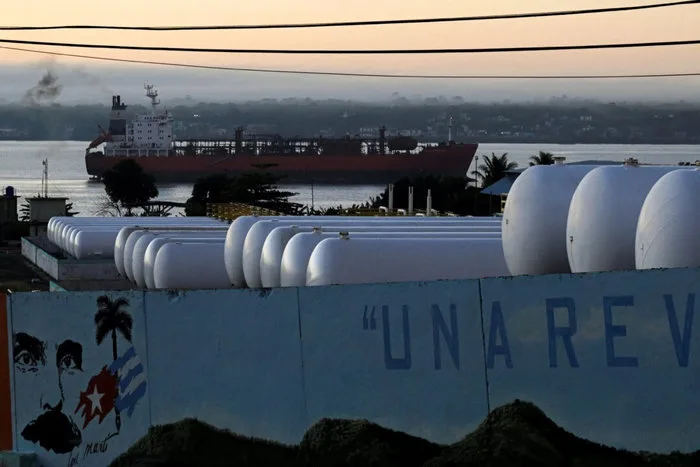
President Donald Trump signed an executive order on Jan. 29 that threatens to impose new tariffs on any country that “directly or indirectly provides oil to Cuba.”
“I find that the policies, practices, and actions of the Government of Cuba constitute an unusual and extraordinary threat, which has its source in whole or substantial part outside the United States, to the national security and foreign policy of the United States,” the executive order reads.
The president’s order accuses the Cuban regime of aligning itself with Russia, China, Iran, Hamas, and Hezbollah and says that opposing the Caribbean nation is essential for U.S. national security.
“Cuba hosts Russia’s largest overseas signals intelligence facility, which tries to steal sensitive national security information of the United States. Cuba continues to build deep intelligence and defense cooperation with the [Chinese Communist Party],” the order states.
The White House says the executive order establishes a “new tariff system” that allows the United States to levy additional tariffs on any nations that “directly or indirectly” supply Cuba with oil.
Secretary of State Marco Rubio and Commerce Secretary Howard Lutnick are authorized to “take all necessary actions, including issuing rules and guidance, to implement the tariff system and related measures,” the fact sheet states.
Additionally, Trump may modify the order if Cuba or any affected nations “take significant steps to address the threat or align with U.S. national security and foreign policy objectives.”
Trump urged Cuba this month to strike a deal with his administration after the United States captured former Venezuelan leader Nicolás Maduro and pressured interim Venezuelan leader Delcy Rodríguez to redirect oil deliveries to the United States.
Last year, Venezuela was Cuba’s largest oil supplier, providing the communist nation with 26,500 barrels per day, roughly one-third of Cuba’s daily needs.
“I just don’t see any light at the end of the tunnel for Cuba to survive the next few months facing zero deliveries of oil from Venezuela,” Jorge Piñon, an energy researcher at the University of Texas at Austin, told Reuters earlier this month.
Cuba’s second largest supplier of oil last year was Mexico at roughly 5,000 barrels per day.
Trump’s latest executive order likely sets up a pressure scenario with Mexico if the Latin American country continues supplying Cuba with oil.
On Jan. 7, Mexican President Claudia Sheinbaum said recent oil exports to the island are not higher than what they have been historically.
Cuba, which has been further impacted by recent energy blackouts and supply shortages, is also resisting calls for diplomacy with the United States.
Shortly after Trump’s initial threat to strike a deal with Washington or face continued discomfort following the loss of Venezuelan oil imports, Cuban leader Miguel Díaz-Canel Bermúdez said he would not negotiate with the U.S. president.
Díaz-Canel penned a series of social media posts on Jan. 12, where he said there are no conversations between his regime and Trump other than “technical contacts in the migration field.”
“We have always been willing to engage in a serious and responsible dialogue with the various governments of the United States, including the current one, on the basis of sovereign equality, mutual respect, principles of International Law, reciprocal benefit without interference in internal affairs and with full respect for our independence,” he wrote, according to a translation of his posts.
“As history demonstrates, relations between the U.S. and Cuba, in order to advance, must be based on International Law rather than on hostility, threats, and economic coercion.”
Reuters and Aldgra Fredly contributed to this report.

More Stories
Shadows of Deception: Unraveling the Somali Fraud Network in Maine’s Welfare System
By Stephen Zogopoulos, USNN World News In the crisp, unforgiving winters of Maine, where communities huddle against the Atlantic chill,...
DOJ Releasing 3 Million Pages, Hundreds of Thousands of Photos of Epstein Files: Deputy AG
By Jack Phillips The Department of Justice (DOJ) is releasing 3 million pages, 180,000 images, and 2,000 videos related to...
Trump Picks Kevin Warsh as New Federal Reserve Chair
By Andrew Moran President Donald Trump said on Jan. 30 that former Federal Reserve Governor Kevin Warsh will be the...
Court Rules CK Hutchison’s Control of Panama Canal Ports ‘Unconstitutional’
By Owen Evans Hong Kong-based CK Hutchison Holdings’ concession to operate ports at the Panama Canal has been ruled unconstitutional....
Trump Threatens 50 Percent Tariffs, Decertification of Canadian Aircraft Over Canada Not Certifying Gulfstream Models
By Paul Rowan Brian U.S. President Donald Trump says he is decertifying the Canadian-made Bombardier Global Express and “all Aircraft...
White House’s Muddled Responses Added Fuel to the Fire in Alex Pretti’s Shooting in Minneapolis
Chaos spread around the White House like wildfire in the tense hours after Border Patrol agents fatally shot Alex Pretti,...