
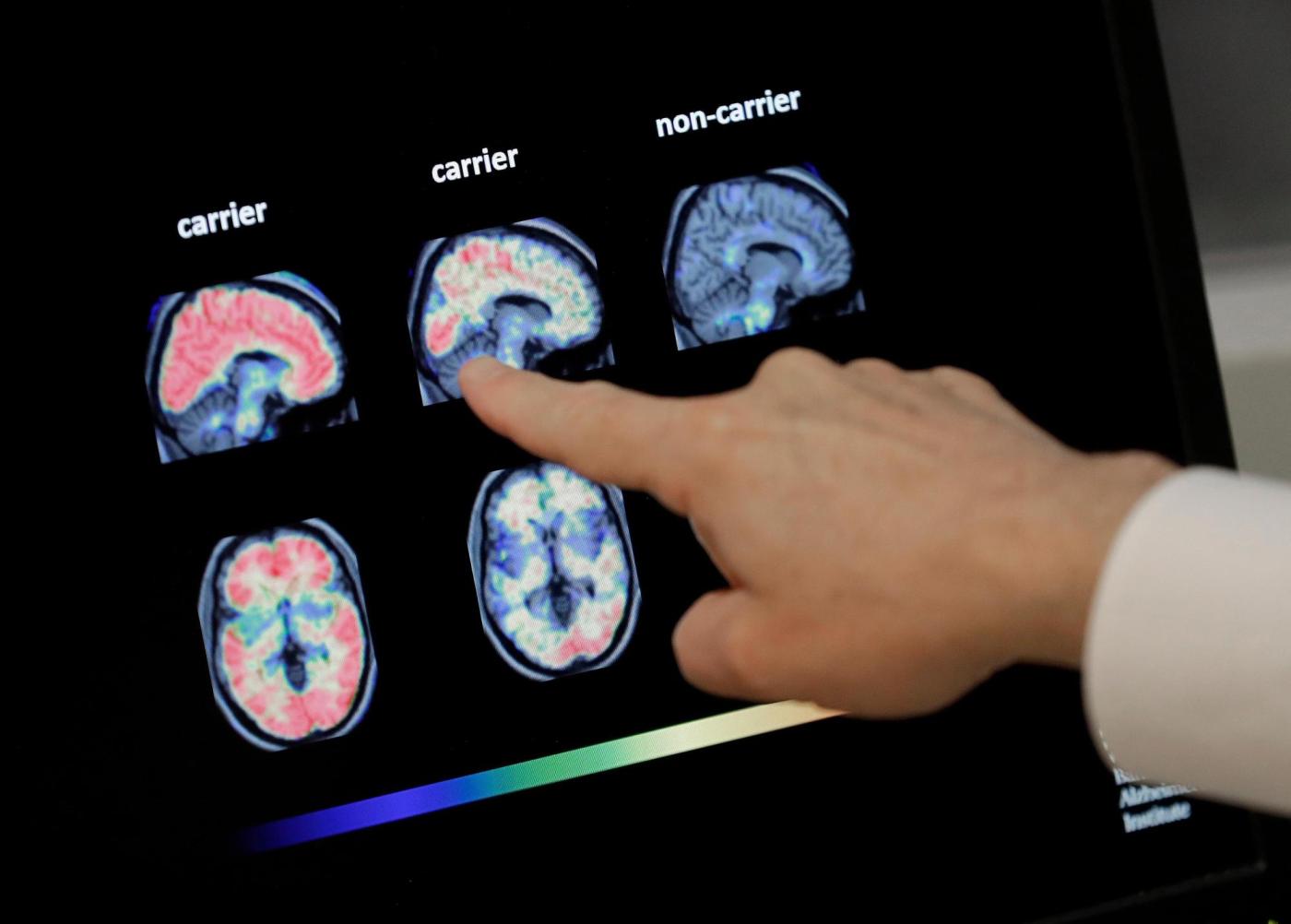
Editorial: News on dementia is a call to action for our future

The latest report on CTE is both enlightening and alarming.
As the Herald reported, a groundbreaking study from Boston University researchers found that those with CTE have a much higher chance of being diagnosed with dementia.
The largest study of its kind from the Boston University CTE Center reveals that the progressive brain disease chronic traumatic encephalopathy should be recognized as a new cause of dementia. Those with advanced CTE — who had been exposed to repetitive head impacts — had four times higher odds of having dementia.
This is sobering news for current CTE sufferers, those who have experienced repetitive head impacts, and their loved ones. A future that could include a dementia diagnosis is a game-changer.
According to the Centers for Disease Control and Prevention, over 11 million U.S. adults provide unpaid care for someone with a form of dementia. In 2023, caregivers provided about 18.4 billion hours of care to someone with dementia.
The National Institutes of Health expects the number of new dementia cases per year to double by 2060 as the population ages.
A project funded by the National Institute on Aging reported that the total economic burden of Alzheimer’s disease and related dementias will reach $781 billion this year in the U.S. Extrapolate those numbers and you get a looming catastrophe for Americans and our economy.
The NIA also noted that the growing number of dementia patients comes with an increased need for specialized care in nursing homes. As of 2023, fewer than 5% of all nursing home beds are in dementia special care units.
More dementia cases, more need for caregiving and specialized nursing homes, more home caregiver hours and higher economic costs. What we do now could ease these burdens, or amplify them.
There have been medical breakthroughs in treating dementia, particularly in slowing cognitive decline in early-stage Alzheimer’s.
“Establishing that cognitive symptoms and dementia are outcomes of CTE moves us closer to being able to accurately detect and diagnose CTE during life, which is urgently needed,” said Alosco.
This is a watershed moment, and it’s all hands on deck — which means funding and focus.
Dementia, Alzheimer’s and CTE research needs to be a priority in Congress. This isn’t a kick-the-can-down-the-road issue. Research is needed to examine the predictors of dementia and Alzheimer’s, to produce medications and treatments for them, and to blunt the causes.
In the case of CTE, that means stepping up protective gear for sports in which repeated head injuries can occur, as well as making sure our military personnel are also well protected.
A lot can be done between now and 2060, when dementia cases are expected to double. We as a nation can meet this head-on, funding and targeting the disease as we did with the COVID vaccine, ramping up protective measures and supporting care.
Or, we can put it in the “to-do” pile and return our attention to polarized politics instead of working together to solve the problem.
The future depends on it.
Editorial cartoon by Al Goodwyn (Creators Syndicate)


More Stories
Driverless taxis could hit UK roads as early as September, Waymo says
Driverless taxis could begin operating in the UK as soon as September, according to Waymo, the US self-driving car firm...
Bruins continue to cook at home, beat Flyers 6-3
If the Bruins really want to be taken seriously, they will have to prove themselves to be a harder out...
Tesla axes Model S and X as revenues fall and focus shifts to AI and robotics
Tesla has reported its first annual fall in revenue as the electric carmaker accelerates a strategic shift away from legacy...
Woburn’s offensive burst powers way to victory over Braintree
WOBURN — It was a matchup that had been brewing for five days. Woburn and Braintree were originally scheduled to...
Apple posts record iPhone sales as Mac revenues fall
Apple has reported its strongest-ever quarterly iPhone sales, helping to lift overall revenues despite weaker performance in other parts of...
Earthquakes adquieren a Timo Werner del Leipzig en fichaje de renombre para la MLS
SAN JOSÉ, California, EE.UU. (AP) — Los Earthquakes de San José adquirieron el jueves al delantero Timo Werner, procedente del...