
Japan–US Alliance ‘Would Collapse’ If Tokyo Turned a Blind Eye to Taiwan Crisis, PM Says

By Dorothy Li
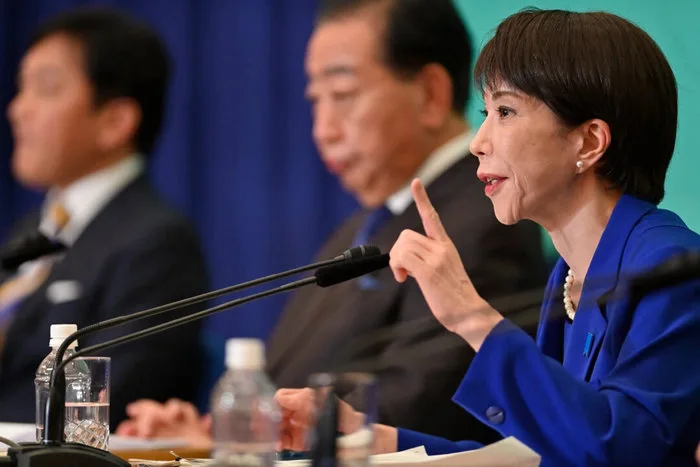
Japanese Prime Minister Sanae Takaichi said on Jan. 26 that if China and the United States were in conflict over Taiwan, Japan would work alongside its U.S. ally to protect Japanese and American citizens in Taiwan.
“If the U.S. forces, acting jointly with us, were to come under attack, and we simply fled without doing anything, the Japan–U.S. Alliance would collapse,” Takaichi said on a TV Asahi program featuring major Japanese party leaders.
“Therefore, we must respond by making comprehensive judgments based on what is happening on the ground, strictly within the limits of the law, within the limits of current laws,” she said, according to a translation of her remarks.
Takaichi’s comments were in response to criticism from an opposition lawmaker who called for a retraction of the prime minister’s earlier remarks related to Taiwan.
Japan has endured diplomatic and economic pressures from the Chinese Communist Party (CCP) since November 2025, when Takaichi linked a Taiwan contingency to a potential “survival-threatening situation” for Japan—a designation that could enable Japan to deploy troops.
The CCP views Taiwan as its own territory, to be taken by force if necessary. The Chinese regime has sought to isolate the self-ruled democracy on the international stage and stepped up military activity around the island in recent years. This includes sending warplanes close to Taiwan on a nearly daily basis and staging live-fire drills around the island, heightening concerns about a potential conflict in the Taiwan Strait, a vital sea route for global trade.
Japan’s westernmost island of Yonaguni is just 68 miles from Taiwan and hosts more than 50,000 American troops along with advanced U.S. military aircraft.
Takaichi, speaking on the nationally broadcast TV program, clarified that her earlier statement did not imply that Japan would intervene militarily in a U.S.–China clash.
“I want to make it absolutely clear that this is not about Japan going out and taking military action if China and the United States come into conflict over Taiwan,” she said.
Citing the close geographic proximity between Taiwan and Japan, she added, “If something terrible were to happen there, we would have to go and rescue the Japanese and Americans in Taiwan. In such a situation, joint action may be necessary.”
Japan’s pacifist constitution prohibits direct military action. Still, it allows Japan to exercise the right of collective self-defense, or to defend the United States or another friendly country that comes under attack, in cases where Japan faces a “threat to its survival.”
Asked about the Japanese prime minister’s comments at a regular briefing in Beijing on Jan. 27, Chinese foreign ministry spokesperson Guo Jiakun accused Japan of interfering in China’s internal affairs and threatening the use of force against China.
Beijing has maintained economic pressure on Japan, with its foreign ministry on Jan. 26 renewing a warning to its citizens against traveling to Japan in the upcoming Chinese New Year holiday.
Major airlines in mainland China have offered full refunds for flights bound for Japan since Beijing issued the first travel advisory last November.
In December, the number of Chinese tourists declined by about 45 percent compared to the same month the previous year, totaling around 330,000, Japan’s Tourism Minister Yasushi Kaneko told a briefing earlier this month. Despite the drop in Chinese visitors, Kaneko noted that overall international tourist arrivals reached a record high of about 3.6 million.
Tensions between the two Asian giants escalated in recent weeks as China banned shipments of dual-use items to Japan if they could be adapted to enhance Japan’s military capability, drawing strong protests from Japan.
“These recent measures, which only target Japan, deviate significantly from international practice, are absolutely unacceptable and deeply regrettable,” a spokesperson for Japan’s Ministry of Economy, Trade and Industry said in an emailed statement to The Epoch Times earlier this month.
“The Government of Japan will thoroughly examine and analyze the details and will consider necessary measures in a resolute and calm manner.”
Takaichi, who has enjoyed high approval ratings since taking office in October 2025, has called a snap election for the lower house of parliament on Feb. 8, saying she wants voters to decide whether to allow her coalition government to make widespread changes to Japan’s economic and security policies.
Reuters contributed to this report.


More Stories
Russia Bans Producers From Exporting Gasoline
By Guy Birchall Russia extended a temporary ban on gasoline exports to producers, Moscow said on April 2, citing the...
Who is Tiger Woods? Age, Marriage, Children, and Recent Controversy
Tiger Woods is one of the most famous American golfers. He is known as one of the greatest golf players...
Oil Falls, Stocks Jump on Renewed Hopes of Iran War Ending
By Tom Ozimek Oil prices dropped and stocks around the world rallied on April 1 on renewed hopes of a...
US Appeals Court Blocks Judge’s Rulings Against Trump Immigration Detention Policy
By Jack Phillips A U.S. appeals court on Tuesday halted a federal judge’s nationwide rulings that blocked the Trump administration...
Trump Says He’s Strongly Considering Pulling US Out of NATO
By Guy Birchall U.S. President Donald Trump said he is strongly considering withdrawing the United States from NATO, in comments...
Iran’s Top Leader Issues Statement Saying Regime Will Keep Backing Anti-Israel Forces
By Jack Phillips Iran’s top leader released a new statement on April 1 saying the Iranian regime will continue to...