
US pushes for quickest fixes to boost Venezuela oil output

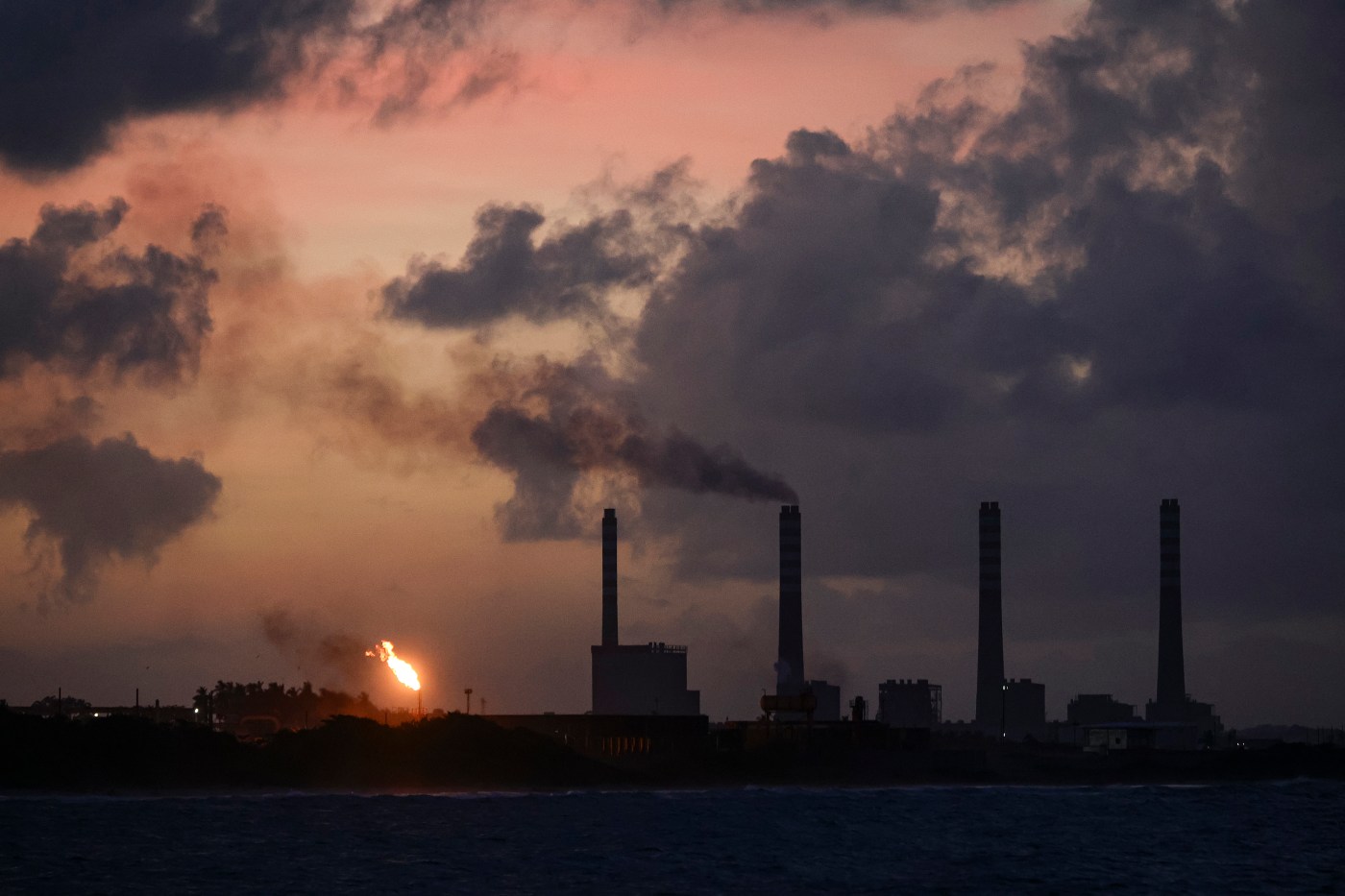
The U.S. is in talks with Chevron, other crude producers and the world’s biggest oilfield service providers about a plan to quickly revive output in Venezuela at a fraction of the estimated $100 billion cost for a complete rebuilding.
Oilfield contractors such as SLB Ltd., Baker Hughes Co. and Halliburton Co. would focus their initial efforts on repairing or replacing damaged or outdated equipment and refreshing older drilling sites, according to senior administration officials who asked not to be identified discussing internal plans.
The idea is that with limited investment, Venezuela could boost production by several hundred thousand barrels over the short term, the people said.
The go-fast approach is designed to fulfill the Trump administration’s goal of swiftly increasing crude flows in the wake of the U.S. capture of Venezuelan strongman Nicolas Maduro, generating cash that could be used to help pay for rebuilding the country. Longer term, President Trump’s goal remains an industry revival that would bring output closer to the country’s 1970 peak of roughly 3.75 million barrels per day from current production of less than 1 million.
While analysts say achieving that bigger prize will take at least a decade, there’s plenty of production gains to be had in the near term.
“There’s some low-hanging fruit that you could probably squeeze some life out of once again,” said Tom Liskey, who heads up Latin American research at industry consultant Enverus.
A representative for Halliburton said its goal in Venezuela “is to achieve quick wins and generate immediate production recovery.” Representatives for SLB didn’t immediately respond to messages seeking comment. Baker Hughes declined to comment.
A more immediate upswing in Venezuelan crude flows would align with several priorities for Trump, who has prized American energy dominance both as a source of leverage globally and political capital at home, where he is seeking to allay cost-of-living concerns ahead of critical midterm elections in November. A supply boost from Venezuela, however modest, is seen as not only helping to check crude and gasoline prices, but also expanding the U.S.’s leeway to move against Iran without jolting the market.
Venezuelan crude sales will make money for both countries and “bring down oil prices even further,” Trump told reporters on Air Force One on Thursday. “We are drilling more oil than at any time in the history of our country, by far. If you add Venezuela to it, it’s a tremendous part of the market.”
Bringing state-of-the-art U.S. equipment and techniques to Venezuela — where the oil industry has been throttled by years of sanctions — can revitalize existing wells and bring new production online within months, the Trump administration officials said. Some analysts have underestimated how dramatically operations could improve under free-flowing, regular relations, one of the people said.
Even so, the country’s existing infrastructure has been plagued by decades of underinvestment and neglect — including in once-prolific areas in the east and around Lake Maracaibo where oil was first discovered a century ago. Environmental liabilities from years of oil spills and jury-rigged installations are another challenge.
If the Trump administration gives the green light for other U.S. contractors to join rival SLB — the largest service company that’s remained working in the country — in the initial phases, they are likely to employ tried-and-true equipment that will rehab old wells, repair artificial lift pumps and install electric turbines at remote fields.
“The short term is workovers of PDVSA’s inventory,” David Goldwyn, chairman of the Energy Advisory Group, said Thursday in an Atlantic Council event, referring to Venezuela’s state-owned oil company. “It’s not technically difficult, doesn’t require a huge amount of capital.”
Chevron will initially focus on “leveraging what’s on the ground” already in Venezuela, Vice Chairman Mark Nelson said at a White House meeting Jan. 9. The company plans to increase production from its joint ventures with PDVSA by 50% within the next 18 to 24 months, he said. Currently the JVs produce about 240,000 barrels of oil per day.
The company said in a statement that it stands ready to help Venezuela “build a better future while strengthening U.S. energy and regional security.”
Longer term, U.S. authorities — and oil companies in talks with the administration about entering Venezuela — see opportunities in drilling new wells and even tapping new underground reservoirs. U.S. Treasury Department officials are weighing a surge of applications from crude producers, oilfield service companies and other firms seeking licenses to enter Venezuela, the administration officials said.
The enthusiasm remains tempered by concerns about political stability and safety for workers in the country. Some industry leaders have stressed they need financial and security guarantees from the U.S. — an option Energy Secretary Chris Wright appeared to foreclose in a Thursday interview with Bloomberg TV.
Despite having to write down losses in the past, U.S. service providers also are buzzing about the opportunity to return to a country that boasts one of the world’s biggest oil reserves.
“We can mobilize in weeks,” Halliburton Chief Executive Officer Jeff Miller told investors recently. “We can move fairly quickly as opportunities arise.”
Baker Hughes has the largest installed base of so-called rotating and artificial lift equipment — machinery that speeds up crude production — in Venezuela, Chief Executive Officer Lorenzo Simonelli said recently. The infrastructure is key for production in the country, where crude is located in remote areas that don’t always have access to electricity.
And Weatherford has called Venezuela a massive opportunity.
“It’s the most interesting development that’s happened in our industry in a long period of time,” CEO Girish Saligram told investors this month at a conference in Miami.
Venezuela could be particularly attractive for servicers, which have suffered from a slowdown in U.S. shale growth in recent years.
When Venezuelan oil production was at about 3 million barrels a day, the country was running roughly 75 rigs, according to Citigroup. Returning to that pace of activity would mean a market of $10 billion in drilling and completion spending. And the artificial lift and chemicals market could be another $750 million a year, the bank said.
“Venezuela, with all that we are seeing, could be heading back to 1.5 million barrels a day,” said Luisa Palacios, former chairwoman of Citgo Petroleum Corp. “That obviously is not enough, but that gets you to stabilization.”

More Stories
US court rules against Pentagon in killer AI dispute
The Department of War had ordered contractors to drop Anthropic after it refused to allow military use of its technology...
Which Interior Flooring is Best?
Where do you start when choosing new flooring? When shopping for new flooring a good place to start is to...
Petrol set to top £1.50 a litre as Iran war drives fuel price surge
UK drivers are bracing for a sharp rise in fuel costs, with petrol prices expected to exceed £1.50 per litre...
Dyson hit by £440m sales drop as Trump tariffs bite
Dyson has reported a £440 million drop in annual sales after being hit by US trade tariffs, although the group...
Octopus Investments to cut 20% of staff as AI reshapes asset management
Octopus Investments is set to cut around a fifth of its workforce as it accelerates the adoption of artificial intelligence,...
Next to invest £300m in UK logistics as new warehouse set to deliver £2.5bn boost
Next has unveiled a major expansion of its UK logistics network, committing more than £300 million to new warehouse infrastructure...