
Powdered whole milk could be a culprit in the ByHeart botulism outbreak, tests show

By JONEL ALECCIA
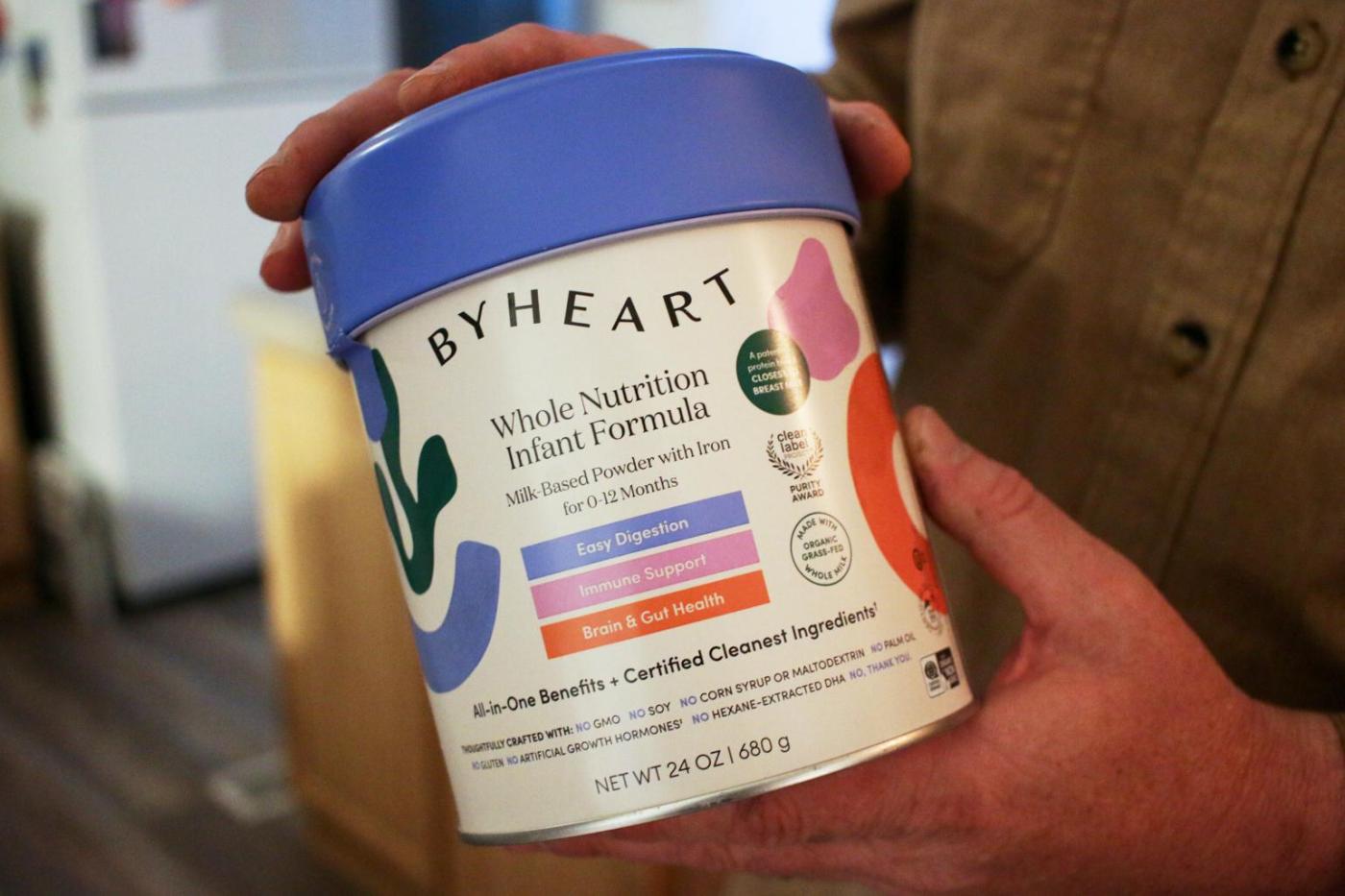
Powdered whole milk used to make ByHeart infant formula could be a source of contamination that led to an outbreak of botulism that has sickened dozens of babies, U.S. health officials indicated Friday.
Related Articles
Meta pauses teen access to AI characters
Texas Black man exonerated nearly 70 years after execution in case marked by racial bias
Massive sewage spill flowing into Potomac River upstream from Washington
Hunter S. Thompson’s death confirmed as suicide, Colorado investigators say
New York school violated civil rights law by changing name from ‘Thunderbirds’ to ‘T-Birds,’ US says
Testing by the U.S. Food and Drug Administration found the type of bacteria that can cause the illness in two samples linked to the formula, officials said.
The agency found that bacteria in an unopened can of formula matched a sample from a sick baby — and it also matched contamination detected in samples of organic whole milk powder used to make ByHeart formula and collected and tested by the company.
FDA testing also found contamination in a sample of whole milk powder supplied to ByHeart — and it matched the germ in a finished sample of the company’s formula.
The findings are not conclusive, and the investigation continues “to determine the source of the contamination,” the agency said in a statement.
A ByHeart official said the finding helps shed light on what has become a “watershed moment” for the company.
“We are focused on the root cause and our responsibility to act on what we’ve learned to help create a safer future for ByHeart and infant formula,” said Dr. Devon Kuehn, ByHeart’s chief scientific and medical officer.
Neither FDA nor ByHeart named the supplier of the powdered whole milk.
At this time, there is no indication of a broader problem in the infant formula supply, the FDA said.
New York-based ByHeart has been at the center of a food poisoning outbreak that has sickened 51 babies in 19 states since December 2023. The problem was identified in November after officials with the California program that supplies the sole treatment for infant botulism detected a surge in cases in babies who consumed ByHeart formula.
No new cases in the outbreak have been identified since mid-December, the U.S. Centers for Disease Control and Prevention said.
ByHeart initially recalled two lots of formula, but it expanded the recall to all products days later. Federal health officials later said they could not rule out contamination of all products made since the company launched in March 2022.
That followed company testing, announced in November, that found six of 36 samples of formula from three different lots contained the dangerous type of bacteria that causes infant botulism.
Illnesses caused by botulism bacteria in infant formula are rare, and the size and scope of the ByHeart outbreak is unprecedented, food safety experts said.
Some formula companies do test raw materials and finished formula for evidence of the contamination, but such testing should be required, said Sarah Sorscher, director of regulatory affairs for the Center for Science in the Public Interest, an advocacy group.
“FDA has not announced a plan to do testing, and that’s what we really want to see them do,” she said.
Even if the contamination was traced to a milk supplier, the company remains responsible for the harm caused by its product, said Bill Marler, a Seattle food safety lawyer who represents more than 30 families of babies who fell ill.
“Just because they are able to point the finger at dried powder as the ingredient that may have been contaminated, it doesn’t take any of the legal or moral responsibility away from ByHeart,” Marler said.
ByHeart, which accounted for about 1% of the U.S. infant formula market, previously sold about 200,000 cans of the product per month. It was marketed as an option close to human breast milk, one that used “organic, grass-fed whole milk.” Parents of babies sickened in the outbreak said they chose the formula, which cost about $42 per can, because of its touted health benefits.
The Associated Press Health and Science Department receives support from the Howard Hughes Medical Institute’s Department of Science Education and the Robert Wood Johnson Foundation. The AP is solely responsible for all content.

More Stories
US court rules against Pentagon in killer AI dispute
The Department of War had ordered contractors to drop Anthropic after it refused to allow military use of its technology...
Which Interior Flooring is Best?
Where do you start when choosing new flooring? When shopping for new flooring a good place to start is to...
Petrol set to top £1.50 a litre as Iran war drives fuel price surge
UK drivers are bracing for a sharp rise in fuel costs, with petrol prices expected to exceed £1.50 per litre...
Dyson hit by £440m sales drop as Trump tariffs bite
Dyson has reported a £440 million drop in annual sales after being hit by US trade tariffs, although the group...
Octopus Investments to cut 20% of staff as AI reshapes asset management
Octopus Investments is set to cut around a fifth of its workforce as it accelerates the adoption of artificial intelligence,...
Next to invest £300m in UK logistics as new warehouse set to deliver £2.5bn boost
Next has unveiled a major expansion of its UK logistics network, committing more than £300 million to new warehouse infrastructure...