
EU Hosts Emergency Meeting in Response to Trump’s Tariffs Over Greenland

By Jacob Burg
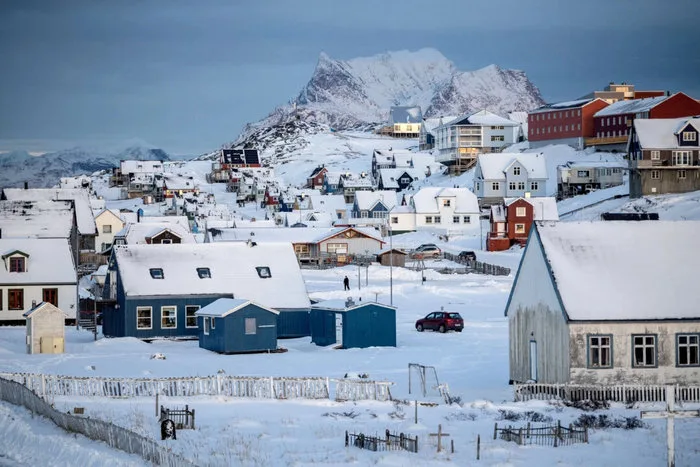
The European Union called an emergency meeting of ambassadors from the bloc’s 27 nations on Jan. 18 to discuss U.S. President Donald Trump’s threats to impose a series of increasing tariffs on some European allies that oppose the United States’ efforts to acquire Greenland.
The holder of the EU’s six-month rotating presidency, Cyprus, announced late on Jan. 17 that it had planned the meeting for the next day, which is scheduled to begin at 5 p.m. local time.
Trump is planning to add a 10 percent tariff onto Denmark, Norway, Sweden, France, Germany, the UK, the Netherlands, and Finland starting on Feb. 1, which would increase to 25 percent on June 1, according to a Truth Social post he made on Jan. 17, “until such time as a Deal is reached for the Complete and Total purchase of Greenland.”
Trump has said the United States needs Greenland for national security purposes and warned that “world peace is at stake” if the United States does not succeed in obtaining Greenland.
“This is a very dangerous situation for the Safety, Security, and Survival of our Planet,” Trump wrote in a Truth Social post on Jan. 17.
He has said that if the United States doesn’t gain control of Greenland, China or Russia will take it.
Meanwhile, the eight European nations, which are already subject to 10 percent or 15 percent tariffs by the United States, have sent a small military presence to Greenland.
“Tariff threats undermine transatlantic relations and risk a dangerous downward spiral,” the group of eight countries said in a joint statement on Jan. 18.
The military deployment is intended to bolster Arctic security “as a shared transatlantic interest” and poses no threat to anyone, the nations said, adding that they are ready for dialogue with the United States “based on the principles of sovereignty and territorial integrity“ that they ”stand firmly behind.”
“We stand in full solidarity with the Kingdom of Denmark and the people of Greenland,” the eight countries said.
“We are committed to upholding our sovereignty.”
According to an English translation of her written statement, Danish Prime Minister Mette Frederiksen said, “Since the U.S. President’s announcement of tariffs, the [Danish] government has been in intensive dialogue with our allies.”
“It is all the more important that we stand firm on the fundamental values that created the European community. We want to cooperate, and we are not the ones seeking conflict,” she said. “And I am pleased with the consistent messages from the rest of the continent: Europe will not be blackmailed.”
Swedish Prime Minister Ulf Kristersson echoed Frederiksen in a social media post on Jan. 17: “Only Denmark and Greenland decide on issues concerning Denmark and Greenland.”
“This is an EU issue that affects many more countries than those now being singled out,” he said. “Sweden is now having intensive discussions with other EU countries, Norway, and the United Kingdom for a coordinated response.”
Greenland Governance
U.S. Vice President JD Vance and Secretary of State Marco Rubio met with Danish Foreign Minister Lars Lokke Rasmussen and Greenland’s foreign minister, Vivian Motzfeldt, at the White House on Jan. 14.
Rasmussen described the talks as a “frank but also constructive discussion.”
Trump said on Jan. 16 that he was considering a wave of tariffs on European allies “if they don’t go along” with allowing the United States to purchase the Danish territory.
The U.S. president said on social media that attempts by the United States to “do this transaction” for Greenland date back “over 150 years.” U.S. President Andrew Johnson’s administration first floated the idea of expanding U.S. influence in the Arctic in the 1860s.
Trump has also previously signaled that Greenland would be a wise investment for the United States because of estimates of high quantities of rare-earth element deposits on the Arctic island.
Although the island had been under formal Danish control since the era of colonization in the early 1700s, Greenland was granted self-governance in the 1970s with the creation of a parliament and the Self-Government Act of 1979, expanding the island’s autonomy. However, the island didn’t gain full self-governance until 2009.
On Jan. 9, the officials from Greenland, including Prime Minister Jens-Frederik Nielsen and multiple political party leaders, released a statement reaffirming Greenland’s sovereignty and rejecting any claims that would impede the island’s autonomy.
“We don’t want to be Americans, we don’t want to be Danes, we want to be Greenlanders,” the statement said. “The future of Greenland must be decided by the Greenlandic people. … No other country can interfere in this.”
Travis Gillmore, Jacki Thrapp, and Reuters contributed to this report.

More Stories
California-Based Family Members of Qasem Soleimani Arrested, Green Cards Revoked
By Jacki Thrapp Two family members of assassinated Islamic Revolutionary Guard Corps Major General Qasem Soleimani were arrested by federal...
‘WE GOT HIM!’: Trump Says US Forces Rescue 2nd Airman Downed in Iran
By Ryan Morgan U.S. forces have successfully rescued a second U.S. airman whose F-15 Strike Eagle fighter jet was shot...
Monthly Payments for Homes Increased 1st Time in 6 Months
By Naveen Athrappully The median monthly mortgage payment in the United States hit $2,742 for the four weeks ending March...
Trump’s 3D Chess: How President Trump Is Checkmating China and Russia by Toppling Their Oil Proxies in Venezuela, Cuba, and Iran
By Stephen Zogopoulos, USNN World News In the rarefied world of grand strategy, true masters don’t play on a flat...
Iran Vows Lasting Grip on Strait of Hormuz After War
By Tom Ozimek Iran has signaled that it intends to exert lasting control over the Strait of Hormuz—the world’s most...
Trump Signs Memo to Pay All DHS Employees During Shutdown
By Troy Myers President Donald Trump on Friday signed a memorandum directing the Department of Homeland Security (DHS) to pay...