
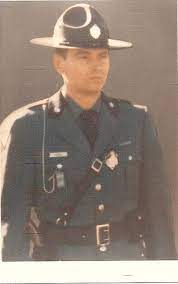
Editorial: Trooper George Hanna’s killer mustn’t go free

If a plea from Gov. Maura Healey won’t sway the Massachusetts Parole Board, then hope is all but lost for victims to see real justice come to murderous criminals.
Jose Colon, convicted for the killing of Mass State Police Trooper George L. Hanna in 1983, was sentenced to life without parole. The punishment fit the crime of murdering the law enforcement officer and father of three in cold blood.
Then came the Mattis decision, the bane of grieving victims’ families since it was issued. The Supreme Judicial Court ruled that “emerging adults” (those who were 18 to 20 at the time of the offense) cannot be sentenced to life without parole. It doesn’t matter how heinous the crime, if you were in the magic “emerging adult” window when you perpetrated it, you can taste freedom after a stint in prison.
Victims’ loved ones have gone before the Parole Board pleading that the people who killed their mothers, sisters, sons, friends, fathers, neighbors be kept off the streets. Time after time, their calls for justice fell on deaf ears.
Healey entered the chat.
“Trooper Hanna’s family, including his wife, Marilyn, and their three children, Deborah, Kimberly, and Michael, have lived with this unimaginable loss ever since,” the governor wrote to the board. “This offense inflicted profound and lasting harm.”
As a law enforcement officer, Hanna’s murder was felt by the people he served, as well as his family and loved ones.
“I write to state plainly that the nature of this offense, the magnitude of its harm, the welfare of this state, and the enduring public significance of Trooper Hanna’s sacrifice weigh decisively against release. For these reasons, I strongly urge the Board to deny parole for Jose Colon.”
The parole hearing for Colon could be a turning point. Healey laid out the aftermath of Hanna’s murder, the effect on the state, the loss to his family. It’s impossible to gloss over the idea of necessary consequences, nor pretend that Colon is the only character that matters in this grisly play.
If Healey’s letter can’t get the Parole Board to acknowledge that it’s the crime that matters more than fitting into a two-year age window at the time it was committed, then what chance do ordinary crime victims have?
Beyond the criteria of the Mattis decision, the Parole Board has let far too many criminals, including rapists and murderers, walk free in the past year. They may be better people now, but that doesn’t erase the lives they took, nor the need or justice to be served.
The murder of Trooper George Hanna was especially egregious, robbing the community of a man who swore to protect and serve it. The Hanna Awards, named in his honor, have been held annually since 1983. They’re a symbol of prestige, within both the law enforcement community and the state as a whole.
The award website reads, “It’s an opportunity to publicly recognize the bravery of members of the law enforcement community who put their lives on the line by dedicating themselves to safety throughout Massachusetts.”
The Parole Board has a chance to show that those who put their lives on the line have lives that matter.
Editorial cartoon by Steve Kelley (Creators Syndicate)


More Stories
Rusia expulsa a diplomático británico de embajada en Moscú por acusaciones de espionaje
Por The Associated Press MOSCÚ (AP) — Las autoridades rusas ordenaron el jueves a un diplomático británico que abandone el...
Today in History: January 15, ‘Great Molasses Flood’ kills 21
Today is Thursday, Jan. 15, the 15th day of 2026. There are 350 days left in the year. Today in...
Today in History: January 15, ‘Great Molasses Flood’ kills 21
Today is Thursday, Jan. 15, the 15th day of 2026. There are 350 days left in the year. Today in...
Tropas europeas llegan a Groenlandia tras reunión con EEUU que destacó “desacuerdo” sobre su futuro
Por EMMA BURROWS, CLAUDIA CIOBANU y BEN FINLEY NUUK, Groenlandia (AP) — Tropas de varios países europeos, incluidos Francia, Alemania,...
2025 M5 Touring drives wagon consumers to BMW
Grasso’s Garage has reviewed over 375 vehicles and driven more brands and models than most city blocks’ population could even...
How Patriots WR Stefon Diggs described injury-shortened season in Houston
FOXBORO — An ACL tear ended Stefon Diggs’ only season in Houston after just eight games last year. Related Articles...