
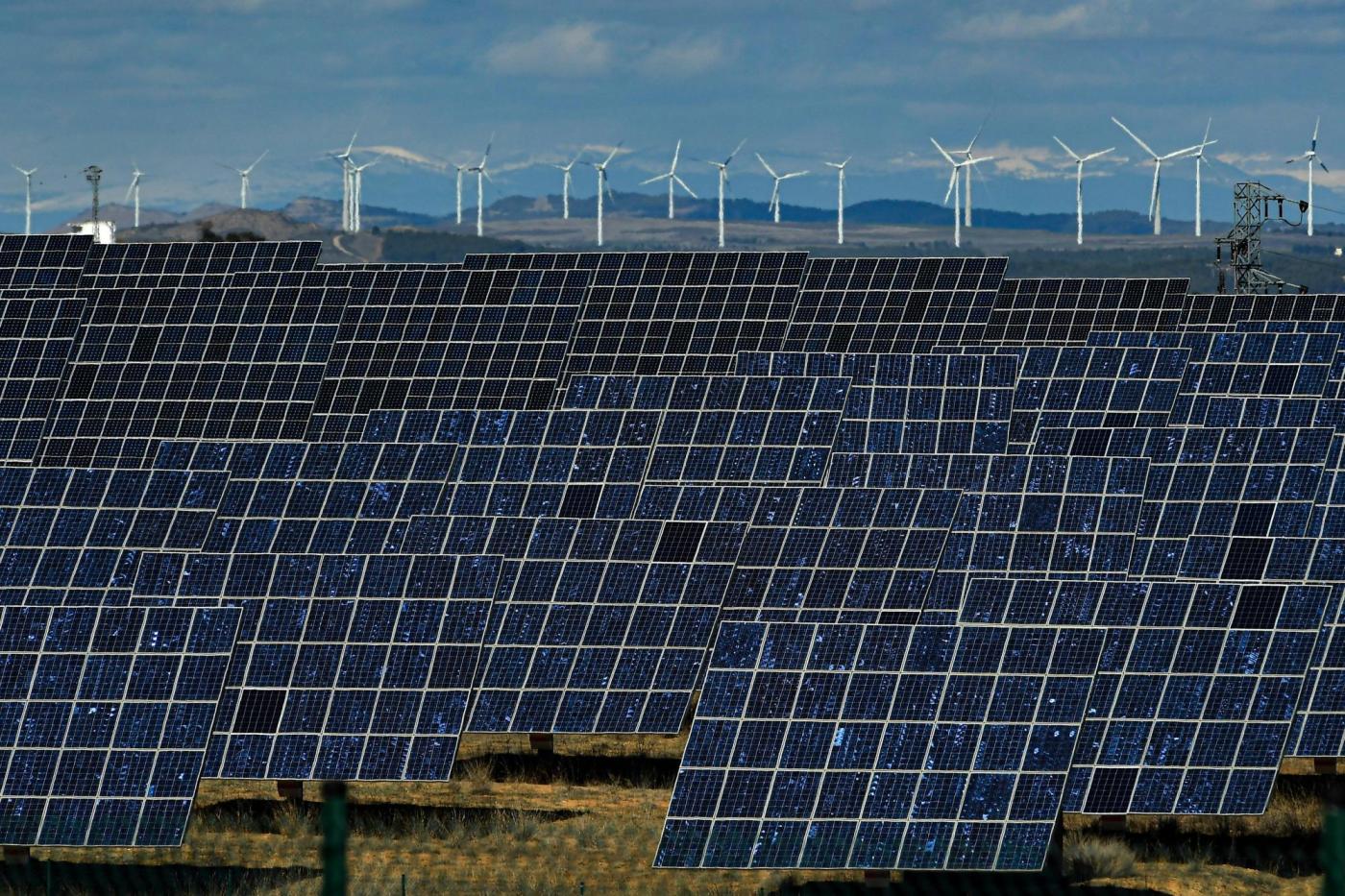
Study: New England ratepayers would save up to $700 billion replacing wind, solar with natural gas, nuclear

A new study has found that New England ratepayers would save an estimated $400-$700 billion by replacing planned offshore wind and solar projects in the region with natural gas and nuclear power.
The study, Alternatives to New England’s Energy Affordability Crisis, estimated the economic effects of meeting the region’s energy needs through 2050 with nuclear and natural gas plants, modeling the cost of energy portfolios in the six New England states to reflect the result of decarbonization plans in the Independent System Operator of New England (ISO-NE).
“New Englanders are being asked to bankroll an energy experiment that is dramatically more expensive and far less reliable than proven alternatives. This study puts hard numbers behind what families and businesses already feel every month. State-mandated wind and solar are driving up costs while increasing the risk of blackouts,” said Executive Director of the Fiscal Alliance Foundation Paul Craney. “Replacing these mandates with nuclear and natural gas would save hundreds of billions of dollars, strengthen grid reliability, and deliver real emissions reductions without sacrificing affordability or economic competitiveness.”
The analysis came to the striking conclusion that either just natural gas or nuclear power, or a combination of the two, would not only result in hundreds of billions of dollars of savings for ratepayers, but would also yield similar emissions reductions to renewable energy sources.
If New England met its energy needs through 2050 with just nuclear power, the study finds it would cost ratepayers $415.3 billion over that span and reduce annual greenhouse gas emissions by 92%.
When it comes to natural gas, the study found using just that power source to meet regional energy needs through 2050 would cost New Englanders just $106.9 billion and reduce emissions by 24.5%.
Combining nuclear and natural gas to meet regional energy needs would cost $195.8 billion in the same span of time and reduce emissions by an estimated 50%.
“If you go with nuclear power you’re going to be getting similar emissions reduction as wind, solar and batteries for a fraction of the cost and without the reliability problems that you could see, depending on weather conditions, with renewable resources, explained Vice President of Research at Always On Energy Research Isaac Orr.
“With natural gas, obviously there’s going to need to be an increase in pipeline capacity, which may or may not be feasible based on local sentiments about that expansion process. But, ultimately that will be the lowest-cost way to meet this new peak demand,” he said.
A previous study by the coalition conducted in 2024 found that sticking with current solar and wind energy projects will cost New England ratepayers an estimated $815 billion. That equates to $399.5 billion more than if the region relied solely on nuclear energy and an incredible $708 billion more than the projected cost of New England states relying on just natural gas for power.
The 2024 study says the $815 billion cost to remain reliant on solar and wind energy projects would amount to a $175-$383 increase in monthly energy bills for the average New England household, more than doubling current electricity costs.
When it comes to Massachusetts, the report found that sticking to renewable energy projects would cost an estimated $405 billion – roughly half the entire cost for all of New England – through 2050. An all-nuclear power option would cost the Bay State nearly half that amount at an estimated $206.4 billion price tag, with a scenario in which the state relies solely on natural gas costing ratepayers an estimated $53.1 billion through 2050. The study estimates that combining nuclear and gas options would result in an estimated cost of $97.4 billion through 2050 for Massachusetts ratepayers.
“We are a big fish in a small pond and the actions we take have negative consequences for everyone else,” Craney said. “This is what we could be choosing, these other scenarios. These are viable options. But Massachusetts legislators, legislative leaders, the governor, have made it into this [current] scenario.”
FIGURE 22. The Natural Gas scenario saves New England residents $707.9
billion through 2050, the Happy Medium scenario saves them $618.9
billion, and the Nuclear scenario saves them $399.5 billion, compared to the
Renewable scenario. Data from AOER’s compliance cost model. (Alternatives to New England’s Energy Affordability Crisis/Always on Energy Research)
The study went on to also find decarbonization plans in New England, especially policies forcing the electrification of the transportation and home heating sectors, would significantly increase the peak demand of the New England electric grid, which in turn, drives up costs.
“The big reason for that is the dispatchable resources don’t require the same overbuilding and curtailment that you would need for renewables. Ultimately, we found that meeting this new peak demand with natural gas and nuclear would require 1.7 times more capacity than New England currently has on its system,” Orr explained. “Doing that same thing with wind, solar and battery storage would have a 6.4 times increase in the installed capacity on the system, and that is going to drive costs through the roof. That’s why you see such high costs with that wind, solar and battery storage system and you’re not even able to keep the lights on.”
An all nuclear scenario would cost more than the all-natural gas scenario due to the higher costs of building nuclear power plants. An all-natural gas scenario would also be much cheaper due to the affordability of natural gas equipment and U.S. fuel prices, according to the researchers.
The coalition is calling on lawmakers across New England, with the exception of New Hampshire, to take a harder look at the true cost of relying solely on renewable energy resources in order to meet decarbonization goals and state climate mandates. New Hampshire is currently the only New England state whose grid significantly relies on natural gas rather than renewable energy.
“This new energy analysis confirms what Maine ratepayers are already feeling every month when they open their utility bills: New England’s decarbonization mandates are driving electricity costs sharply higher while putting grid reliability at risk,” said Maine Policy Institute analyst Harris Van Pate. “Policymakers need to stop pretending these costs are hypothetical; they are enormous, and ratepayers are already paying them.”
“Again, we see that New England states would better serve their residents by adopting reality-based energy policies that prioritize reliability and costs. And again, New Hampshire leads the way,” added President of the Josiah Bartlett Center for Public Policy Drew Cline.
The study was conducted by the group Always on Energy Research on behalf of the Maine Policy Institute, the Fiscal Alliance Foundation, the Josiah Bartlett Center for Public Policy, the Rhode Island Center for Freedom & Prosperity, and the Yankee Institute, along with Americans for Prosperity Foundation. It draws on data from the U.S. Energy Information Administration, the Weldon Cooper Center and ISO-NE.
FIGURE 20. The Renewable scenario imposes the most financial hardship on
New England residents through 2050, costing $45,106 more than the Natural
Gas scenario. Data from AOER’s cost modeling. (Alternatives to New England’s Energy Affordability Crisis/Always on Energy Research)


More Stories
UK business confidence crashes to Covid-era lows as Iran conflict forces firms into survival mode
Britain’s finance chiefs have retreated into full defensive mode as the fallout from the war in Iran sends confidence tumbling...
OpenAI doubles down on London with first permanent office despite Stargate U-turn
The decision by OpenAI to plant its flag in King’s Cross with a permanent London headquarters, just days after walking...
Founders push for ‘repeat entrepreneur relief’ to keep exit capital flowing back into UK start-ups
Some of Britain’s most prominent entrepreneurial voices are pressing the Treasury to introduce a targeted tax incentive designed to keep...
Middle East war triggering global energy ‘shock’ – IMF
Disruptions to oil and gas supplies will leave lasting “scars” on the world economy, managing director Kristalina Georgieva has said...
What is fueling unrest across the EU?
The bloc is facing an energy crisis due to the Strait of Hormuz disruption, with soaring diesel prices triggering protests...
OECD urges reeves to overhaul ‘inefficient’ UK tax system
Rachel Reeves has been told by one of the world’s most influential economic bodies that Britain’s tax system is holding...