
Senate readies vote on Venezuela war powers as Trump pressures GOP defectors

By STEPHEN GROVES
WASHINGTON (AP) — Senate Republicans are facing intense pressure from President Donald Trump to vote down a war powers resolution Wednesday that is aimed at limiting the president’s ability to carry out further military action against Venezuela.
Related Articles
Supreme Court revives GOP congressman’s challenge to late-arriving mail ballot law
Sen. Slotkin is being investigated by the Trump administration for Democrats’ video to troops
Schumer tells the AP Democrats are preparing for Trump to disrupt and dispute the midterms: Q&A
Developer of New York offshore wind farm is asking a federal judge to spare it from Trump
What Americans think about Trump’s military intervention abroad, according to a new poll
Five GOP senators joined with Democrats to advance the resolution last week, but Trump has lashed out at the defectors as he tries to head off passage of the bill. Democrats are forcing the vote after U.S. troops captured Venezuelan leader Nicolás Maduro in a surprise nighttime raid earlier this month.
“Here we have one of the most successful attacks ever and they find a way to be against it. It’s pretty amazing. And it’s a shame,” Trump said at a speech in Michigan Tuesday. He also hurled insults at several of the Republicans who advanced the legislation, calling Sen. Rand Paul of Kentucky a “stone cold loser” and Sens. Lisa Murkowski of Alaska and Susan Collins of Maine “disasters.”
Trump’s latest comments followed earlier phone calls with the senators, which they described as terse. The fury being directed their way from the president underscored how the war powers vote has taken on new political significance as Trump expands his foreign policy ambitions in the Western Hemisphere.
The legislation, even if passed by the Senate, has virtually no chance of becoming law because it would eventually need to be signed by Trump himself. But it represented both a test of GOP loyalty to the president and a marker for how much leeway the Republican-controlled Senate is willing to give Trump to use the military abroad.
At least one Republican reconsidering
Sen. Josh Hawley, a Missouri Republican who helped advance the war powers resolution last week, has indicated he may change his position.
Hawley said that Trump’s message during a phone call last week was that the legislation “really ties my hands.” The senator said he had a follow-up phone call with Secretary of State Marco Rubio that was “really positive.”
Hawley said that Rubio told him Monday “point blank, we’re not going to do ground troops.” The senator said he also received assurances that the Trump administration will follow constitutional requirements if it becomes necessary to deploy troops again to the South American country.
“I’m in listening-and-receive mode at this time,” said Hawley, adding, “I don’t know how we’re going to proceed next on the floor.”
Sen. Todd Young, an Indiana Republican who also voted to advance the resolution, declined repeatedly to discuss his position but said he was “giving it some thought.” Collins had voted against similar war powers resolutions in previous months before voting last week to advance the one currently before the Senate.
Democratic Sen. Tim Kaine, who has brought a series of war powers resolutions this year, said he wasn’t surprised at Trump’s reaction to Congress asserting its ability to check the president.
“They’re furious at the notion that Congress wants to be Congress,” he said. “But I think people who ran for the Senate, they want to be U.S. senators and they don’t want to just vote their own irrelevance.”
What is the war powers resolution?
Under the Constitution, Congress alone has the ability to declare war. But U.S. presidents have long stretched their powers to use the might of the U.S. military around the globe.
In the post-Vietnam War era, lawmakers tried to take back some of their authority over wartime powers with the War Powers Resolution of 1973, which allows lawmakers to hold votes on measures that restrict a president from using military force in specific conflicts without congressional approval.
Trump’s shifting rationale for military intervention
Trump has used a series of legal arguments for his campaign against Maduro.
As he built up a naval force in the Caribbean and destroyed vessels that were allegedly carrying drugs from Venezuela, the Trump administration tapped wartime powers under the global war on terror by designating drug cartels as terrorist organizations.
The administration has claimed the capture of Maduro himself was actually a law enforcement operation, essentially to extradite the Venezuelan president to stand trial for charges in the U.S. that were filed in 2020.
In a classified briefing Tuesday, senators reviewed the Trump administration’s still undisclosed legal opinion for using the military for the operation. It was described as a lengthy document.
As he exited the classified briefing room at the Capitol, Paul said, “Legal arguments and constitutional arguments should all be public, and it’s a terrible thing that any of this is being kept secret because the arguments aren’t very good.”
Lawmakers, including some Republicans, have been alarmed by Trump’s recent foreign policy talk. In recent weeks, he has pledged that the U.S. will “run” Venezuela for years to come, threatened military action to take possession of Greenland and told Iranians protesting their government that “ help is on its way.”
“It’s amazing. He’s concerned about the protesters in Iran, but not concerned about the damage that ICE is doing to the protesters and Americans in Minnesota and other places,” said Senate Democratic leader Chuck Schumer, referring to the fatal shooting of a woman in Minnesota by an Immigration and Customs Enforcement officer.
How Senate will tackle the war powers resolution
Republican Senate leaders were looking for ways to defuse the conflict between their members and Trump and were eager to move on quickly to other business.
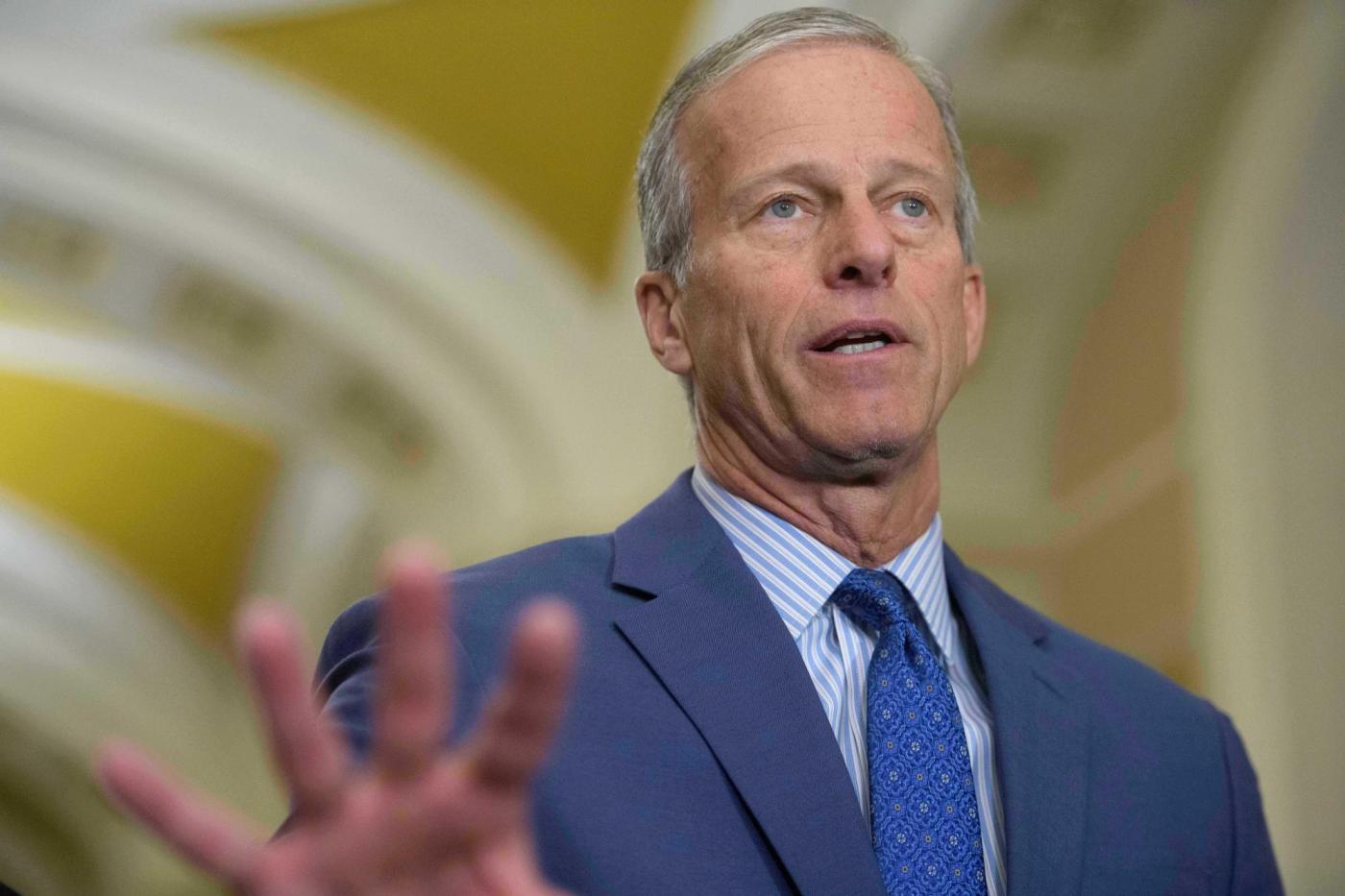
In a floor speech Wednesday morning, Senate Majority Leader John Thune, R-S.D., vented his displeasure at the measure as he questioned whether this war powers resolution should be prioritized under the chamber’s rules.
“We have no troops on the ground in Venezuela. We’re not currently conducting military operations there,” he said. “But Democrats are taking up this bill because their anti-Trump hysteria knows no bounds.”
Republican leaders could move to dismiss the measure under the argument that it is irrelevant to the current situation, but that procedure would still receive a vote.
Schumer said he hoped at least the five Republicans would hold to their position because they “understand how important this is.”
Associated Press writers Lisa Mascaro and Joey Cappelletti contributed to this report.

More Stories
Blasting heat at home and still freezing? There are easy fixes to save money and stay warm
By CALEIGH WELLS It’s that time of year again, when the fuzzy socks are working overtime, the heat is cranking...
Blasting heat at home and still freezing? There are easy fixes to save money and stay warm
By CALEIGH WELLS It’s that time of year again, when the fuzzy socks are working overtime, the heat is cranking...
Tina Peters’ lawyers try to convince Colorado court to overturn conviction for voting system breach
By COLLEEN SLEVIN DENVER (AP) — Lawyers for former Colorado elections clerk Tina Peters will try to convince a state...
Tina Peters’ lawyers try to convince Colorado court to overturn conviction for voting system breach
By COLLEEN SLEVIN DENVER (AP) — Lawyers for former Colorado elections clerk Tina Peters will try to convince a state...
Democrats see a path to win the Senate. It’s narrow and has little room for error
By THOMAS BEAUMONT and JOEY CAPPELLETTI WASHINGTON (AP) — Senate Democratic leaders believe they have a path to winning the...
Democrats see a path to win the Senate. It’s narrow and has little room for error
By THOMAS BEAUMONT and JOEY CAPPELLETTI WASHINGTON (AP) — Senate Democratic leaders believe they have a path to winning the...