
Russia launches another major strike on Ukraine’s power grid in freezing temperatures

By ILLIA NOVIKOV
KYIV, Ukraine (AP) — Russia launched a second major drone and missile bombardment of Ukraine in four days, officials said Tuesday, aiming again at the power grid amid freezing temperatures in an apparent snub to U.S.-led peace efforts as Moscow’s invasion of its neighbor approaches the four-year mark.
Related Articles
Trump set to lead largest-ever US delegation to World Economic Forum in Davos next week
Trump cancels meetings with Iranian officials and tells protesters ‘help is on its way’
Death toll from Iranian protests surpasses 2,000, activists say, as chaos recalls 1979 revolution
Greenland official calls it ‘unfathomable’ that the US is considering taking over the island
Today in History: January 13, Plane crash into Potomac River in snowstorm kills 78
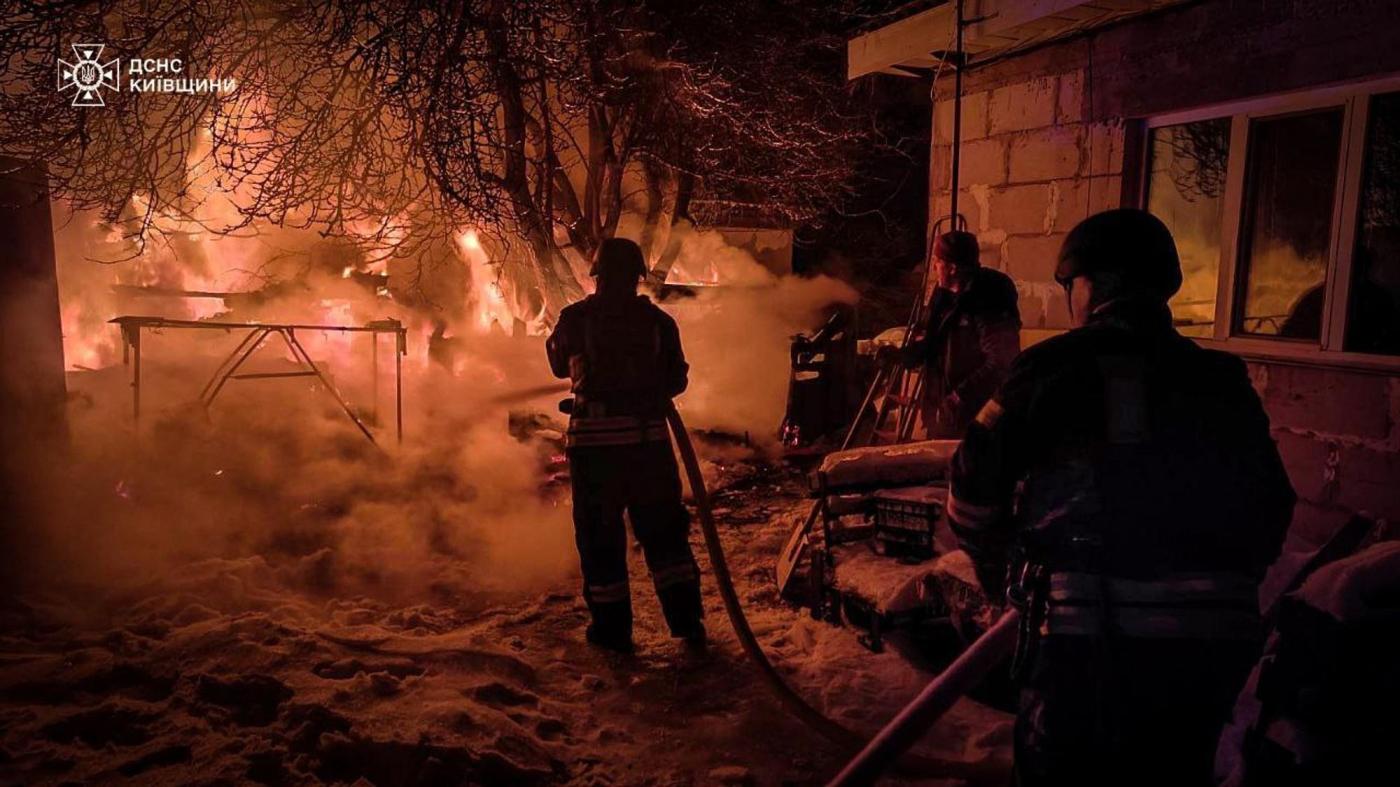
Russia fired almost 300 drones, 18 ballistic missiles and seven cruise missiles at eight regions overnight, Ukrainian President Volodymyr Zelenskyy said on social media.
One strike in the northeastern Kharkiv region killed four people at a mail depot, and several hundred thousand households were without power in the Kyiv region, Zelenskyy said.
The daytime temperature in Kyiv, which has endured freezing temperatures for more than two weeks, was minus 12 degrees C (about 10 degrees F), with streets covered in ice and the rumble of generators heard throughout the capital.
Kyiv has grappled with severe power shortages for days, although Mayor Vitali Klitschko said Monday night’s strikes caused the biggest electrical outage the city has faced so far.
Kyiv residents huddle for warmth
More than 500 residential buildings remained without central heating Tuesday. Throughout the city, bare trees were weighed down with icicles and snow was piled up next to sidewalks.
Olena Davydova, 30, charged her phone at what is called a ”Point of Invincibility” shelter in Kyiv’s Dniprovskyi district. The government-built temporary installations, often large tents on the sidewalk, provide food, drinks, warmth and electricity.
Davydova said she had been without power for nearly 50 hours. That forced her to adopt some new routines: sleeping in one bed with her child and two cats, storing fresh food on the balcony, and using candles after dark.
She says she is taking the changes in stride. “I still have enough patience. I’m not reacting to this in a very emotional way,” she told The Associated Press.
Elsewhere, friends and relatives gathered in apartments still with power or hot water, at least temporarily, to charge their phones, take showers, or share a warm drink.
Klitschko ordered the city to provide one hot meal per day to needy residents. He also announced that workers in the city’s water, heating and road maintenance services would receive bonuses for working “day and night” to restore critical infrastructure.
US calls out ‘inexplicable’ Russian escalation
Four days earlier, Russia also sent hundreds of drones and dozens of missiles in a large-scale overnight attack and, for only the second time in the war, it used a powerful new hypersonic missile that struck western Ukraine in what appeared to be a clear warning to Kyiv’s NATO allies that it won’t back down.
On Monday, the U.S. accused Russia of a “ dangerous and inexplicable escalation ” of the fighting at a time when the Trump administration is trying to advance peace negotiations.
Tammy Bruce, the U.S. deputy ambassador to the United Nations, told an emergency meeting of the U.N. Security Council that Washington deplores “the staggering number of casualties” in the conflict and condemns Russia’s intensifying attacks on energy and other infrastructure.
Russia has sought to deny Ukrainian civilians heat and running water over the course of the war, hoping to wear down public resistance to Moscow’s full-scale invasion, which began on Feb. 24, 2022. Ukrainian officials describe the strategy as “weaponizing winter.”
The attack in Ukraine’s Kharkiv region also wounded 10 people, local authorities said.
In the southern city of Odesa, six people were wounded in the attack, said Oleh Kiper, the head of the regional military administration. The strikes damaged energy infrastructure, a hospital, a kindergarten, an educational facility and a number of residential buildings, he said.
2025 was the deadliest year for Ukrainian civilians
Last year was the deadliest for civilians in Ukraine since 2022 as Russia intensified its aerial barrages behind the front line, according to the U.N. Human Rights Monitoring Mission in the country.
The war killed 2,514 civilians and injured 12,142 in Ukraine — 31% higher than in 2024, it said.
“The sharp increase in long-range attacks and the targeting of Ukraine’s national energy infrastructure mean that the consequences of the war are now felt by civilians far beyond the front line,” Danielle Bell, the agency’s head, said in a statement Monday.
Zelenskyy said Ukraine is counting on quicker deliveries of agreed upon air defense systems from the U.S. and Europe, as well as new pledges of aid to counter Russia’s latest onslaught.
Meanwhile, Russian air defenses shot down 11 Ukrainian drones overnight, Russia’s Defese Ministry said Tuesday. Seven were reportedly destroyed over Russia’s Rostov region, where Gov. Yuri Slyusar confirmed an attack on the coastal city of Taganrog, about 40 kilometers (about 24 miles) east of the Ukrainian border, in Kyiv’s latest long-range attack on Russian war-related facilities.
Ukraine’s military said its drones hit a drone manufacturing facility in Taganrog. The Atlant Aero plant designs, manufactures and tests Molniya drones and components for Orion unmanned aerial vehicles, according to the General Staff of the Armed Forces of Ukraine. Explosions and a fire were reported at the site, with damage to production buildings confirmed, the General Staff said.
It wasn’t possible to independently verify the reports.
Katie Marie Davies in Manchester, England, and Volodymyr Yurchuk in Kyiv contributed.
Follow AP’s coverage of the war in Ukraine at https://apnews.com/hub/russia-ukraine

More Stories
What to know about the Muslim Brotherhood after the US terrorist designation
By SAM MEDNICK and ABBY SEWELL BEIRUT (AP) — The Trump administration waded into a regional debate over the Muslim...
Trump is ending protected immigration status for Somalis, long a target of his anti-immigrant barbs
By BILL BARROW Donald Trump’s administration said Tuesday it will end temporary protected status for immigrants from Somalia, the latest...
Bruins notebook: Geekies welcome baby boy
The Geekies had quite a day for themselves on Saturday. Morgan headed off in the morning to his job as...
How will climate change reshape the Winter Olympics? The list of possible host sites is shrinking
By JENNIFER McDERMOTT and PAT GRAHAM Belgian biathlete Maya Cloetens can’t help but think about the future of winter sports...
How will climate change reshape the Winter Olympics? The list of possible host sites is shrinking
By JENNIFER McDERMOTT and PAT GRAHAM Belgian biathlete Maya Cloetens can’t help but think about the future of winter sports...
Adelaide Writers Week canceled as 180 speakers withdraw after the exclusion of a Palestinian writer
By CHARLOTTE GRAHAM-McLAY, Associated Press WELLINGTON, New Zealand (AP) — Organizers of Australia’s largest free literary festival canceled the event...