
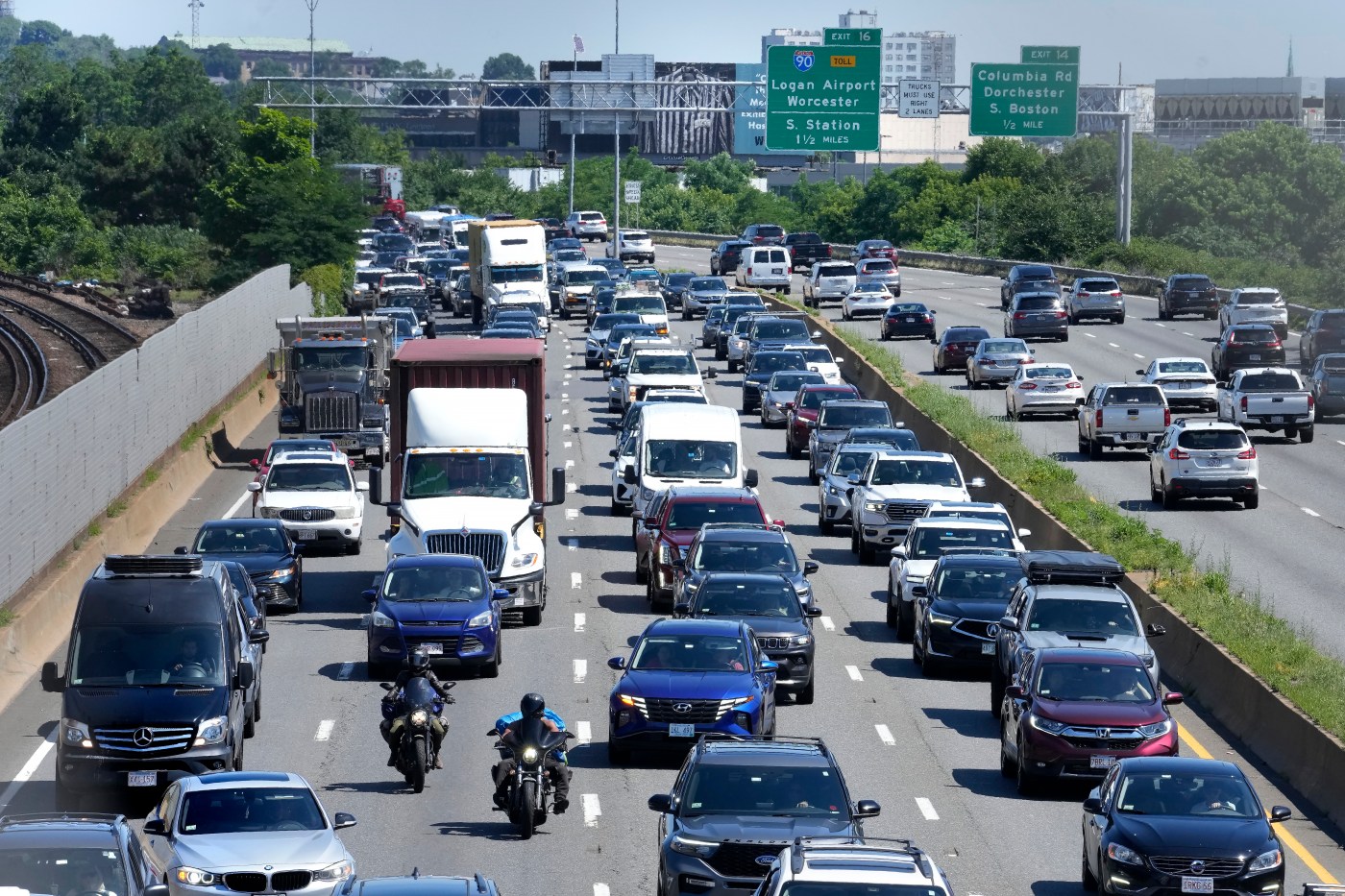
Editorial: More public transportation is great — who’s going to pay?

In progressive Massachusetts, the only good car is one that’s up on blocks, undriveable and unused.
But for Bay Staters who want and/or need to drive places, lawmakers have a plan: a bill seeking to reduce the amount of miles residents travel in their personal vehicles in order to meet state climate mandates.
It’s making its way through the Massachusetts State House, and supporters are high on the premise, citing the fact that the transportation sector accounts for the greatest share of emissions in Massachusetts.
“The sector is the largest source of emissions in the Commonwealth, accounting for roughly 40% of overall carbon pollution,” said Casey Bowers, of the Environmental League of Massachusetts, while testifying in support of the bill before the Joint Committee on Telecommunications, Utilities and Energy.
Kevin Shannon, an analyst with the Union of Concerned Scientists, also testified: “Our recent research… has shown that across the country this kind of transition could save over $100 Billion in public health costs from improved air quality alone. And that doesn’t even account for the reduced pedestrian fatalities and the increased benefits of public transportation.”
Fair enough. Who doesn’t want cleaner air and fewer traffic fatalities? But the devil, as they say, is in the details.
Bill proponents point to similar laws already on the books in Colorado and Minnesota. Minnesota already tracks vehicle miles traveled by its residents, complete with a state dashboard, noting that “high per capita VMT suggests people do not have effective transportation options to get to destinations. It also suggests that people drive farther to get to the places they need to go (e.g., work, grocery stores, amenities).”
If you build it far away, they will come, but they’ll have to drive. It’s a mundane fact of life outside of a city: getting to work, taking the kids to activities, shopping, going to a movie, all these things usually require a car.
State Senator and Committee Chair Michael Barrett (D-Third Middlesex) gets it.
“I do worry about an unintended and subtle bias against rural Massachusetts,” said Barrett. “Why we would want to start to pressure Massachusetts to reduce all miles traveled, polluting and non-polluting alike, does raise the question of what someone is to do in a place when one has to travel a long distance to a construction job or any other place of employment,” Barrett said.
Or work as a ride-share or delivery driver.
The idea here, and in states like Minnesota, is to incentivize the use of public transportation, which means having state-wide, convenient public transportation.
That takes money, which leads to the unpopular question: where will it come from?
Minnesota also uses what it calls “dynamic toll pricing,” a terrific euphemism for “congestion pricing.” Here’s how it works: “… Solo driver fees are based on traffic levels in the E-ZPass lane and can change every three minutes. Fees increase as traffic in the E-ZPass lane increases, and they decrease as traffic decreases. Fees range between $0.25 and $8.”
The idea of an $8 toll must make Beacon Hill lawmakers giddy, but before anyone hits the gas on a similar idea, they should ask themselves: is this an incentive to leave the car at home, or pack it up and leave the state?
Editorial cartoon by Chip Bok (Creators Syndicate)
More Stories
Dear Abby: Her ‘let’s marry’ meets his ‘not yet’
Dear Abby: I have been in a relationship for almost two years with an incredible man who makes my heart...
Wild end marathon roadie in style, beating Seattle in OT
To cap a road trip that seemed like it would never end, the Minnesota Wild found a sudden and spectacular...
Marshon Lattimore, cornerback de Commanders, arrestado cerca de Cleveland por cargos de armas
LAKEWOOD, Ohio, EE.UU. (AP) — Marshon Lattimore, esquinero de los Commanders de Washington, fue arrestado fuera de su natal Cleveland...
Court records reveal details of ICE agent’s previous dragging incident in Bloomington
MINNEAPOLIS — The federal immigration agent who fatally shot a woman in her car this week was dragged about 100...
5 states sue Trump administration for withholding billions in social safety net funds
By MORIAH BALINGIT WASHINGTON (AP) — Attorneys general in five Democratic-led states filed a lawsuit Thursday against President Donald Trump’s...
High School roundup/scores: Danvers star sees 20-20 in victory
AngieLouise Djoko flirted with a triple-double and finished with an eye-opening 21 points, 20 boards and eight steals as Danvers...