
Department Of City Planning Shutters Design Division

Last month, the Department of City Planning reassigned the central design division that used zoning tools to manage public spaces and craft neighborhood character. Critics say the move will deprioritize livability as the city pledges to build more housing.
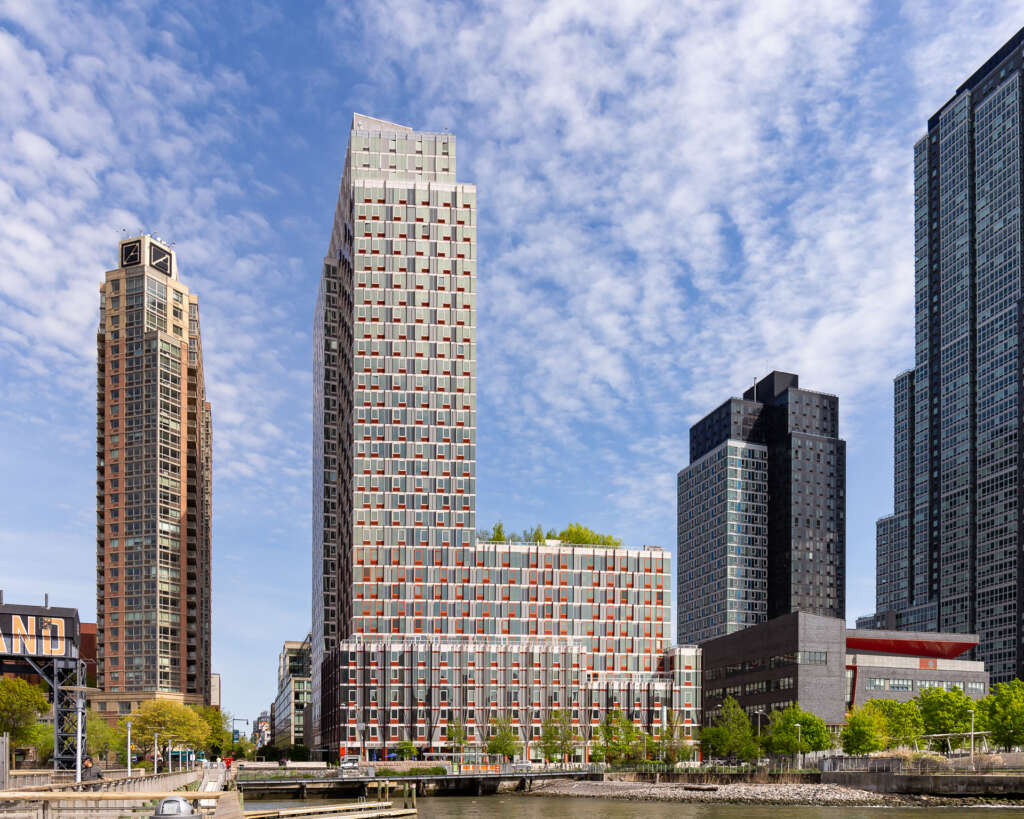
Long Island City’s waterfront near 50th Avenue. A recently approved rezoning will expand the neighborhood’s waterfront esplanade further north, among other design-minded changes included in the plan. (Adi Talwar/City LImits)
When the City Council approved a rezoning last month to create up to 15,000 new homes in Long Island City, it came with strings attached. The package included $650 million for local projects, including a new waterfront esplanade on the East River, sewer upgrades, and new open space.
That plan required coordination with urban designers at the Department of City Planning (DCP), staff who consider the look and feel of a neighborhood undergoing a transformation like a rezoning. Urban designers plan for preserving open space, visualize how neighborhood changes will look, and design the physical infrastructure of a place.
But shortly after the LIC plan was approved, and before Zohran Mamdani took office, DCP shuttered its central design team in late December, and reassigned seven of the department’s designers to different teams.
The move caused a stir at the agency, with planners from past administrations criticizing the decision. They stressed the importance of urban design to make neighborhoods livable as the city plans to build hundreds of thousands of new housing units.
“We shouldn’t be diminishing the role of design at this time. We should be enhancing it,” said Jeffrey Shumaker, a planner who led the department’s design team from 2014 through 2017.
Representatives from DCP said the move was a “reorganization,” adding that “urban design is essential to smart planning and an affordable, sustainable city.” The agency also emphasized that over two dozen staff are trained designers, even if it is not explicitly part of their job function.
“Over time, urban design has evolved from a specialized function into a core part of DCP’s work, with urban designers embedded in borough offices and applying their expertise to neighborhood plans and private applications,” said DCP Executive Director Edith Hsu-Chen in a statement to City Limits. “This reorganization builds on that success, bringing urban designers into citywide, policy-focused divisions, ensuring that the values of good urban design are reflected across the agency.”
Under Commissioner Dan Garodnick the department advanced several large rezonings, including the citywide “City of Yes” plan as well as neighborhood rezonings in the Bronx, Midtown Manhattan, Atlantic Avenue in Brooklyn, Jamaica, Queens, and Long Island City. Those changes unlocked over 400,000 potential units, according to Mayor Eric Adams’ administration, though the figures may prove an exaggeration, reporting from POLITICO found.
Newly inaugurated Mamdani has yet to appoint a DCP commissioner. City Hall did not respond to City Limits’ request for comment before publication.
Mamdani has pledged to build hundreds of thousands of new affordable housing units and has suggested in his plans that the city should pursue more development around transit hubs. It remains to be seen how his administration will use the planning department and its powers to advance zoning changes.
DCP said the changes had been in the works for years, but it came as a surprise to many staff.
Councilmember Julie Won was skeptical of the thinking behind the move, questioning how a decentralized structure would be able to deliver on the same scale. She emphasized the importance of urban design to gaining her support for the Long Island City rezoning in her district late last year.
“Long Island City has dealt with overdevelopment without investment and adequate infrastructure to create an actual neighborhood, not just high rises,” said Won.
Planners who spoke to City Limits about the change highlighted the design team’s vital role in helping communities understand plans through visualization and engagement, and worried that the move would deprioritize design amid ambitious goals to develop more of the city.
“The sudden and shocking dismantling of the Urban Design Division at the NYC Department of City Planning is a huge step backwards for New York. Over the past two decades, their advocacy for the public realm has made the city better,” said Austin Sakong, a professor of urban design at Columbia University, in a post on LinkedIn.
One planner cited the urban designers’ influence in the Gowanus rezoning, where rules mandated new development preserve a continuous walkable waterfront around the Gowanus Canal.
Shumaker pointed to resilient design standards they put in place prior to Hurricane Sandy that shaped recovery efforts after the storm, planning for elevated homes that did not loom over streets.
The restructuring highlights a dynamic present in much of the city’s land use debate in recent years: a widely-acknowledged need for more housing and a desire for livable neighborhoods.
Urban design helps the city do both at once, argued Shumaker, who now leads his own design firm. “We can’t just talk about the quantity of housing. We’ve got to talk about quality,” he said.
New York is the only major U.S. city that doesn’t have a comprehensive plan—a unified vision for growth and development and the infrastructure investments that come with it.
DCP’s design team, Shumaker says, had the flexibility to “think ahead, not just respond to applications or developers that are coming in.”
Mamdani’s campaign platform called for comprehensive planning in New York, to reform what he described as “our disjointed planning and zoning processes to create a holistic vision for affordability, equity, and growth.”
Former planning officials contend that the agency restructuring will make it more difficult to look ahead and train future urban designers.
“Individual designers in separate borough offices do not have the benefits of collaborative input and cannot effectively advise the Commissioner on an ongoing basis,” said Amanda Burden, who served as New York City Planning commissioner from 2002 to 2013, in an email.
But Hsu-Chen said the change would improve the DCP’s work, not detract from it, and build on a model where borough planning offices employ urban designers alongside other planners.
“This reorganization formalizes urban designers’ place across DCP’s teams and ensures that they have a central role in shaping the agency’s work moving forward,” Hsu-Chen said. “We’re confident that the important work of DCP’s urban designers will not only continue but be enhanced in this structure.”
To reach the reporter behind this story, contact Patrick@citylimits.org. To reach the editor, contact Jeanmarie@citylimits.org
Want to republish this story? Find City Limits’ reprint policy here.
The post Department Of City Planning Shutters Design Division appeared first on City Limits.


More Stories
Ataques israelíes dejan al menos a 13 muertos en Gaza antes de que Trump anuncie la Junta de Paz
Por WAFAA SHURAFA DEIR AL BALAH, Gaza (AP) — Ataques israelíes en toda Gaza mataron al menos a 13 personas,...
Today in History: January 9, Americans arrive in Lingayen Gulf during World War II
Today is Friday, Jan. 9, the ninth day of 2026. There are 356 days left in the year. Today in...
Televisora estatal iraní transmite discurso del líder supremo, el ayatolá Ali Jamenei, sobre las protestas en el país
DUBÁI, Emiratos Árabes Unidos (AP) — Televisora estatal iraní transmite discurso del líder supremo, el ayatolá Ali Jamenei, sobre las...
Líder iraní: “Manifestantes arruinan sus calles para hacer feliz al presidente de otro país”, refiriéndose a Trump
DUBÁI, Emiratos Árabes Unidos (AP) — Líder iraní: “Manifestantes arruinan sus calles para hacer feliz al presidente de otro país”,...
Howie Carr: Another dismal week for Democrats
It’s been a dreadful first week of 2026 for the local hackerama. Let’s start with this headline from Fox News...
Autoridades filipinas elevan a 38 el número de desaparecidos tras un derrumbe en un vertedero
MANILA, Filipinas (AP) — Autoridades filipinas elevan a 38 el número de desaparecidos tras un derrumbe en un vertedero.