
Prediction markets could change sports betting nationwide, report says

By Richard N. Velotta, Las Vegas Review-Journal
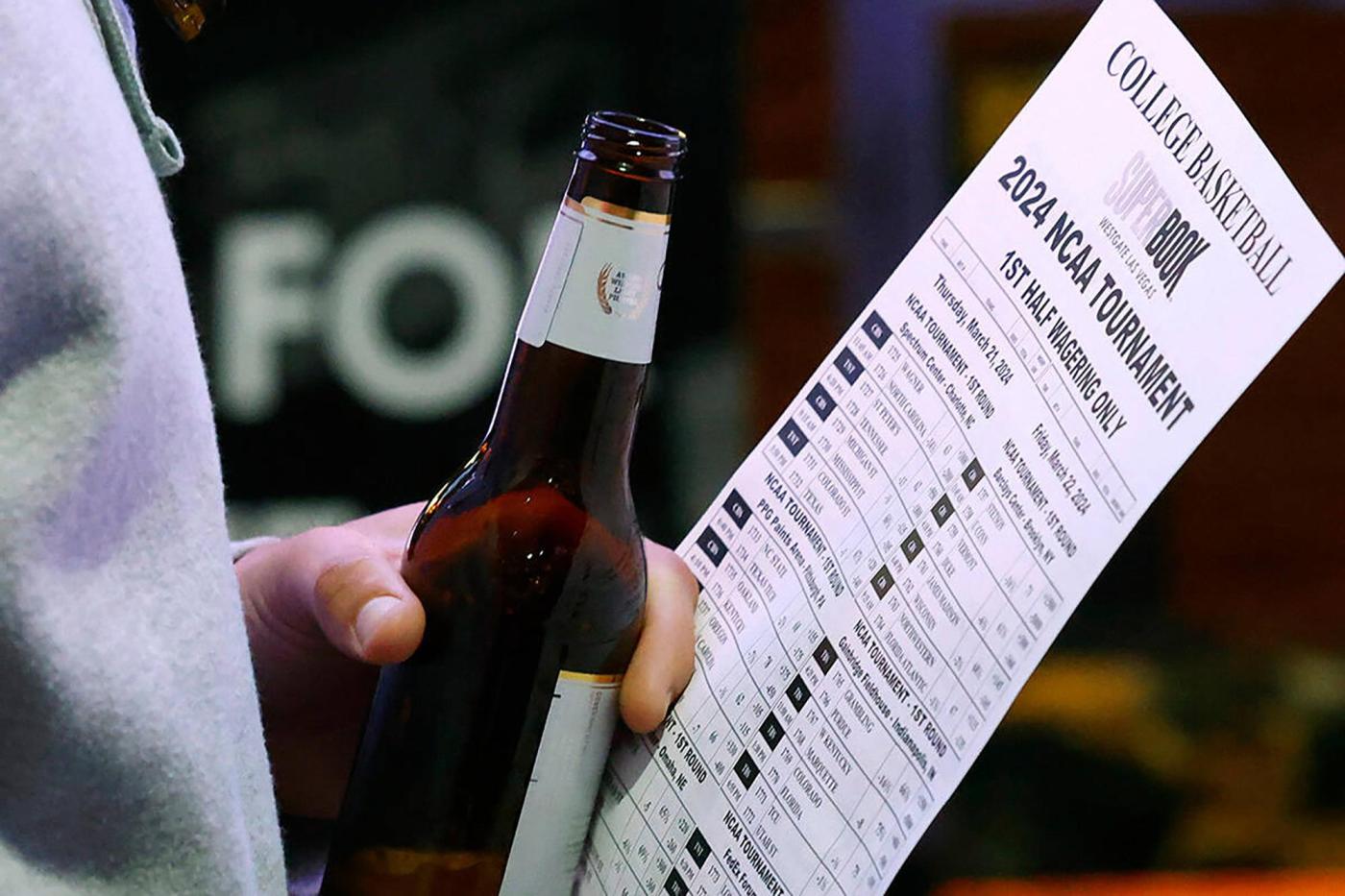
A gambling research company says prediction markets could become a $1 trillion industry nationwide when fully mature, with $435 billion of that coming from contracts on sports outcomes.
Related Articles
Automakers face an ‘EV winter’ in 2026 as sales growth slows
Ticker: Grok faces global backlash over non-consensual sexualized images
Boston Dynamics ups robot game
Alaska Airlines pilot who safely landed plane after panel blew out says Boeing unfairly blamed him
Musk’s AI chatbot faces global backlash over sexualized images of women and children
The battle between prediction markets and states that offer legal sports betting may not be resolved for months, even years.
Newport Beach, California-based Eilers & Krejcik issued a December report, “U.S. Prediction Markets: How Big, How Fast, What’s Next?” that estimates how much the federally regulated markets could slice into traditionally state-regulated sports wagering and that it may not be until 2027 that legal disputes wind their way through court appeals that may ultimately end at the U.S. Supreme Court level.
“Prediction markets could become an important catalyst for reshaping both the betting and trading industries, and may increasingly blur the line between the two,” the company said in the executive summary of its 32-page report. “But myriad patches of risks, unknowns and uncertainties are strewn across the path from here to there.”
Prediction markets entered the Nevada landscape in early 2025 when state regulators found New York-based KalshiEx LLC selling prediction contracts from its website on the outcome of sporting events.
The Nevada attorney general’s office believed Kalshi’s contracts, which offer yes-or-no propositions on all kinds of matters ranging from weather forecasts to economic issues to pop-culture questions, was engaging in a form of sports betting with its sports results contracts.
March lawsuit
In late March, Kalshi filed a lawsuit against individual members of the Nevada Gaming Control Board and the Nevada Gaming Commission. Because Kalshi’s actions directly affected resorts with sportsbooks, the Nevada Resort Association signed on as a defendant in the case.
In November, U.S. District Judge Andrew Gordon dissolved a preliminary injunction that had allowed Kalshi to offer contracts on sporting events until the case was decided in court.
While Kalshi rivals Robinhood and crypto.com agreed to stop writing contracts in Nevada, Kalshi refused and continues to operate in the state as the company appeals Gordon’s ruling to the Ninth Circuit Court.
The Eilers & Krejcik report speculates on what will happen next and other legal experts have weighed in on the future of prediction markets.
Alan Wilmot, a partner at Heitner Legal PLLC, an intellectual property, sports and entertainment law firm based in Fort Lauderdale, Florida, believes the number of outlets will expand in 2026.
Writing for Las Vegas-based Legal Sports Report, Wilmot said more outlets are coming.
“Last year saw 12 organizations submit and/or otherwise become designated as a DCM (designated contract market), a 500 percent increase compared to 2024; this number does not include those who sought to become future commission merchants in order to offer prediction markets in partnership with DCMs,” he wrote.
Wilmot explained that some sportsbooks and fantasy sports operators are considering developing prediction markets as part of their business models.
That isn’t likely to happen in Nevada, where Gaming Control Board Chairman Mike Dreitzer issued an industry notice to gaming licensees warning that prediction market contracts are a form of wagering.
“Offerings for sports and other events contracts may be conducted in Nevada only if the offering entity possesses a nonrestricted gaming license with sports pool approval in Nevada and meets the other requirements for sports wagering including, without limitation, wagering accounts and sports book systems,” Dreitzer said in the Oct. 15 memorandum.
Now offering parlays
The Eilers & Krejcik report indicated that not only are prediction markets expanding in number, they’re adding new contract products that are similar to sportsbook parlay bets.
A parlay bet is a single wager in which two or more individual bets are combined into one. For a parlay bet to win, every wagering selection must be correct. The appeal of a parlay is that it pays out more for winning tickets. Payouts are higher because odds from each leg of a bet are multiplied together producing a riskier proposition since every leg of the bet must be correct.
The Eilers & Krejcik report notes that more than half the gross gaming revenue sportsbooks generate are through parlay bets.
The report said “any prediction market product that hopes to compete meaningfully in sports must, in some form, replicate the emotional payoff and upside profile that parlays provide.”
That’s why Kalshi introduced same-game parlay contracts in September, to offer a competitive product to sportsbooks.
Analysts are now speculating that prediction markets will introduce parlays that cross over into other topics, giving them something traditional sportsbooks don’t offer.
Eilers & Krejcik, in its $1 trillion trading forecast, said sports prediction events would generate $435 billion, with a $310 billion market for financial and crypto predictions, $160 billion on news issues, $40 billion on culture and $55 billion on other topics.
Questions remain
While the report offers several insights and predictions, it also notes that there are numerous unanswered questions. Among them:
How much of the prediction market total addressable market can non-sports events generate?
“Put plainly, there is no bull case for prediction markets without significant total addressable market contribution from non-sports markets. We could easily fill an entirely separate report attempting to answer that question, and we may do that at some point. But for now, we’ll settle on a simpler conclusion: We see a path to non-sports events generating an equal or greater share of the total trading volume generated by sports.”
Will prediction markets offer truly novel products? Will we see cross-genre parlays?
Will increased distribution and reduced friction generate meaningful incremental consumer adoption?
“This is another question where we’re more bullish than bearish, but it’s important to acknowledge that we still don’t know for sure. The ‘mainstream’ prediction market category is effectively a year old in the U.S., and we’re only now starting to see a fulsome push from a range of brands. Until we’ve got better data, the breadth and depth of consumer demand of consumer adoption remains an unknown.”
Will a regulated online sportsbook operator flip to prediction markets?
“A highly speculative but not implausible route driven by multiple factors: lines in the sand drawn by gaming regulators, unsustainable state gaming tax rates, an effectively locked iCasino total addressable market and a prediction market product set that becomes more and more gamblified amid a permissive Commodity Futures Trading Commission under (President Donald) Trump. If exchange economics are the stick, the carrots could include 50-state access, materially lower costs of revenue, and potential to bring differentiated product to a prediction market sector largely lacking in betting and casino heritage. If a regulated online sportsbook operator fully flips, the path to prediction market product parity and correspondingly larger total addressable market gets all the easier to traverse.”
©2026 Las Vegas Review-Journal. Visit reviewjournal.com.. Distributed by Tribune Content Agency, LLC.

More Stories
NASCAR’s Greg Biffle wasn’t flying his plane before crash that killed him and 6 others
By JOSH FUNK WASHINGTON (AP) — Retired NASCAR driver Greg Biffle was not flying his own jet when it crashed...
NASCAR’s Greg Biffle wasn’t flying his plane before crash that killed him and 6 others
By JOSH FUNK WASHINGTON (AP) — Retired NASCAR driver Greg Biffle was not flying his own jet when it crashed...
Anfernee Simons reacts to trade rumors ahead of looming deadline
No Celtics player has appeared in more trade rumors this season than Anfernee Simons. Immediately after Boston acquired Simons in...
NASA delays the first Artemis moonshot with astronauts because of extreme cold at the launch site
By MARCIA DUNN CAPE CANAVERAL, Fla. (AP) — NASA has delayed astronauts’ upcoming trip to the moon because of near-freezing...
NASA delays the first Artemis moonshot with astronauts because of extreme cold at the launch site
By MARCIA DUNN CAPE CANAVERAL, Fla. (AP) — NASA has delayed astronauts’ upcoming trip to the moon because of near-freezing...
Ticker: Eli Lilly announces new plant in Pennsylvania; AmEx profits surge 13%
Drugmaker Eli Lilly and Co. said Friday that it will build a $3.5 billion manufacturing facility in Pennsylvania, as the...