
Opinion: Creative Public-Private Partnerships Can Help Tackle NYC’s Housing Shortage

“One way to address the problem is by the city taking on the cost of building new apartment buildings and entering into vertical ground leases with landlords. This would allow landlords to charge tenants less and still turn a profit.”
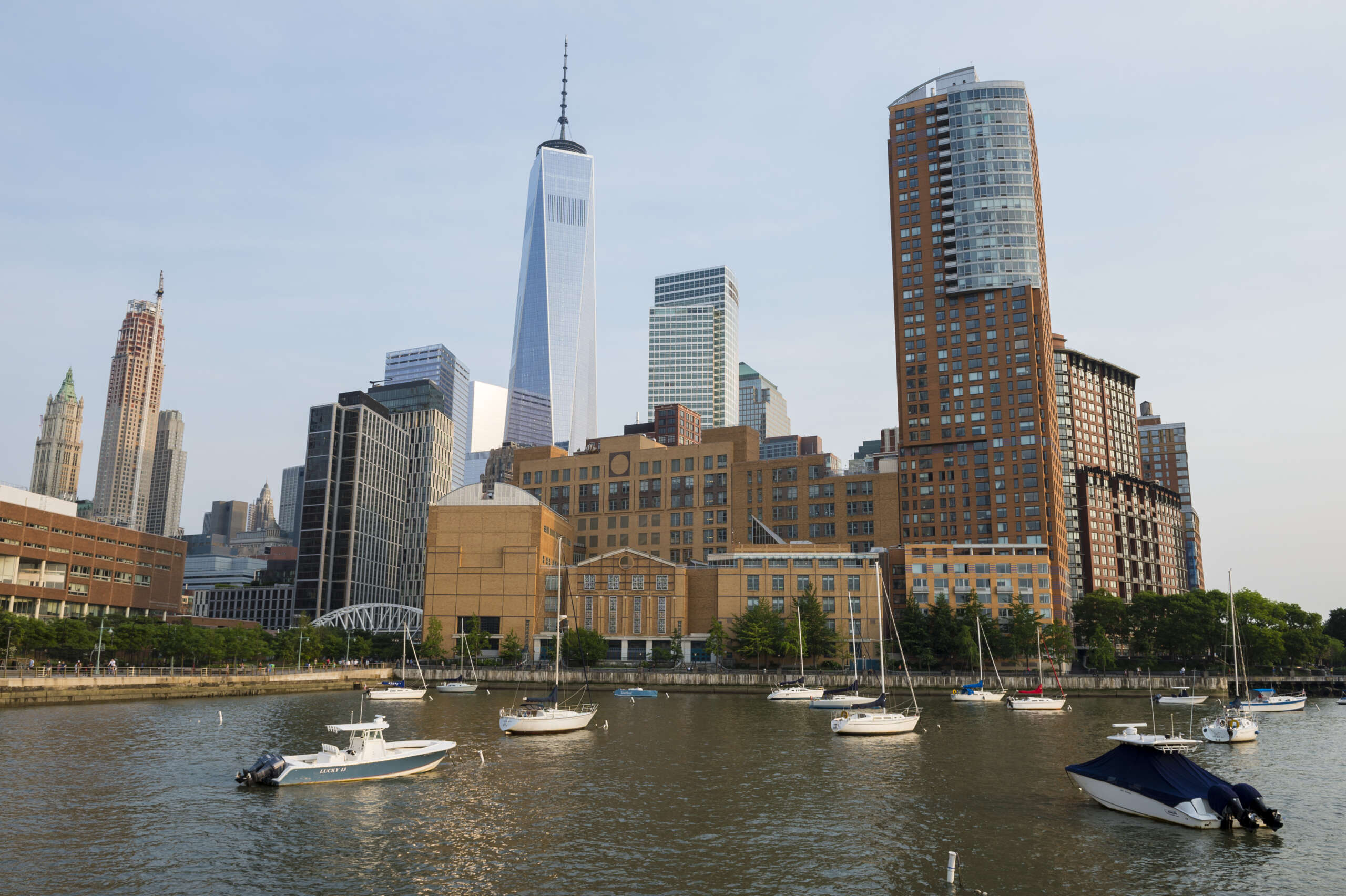
Buildings in Battery Park City, lower Manhattan. (Shutterstock.com)
To address the housing shortage, the city should make it cheaper for landlords to build new units. A public-private partnership where the city builds the shells of new apartment buildings and leases the interiors to landlords, who in turn develop and rent them to tenants, can increase supply and lower rents.
Some estimate that the city needs 500,000 more housing units by 2032 to keep up with demand. Rental prices are skyrocketing because of this high demand and limited supply. “Abundance,” a book by Ezra Klein and Derek Thompson, claims that the lack of affordable and plentiful housing is a major contributor to basically all the ills that plague our cities, like homelessness, wealth inequality, and drug abuse. The lack of affordable rent will crush the soul of the city, as aspiring musicians, artists, and actors continue to get priced out.
As crazy as it sounds, one way to address the problem is by the city taking on the cost of building new apartment buildings and entering into vertical ground leases with landlords. This would allow landlords to charge tenants less and still turn a profit.
The city could use a mix of public funds and mortgage financing to pay developers to construct the exterior and base structures of the buildings. The expense of building the interiors is left to landlords (more below). Unlike other public-private housing partnerships, like Battery Park City, the city would own the buildings. The buildings should be thoughtfully designed with the same profit-earning mentality of apartment buildings built by the private sector.
The city could then execute vertical ground leases of 50 to 100 years with landlords. The landlords would be responsible for designing and building the interiors, and have as much control as possible over the layout of each floor. But the city could impose some conditions to ensure that the buildings have a sufficient number of units, and that landlords do not overcharge rent.
Here is why this plan could be a win-win-win:
Landlords would have significantly lower up-front costs, allowing them to charge less in rent and still make money. Landlords would only need to recoup their costs from developing and maintaining the interior of the buildings. And since the landlords would not own the buildings, they would not have to pay real estate taxes. This could amount to millions of dollars in savings per year.
Tenants would benefit because as explained above, the landlords’ lower up-front costs means they can charge less in rent. If the government builds enough of these buildings, it could dramatically increase the supply of rental units which would also lead to lower rental prices across the City.
The city would earn money in the form of ground rents from the landlords that lease the buildings, creating a long term income stream. As an example, the Battery Park City Authority earned $52 million in ground rents in fiscal year 2023 alone. And the BCPA projects that it may earn over $8 billion in ground rents by 2069.
Since the city would own the buildings, it would benefit from the value of real estate increasing over time, and the capital improvements that the landlords make to the buildings on their own dime. (Any increase in the value of the buildings from renovations and improvements made by the landlords belongs to the city, since it owns the buildings.) It is like house flipping, except the landlords do all the renovating for the city for free.
The city must be creative and consider public-private partnerships like this if it wants to fix the housing crisis. Committing public funds in ways that benefit private landlords makes people feel uncomfortable, but it can be effective. The BPCA makes so much money that it was recently able to commit $500 million to other affordable housing projects in other parts of the city.
This plan would be challenging and expensive. Figuring out how to pay for these buildings, choosing which public property to commit to the projects, finding developers to design and build the buildings, and finding landlords interested in leasing the buildings are just some of the challenges posed by this plan. But no cost is too high to save New Yorkers from astronomically expensive rent. It could revitalize the city.
Sam Martin is a Brooklyn resident and public interest lawyer.
The post Opinion: Creative Public-Private Partnerships Can Help Tackle NYC’s Housing Shortage appeared first on City Limits.


More Stories
Regions from Teesside to Cornwall awarded up to £20m to boost innovation
Regions across England and Wales are set to receive up to £20 million each in fresh government funding to accelerate...
Roadchef secures 75-year leases to unlock £300m motorway investment
Roadchef is set to invest more than £300 million across its network after securing 75-year lease extensions on five key...
UK warned it will rely on US gas as calls grow to boost North Sea output
Britain risks becoming heavily dependent on US gas imports within the next decade, prompting renewed calls for increased North Sea...
Oracle cuts thousands of jobs as Ellison doubles down on AI investment
Oracle has begun cutting thousands of jobs as it accelerates a costly push into artificial intelligence infrastructure, with analysts warning...
Marmite and Hellmann’s to join us giant in £50bn flavour deal
Unilever has agreed a £50 billion ($66 billion) deal to combine its food brands with McCormick & Company, placing household...
Inheritance tax overhaul sparks backlash as family firms warn of lasting damage
Family business owners across the UK have warned that sweeping changes to inheritance tax rules risk undermining long-term growth, forcing...