
Boston Harbor shellfish harvest changes will be ‘tremendous boon’ to Massachusetts residents

Love that clean water!
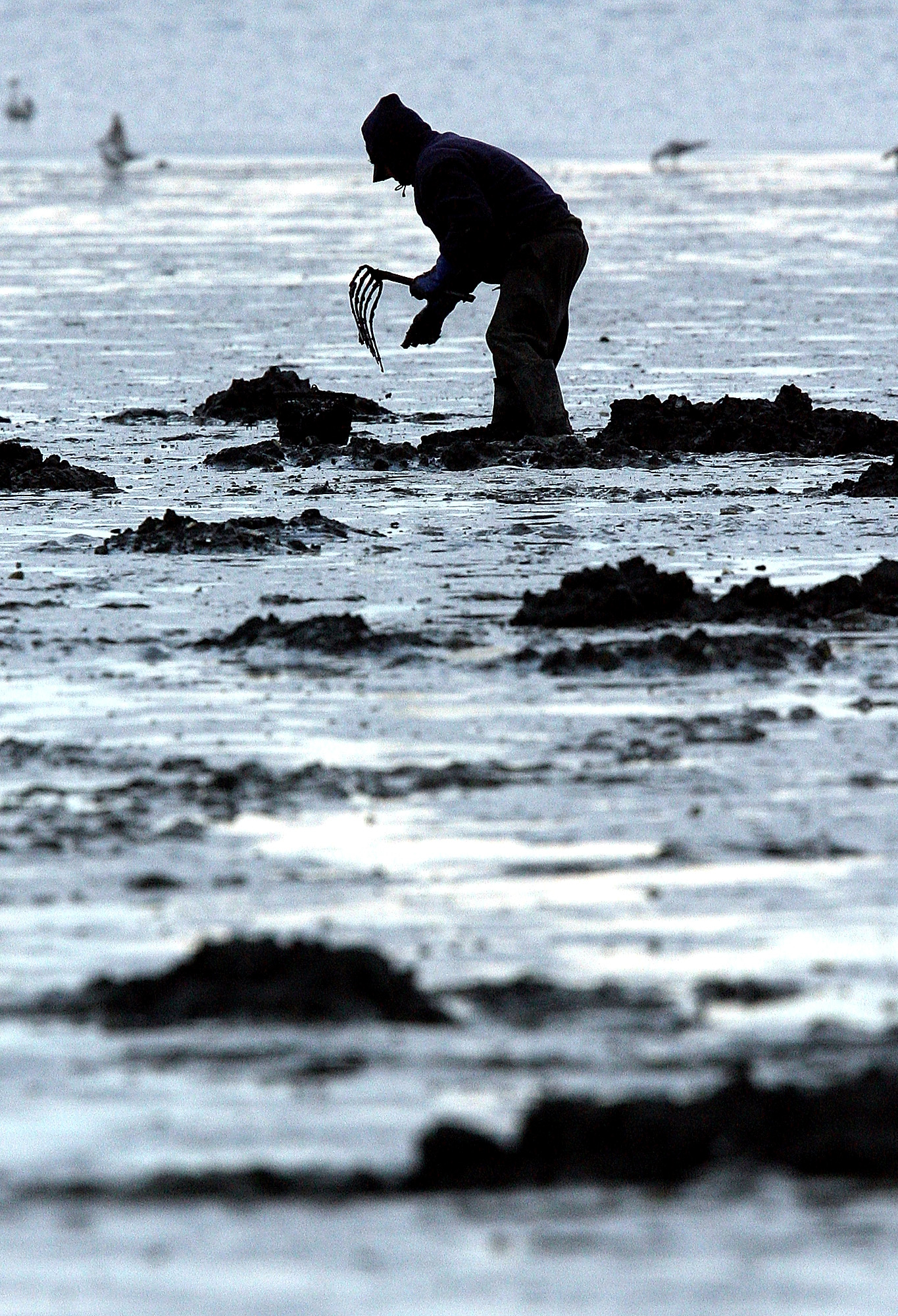
For the first time in 100 years, commercial and recreational shellfishers will be allowed to direct harvest shellfish in Boston Harbor, according to the Massachusetts Division of Marine Fisheries.
“Thanks largely to the multi-billion-dollar clean-up of Boston Harbor, water quality has improved enough to reclassify certain areas of the harbor to Conditionally Approved, allowing shellfishing for direct human consumption,” said Wayne Castonguay, the Gloucester regional shellfish supervisor.
These areas include some of the most productive shellfish habitats in the Bay State — in parts of Winthrop, Hingham, and Hull.
“Not only will this be a tremendous boon to residents of the three towns, but also to other Massachusetts residents interested in recreational shellfishing,” Castonguay added.
Some of these areas have been harvested over the years on a limited basis. But the soft-shelled clams had to be sent to the Division of Marine Fisheries’ shellfish depuration plant in Newburyport — where the clams were purified before they could go to market.
While the depuration process makes shellfish safe to eat, it’s expensive, labor intensive, and is limited to a few specially trained and certified commercial harvesters.
“As such, most residents of the Commonwealth could not benefit from this fishery,” the Gloucester regional shellfish supervisor said. “Reclassification in Boston Harbor will eliminate the need for this highly regulated and controlled process and allow this bountiful public resource to benefit the general public.”
In 1925, a national typhoid epidemic caused by the consumption of contaminated oysters led to the closure of almost all of Boston Harbor to shellfishing.
While the state has ruled that large areas of the Outer Harbor are clean enough to be reclassified for direct harvest, the actual timing of the re-opening requires more collaboration with the local cities and towns.
As a home-rule state, Massachusetts cedes management of shellfishing in clean waters to the local cities and towns.
Because Winthrop, Hingham, and Hull have no history of managing shellfisheries, they need to take some other steps before they can allow shellfishing.
First, a local management plan must be developed to specify how the fishery will be managed sustainably.
Second, they need to establish enforceable rules and regulations, as well as a local permitting system. Third, a local shellfish constable must be hired and trained to oversee all aspects of the fishery.
Also, the areas will be subject to closures following rainfall, sewage spills, and other unforeseen events that can negatively affect water quality. As a result, the towns will need to develop a Conditional Area Management Plan with the state.
To help the towns develop these new procedures, DMF Shellfish Program staff have already met with officials from Winthrop, Hingham, and Hull. These areas are expected to begin opening for shellfish harvesting this year.
“As filter feeders, shellfish have the unique ability to accumulate any contaminants found in the surrounding water,” Castonguay said. “Because of this biology, shellfishing for direct human consumption can only be allowed in areas with the highest water quality designation due to the risk to public health. As such, re-opening these areas to shellfishing is one of the strongest indicators yet that the decades-long Boston Harbor clean-up was a success. We hope this trend continues and we can re-open additional areas of Greater Boston Harbor in the future.”


More Stories
Gophers add California edge TJ Bush Jr. in transfer portal
The Gophers top three defensive ends will return for the 2026 season, and the U has added another threatening edge...
US military action in Venezuela is seen as both a blessing and a curse for Russia’s Putin
By The Associated Press The lightning U.S. operation to capture Venezuelan leader Nicolas Maduro can be seen as both a...
US military action in Venezuela is seen as both a blessing and a curse for Russia’s Putin
By The Associated Press The lightning U.S. operation to capture Venezuelan leader Nicolas Maduro can be seen as both a...
New dietary guidelines urge Americans to avoid processed foods and added sugar
By JONEL ALECCIA, AP Health Writer Americans should eat more whole foods and protein, fewer highly processed foods and less...
New dietary guidelines urge Americans to avoid processed foods and added sugar
By JONEL ALECCIA, AP Health Writer Americans should eat more whole foods and protein, fewer highly processed foods and less...
Mamdani Looks to Phase Out Emergency Migrant Shelters That Don’t Meet City Standards
In 2024, the city temporarily suspended requirements for some shelters during a surge of new immigrant arrivals, so that it...