
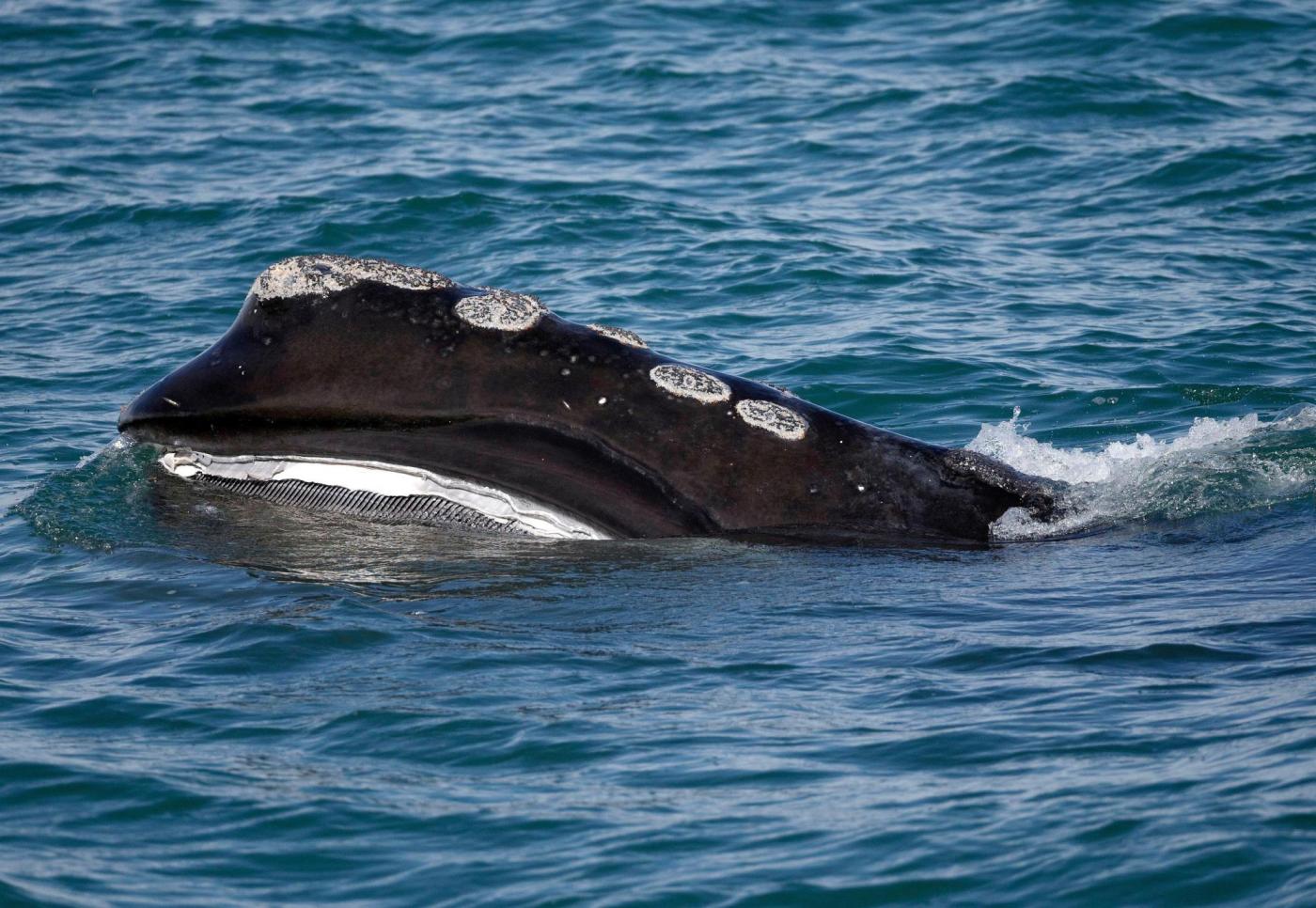
A rare whale is having an encouraging season for births. Scientists warn it might still go extinct

By PATRICK WHITTLE
PORTLAND, Maine (AP) — One of the world’s rarest whale species is having more babies this year than in some recent seasons, but experts say many more young are needed to help stave off the possibility of extinction.
Related Articles
Record $9.6 million fine for Third Coast after substantial oil spill in the Gulf of Mexico
Big Tech’s fast-expanding plans for data centers are running into stiff community opposition
Edith Renfrow Smith, part of Northwestern’s ‘SuperAgers’ study, dies at 111
Hyundai and Boston Dynamics unveil humanoid robot Atlas at CES
McDonald’s facing class action lawsuit over ‘deceptive’ McRib meat
The North Atlantic right whale’s population numbers an estimated 384 animals and is slowly rising after several years of decline. The whales have gained more than 7% of their 2020 population, according to scientists who study them.
The whales give birth off the southeastern United States every winter before migrating north to feed. Researchers have identified 15 calves this winter, the National Oceanic and Atmospheric Administration said Monday.
That number is higher than two of the last three winters, but the species needs “approximately 50 or more calves per year for many years” to stop its decline and allow for recovery, NOAA said in a statement. The whales are vulnerable to collisions with large ships and entanglement in commercial fishing gear.
This year’s number is encouraging, but the species remains in peril without stronger laws to protect against those threats, said Gib Brogan, senior campaign director with environmental group Oceana. The federal government is in the midst of a moratorium on federal rules designed to protect right whales until 2028, and commercial fishing groups have pushed for a proposal to extend that pause for even longer.
There is still time left for more baby whales to be born this winter, but 50 is not a reasonable expectation because of a lack of reproductive females in the population, Brogan said.
“We’re not going to be able to calve ourselves to recovery,” Brogan said. “We also need to be doing more to tackle the two primary causes of right whale deaths, being entanglement in fishing gear and being hit by boats.”
The whales have fared better than last winter, when they gave birth to only 11 calves, according to NOAA data. The whales have reached 20 calves only twice since 2010, and they gave birth to no calves in a disastrous 2018 season. The whales are less likely to reproduce when they have suffered injuries or are underfed, scientists have said.
The whales were hunted to the brink of extinction during the era of commercial whaling and have been federally protected for decades. They remain in a crisis at the moment because there have been more deaths than births in the population in the past decade, NOAA said in its statement.

More Stories
Rolls-Royce targets collectors with £3m electric nightingale as coach-building strategy accelerates
Rolls-Royce Motor Cars has reasserted its electric credentials with the unveiling of a £3 million zero-emissions hypercar aimed squarely at...
Morrisons to axe up to 200 head office jobs as AI drive accelerates
Morrisons has placed up to 200 head office jobs at risk as Britain’s fifth-largest supermarket leans harder on artificial intelligence...
HSBC warns Iran war is shaking global confidence as UK business leaders count the cost
Britain’s biggest bank has issued a stark warning that the war in Iran is already corroding global business confidence, as...
Monica Goyal: Leading the Shift to AI in Law
The legal industry is not known for moving fast. But Monica Goyal has built her career by doing exactly that....
Why Sustainable Promotional Products Are Reshaping How SMEs Build Brand Loyalty
Handing someone a cheap plastic pen with your logo on it used to be standard practice at trade shows and...
From Scotland Yard Commander to Global Security Entrepreneur: Dr Ali Dizaei’s Leadership Story
There are career journeys that follow a straight line, predictable, uniform, and comfortable. And then there are journeys shaped by...