
Trump Escalates Warning to Iran as Protest Death Toll Mounts

By Tom Ozimek
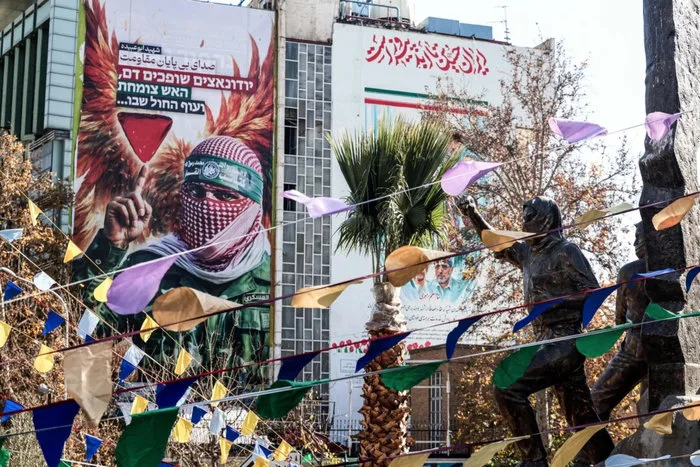
U.S. President Donald Trump on Jan. 4 warned Iran that the United States is prepared to respond forcefully if Iranian security forces escalate lethal violence against protesters, as rights groups reported that at least 16 people had been killed during a week of unrest sparked by soaring inflation and a collapsing currency.
“We’re watching it very closely,” Trump told reporters aboard Air Force One when asked about the protests and earlier remarks in which he said Washington was “locked and loaded” and ready to come to the rescue if Iran kills peaceful protesters.
“If they start killing people like they have in the past, I think they’re going to get hit very hard by the United States,” Trump said, reiterating his earlier warning to Tehran that Washington would not stand by if Iranian authorities resort to deadly force against demonstrators.
Rights monitors say demonstrations have spread across multiple provinces, with clashes between protesters and security forces intensifying in recent days.
What started as anger over economic hardship, sanctions, and the collapse of the Iranian rial has hardened into mass demonstrations against the ruling system itself, with calls for the overthrow of the Islamic Republic met by an increasingly lethal security response.
Norway-based Kurdish rights group Hengaw said that at least 17 people have been killed since the protests began in late December. HRANA, a network of Iranian rights activists, reported at least 16 deaths and 582 arrests. Iranian state media have acknowledged fatalities and arrests but have reported different figures.
The Epoch Times has not been able to independently verify the numbers.
Trump Escalates Rhetoric, Iran Pushes Back
Trump’s latest warning followed a social media post late last week in which he vowed to come to the aid of protesters if the Iranian government “violently kills peaceful protesters,” adding that the United States was “locked and loaded and ready to go,” without specifying what action Washington might take.
His warnings to Iran have taken on new weight after U.S. troops captured Venezuelan leader Nicolás Maduro, a longtime ally of Tehran, on Jan. 3.
The Iranian foreign ministry condemned the U.S. action in a Jan. 3 post on X, calling it a “blatant violation of the country’s national sovereignty and territorial integrity.” The ministry called on the U.N. Security Council to “immediately halt” what it called “the United States’ unlawful aggression against Venezuela.”
A foreign ministry spokesperson on Jan. 5 condemned the voicing of support from the United States for protesters in Iran, describing it as an “incitement to violence.”
Iranian leader Ayatollah Ali Khamenei speaks in Tehran on July 5, 2024. Vahid Salemi/AP Photo
Responding to Trump’s remarks that the United States is ready to come to the rescue of protesters if the killing ramps up, Iranian leader Ayatollah Ali Khamenei said Tehran “will not yield to the enemy,” while distinguishing protesters from what he called rioters.
“We will speak with the protesters but talking to rioters is useless,” Khamenei said in remarks aired by Iranian state television on Jan. 3. “Rioters should be put in their place.”
Police chief Ahmad-Reza Radan said protest leaders were being targeted for arrest, adding that a “big number of leaders on the virtual space” had been detained. Police said about 40 people were arrested in Tehran over what they described as fake online posts aimed at fueling unrest.
Intense clashes have been reported in western Iran, though protests have also erupted in Tehran and in the southern Baluchistan province. In Qom, a religious center, local officials said two people were killed during unrest late Jan. 3, including one man who died when an explosive device he had made detonated prematurely.
Unrest Fueled by Economic Woes
Economic grievances lie at the heart of the unrest. Iran has faced inflation above 36 percent since March, and the rial has lost around half its value against the dollar over the past year, pushing up prices for basic goods. International sanctions tied to Iran’s nuclear program have compounded the pressure, while power and water shortages have added to public anger.
Iran has long maintained that its nuclear activities are strictly civilian, but Western governments say recent actions and rhetoric have heightened concerns about proliferation. Before U.S. strikes in June targeting Iran’s nuclear program, Tehran had been enriching uranium to near weapons-grade levels—an unprecedented step for a country without a declared nuclear weapons program.
Iranian officials recently said enrichment had ceased at all sites, a move they portrayed as a signal of openness to renewed talks aimed at easing sanctions, though no meaningful negotiations have taken place since the June strikes.
Beyond economic pressure, analysts say the unrest reflects widening public frustration with stalled reforms and a growing belief that Iran’s political system is unwilling or unable to deliver meaningful change.
“Even if President Pezeshkian wanted to pursue real reforms, the system itself would not permit them,” political commentator Saeed Bashirtash said in an interview with the Persian edition of The Epoch Times.
Shahrzad Ghanei, Reuters, and The Associated Press contributed to this report.

More Stories
Judge Orders Month-Long Pause on Process for Alberta Separation Referendum Petition
By Olivia Gomm An Alberta judge has granted a one-month stay on the validation process of a petition to trigger...
US to Blockade Strait of Hormuz After US–Iran Talks End Without Deal, Trump Says
By Jacki Thrapp The U.S. Navy will begin blockading the Strait of Hormuz after peace talks with Iran ended without...
US Property Taxes Grow 3 Percent on Average in 2025, Outpacing Inflation
By Rob Sabo Property taxes are rising across the United States and, on average, have outpaced inflation. Homeowners in 2025...
Shane Lowry Makes Golf History With His 2nd Masters Hole-in-One
By Ross Kelly There are millions of casual golfers around the world who dream some day of recording an ace...
Treasury, IRS Propose Rules for 1 Percent Remittance Tax on Some Money Sent to Foreign Countries
By Naveen Athrappully The Internal Revenue Service and the Department of the Treasury proposed regulations on Friday regarding the new...
Hezbollah Leader Says Group Would Continue to Fight Israel After Strikes
By Jack Phillips The leader of Lebanese terrorist organization Hezbollah has said that his group would continue to fight Israel,...