
Massachusetts native on the national frontline of targeting SNAP fraud

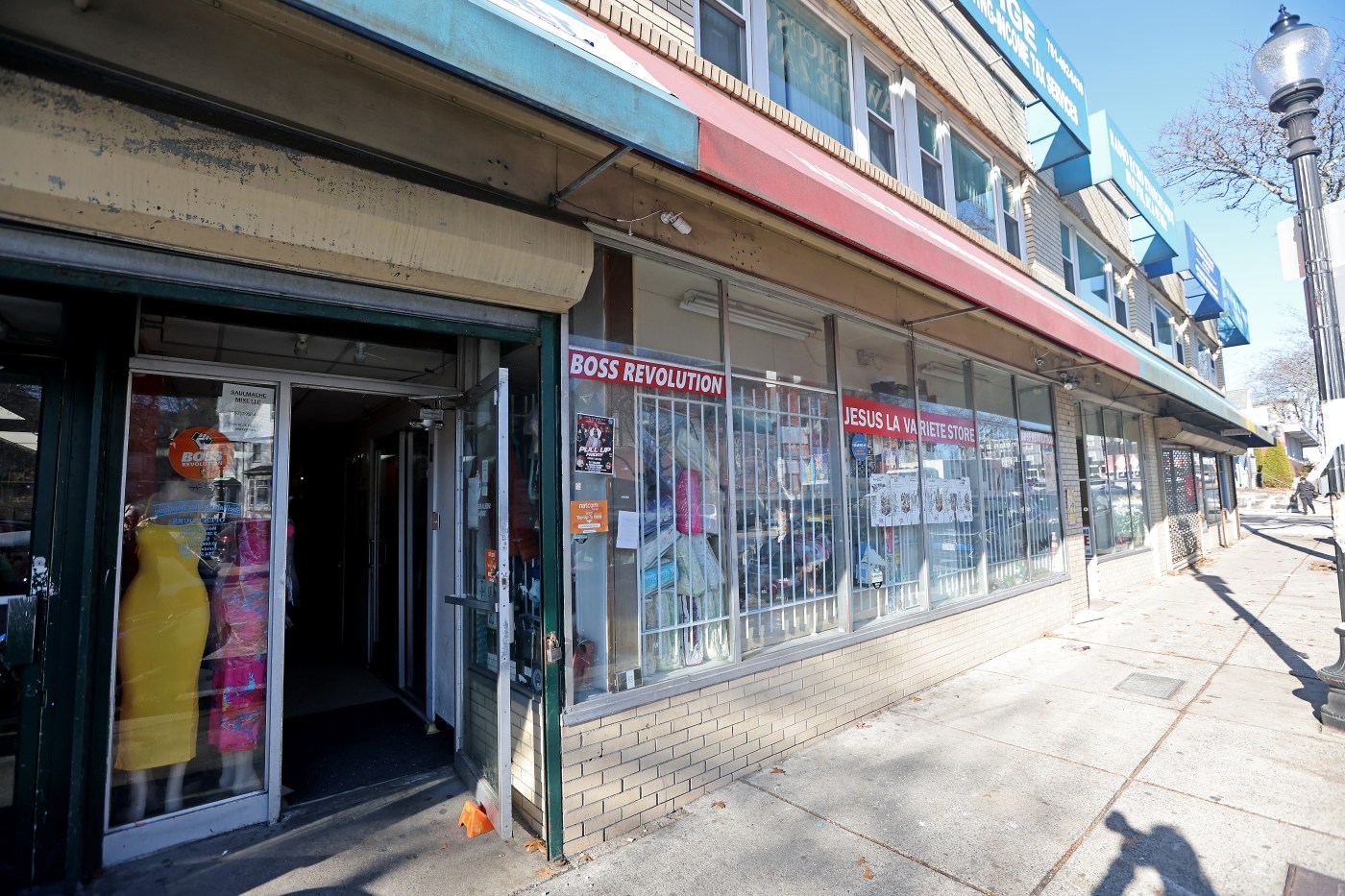
A Massachusetts native on the national frontline of targeting SNAP fraud says the Bay State’s “lax controls” enabled an alleged operation that obtained nearly $7 million in benefits out of tiny storefronts in Boston.
Haywood Talcove, a Danvers native who heads LexisNexis Risk Solutions’ government division, has accompanied the Secret Service on raids that have busted schemes taking advantage of the Supplemental Nutrition Assistance Program (or SNAP). In those enforcement actions, he’s found operations that he says resemble the one uncovered in Mattapan before the New Year.
“What you saw in Massachusetts is happening literally across the country with those convenience stores,” Talcove told the Herald after the feds announced a pair of arrests in connection with the alleged “criminal enterprise” on Blue Hill Avenue.
Talcove has traveled to San Diego, Los Angeles, Las Vegas and Miami with the Secret Service over the past two years, in an attempt to crack down on SNAP fraud. A bulk of the fraudulent activity, he said, occurs in small bodegas, similar to the two storefronts that totaled just 650 square feet.
Inside one targeted Los Angeles business, Talcove recalled, there was a “bag of cocaine and cash,” and no food to be found. The raid uncovered how the store owner received SNAP benefits, he said.
Talcove added that the owner likely told friends and family how to apply for EBT cards, and once in hand, they’d come to the store to receive cocaine or cash.
“If you were a USDA inspector, and you walked in, unless you were visually challenged,” Talcove said, “you would realize this really wasn’t a store.”
Last April, Talcove traveled to Las Vegas with the Secret Service to conduct a payment card skimming fraud operation. In that action, authorities removed four skimming devices, preventing a potential loss of an estimated nearly $1.3 million.
Talcove recounted how one of the fraudulent businesses was located near a homeless encampment, and all the food in the store was dated, including Raisin Brand that expired in 2022 but cost $11.
“They were allowing people to trade in their EBT cards for beer and cash,” Talcove said. “There was no reason to have this bodega, this convenience store, being able to resell EBT.”
Within the past year, Talcove has testified before Congress twice. In each testimony offered last February, the Massachusetts native exposed the “scale and sophistication of fraud targeting government programs.”
Transnational fraud rings, terrorist organizations and domestic criminal enterprises, he said, have “moved beyond pandemic relief” and now target “core social programs with the same tactics — leveraging stolen identities, synthetic identities, and insider collusion.”
Talcove has focused on individuals he describes as “first-person fraudsters,” people he says often overstate their lost income, fail to disclose employment, or misrepresent eligibility details.
He says a second group of people is “perhaps more insidious,” one he calls the “insider threat.” These cases “involve government employees entrusted with administering these programs who instead exploit their positions to facilitate fraud,” he told Congress on Feb. 6, 2025.
As CEO of LexisNexis Risk Solutions for Government, Talcove leads efforts to “stop fraud, streamline government services, and protect taxpayer resources.” His organization issued a report last September, finding that the average monthly rate of applications and post-issuance cases determined as SNAP fraud had doubled since 2024.
That has resulted in a “sharp increase in fraud costs,” the report states. “For every $1 value of benefits lost through fraud, it actually costs SNAP agencies $4.14, up from $3.93 in 2024,” it found.
Talcove said the exploding SNAP fraud is due to a lack of action at the state and federal levels.
Massachusetts U.S. Attorney Leah Foley blamed the state Department of Transition Assistance for failing to prevent the alleged SNAP fraud scheme in Mattapan, while Gov. Maura Healey said her administration reported the “suspicious activity” to the feds.
Antonio Bonheur, 74, a naturalized U.S. citizen from Haiti living in Mattapan, and Saul Alisme, 21, a Haitian national residing in Hyde Park, face one count of food stamp fraud in connection with the scheme.
The defendants’ monthly SNAP redemptions allegedly ranged from $100,000 to $500,000 per month, an amount that the feds say is larger than “full-service supermarkets.”
Bonheur and Alisme allegedly ran the operation out of Jesula Variety Store and Saul Mache Mixe Store, both of which they ran as small variety stores within a single street-facing storefront.
Jesula Variety Store, which Bonheur allegedly owned in Mattapan, began accepting SNAP benefits in September 2021, according to charging documents. The man is accused of submitting a fraudulent application for SNAP benefits, which he started receiving in 2022. He allegedly claimed that he didn’t have an income, but he failed to list his ownership of the business.
Prosecutors allege Bonheur and Alisme “worked the cash registers and personally exchanged SNAP benefits for cash.”
In response, Gov. Healey’s office said DTA notified the USDA on Nov. 1, 2024, about “suspicious transactions” taking place at Bonheur’s store. The governor’s office also pointed out that the USDA “manages the retailer’s application review and approval, and enforcement of reported fraud or suspicious transactions.”
Talcove told the Herald that Massachusetts “doesn’t follow best practices” in verifying data that SNAP applicants provide to “third parties,” as it uses a rules-based check to ensure applications are filled out correctly but stops there.
That means “self-reported information is never challenged,” Talcove said. He added that the state doesn’t run SNAP recipient data against the backgrounds of bodega owners, a group in which he estimates 10% also receive food stamps.
On the other hand, Talcove said, the USDA has spent less than 1% on SNAP program integrity, allowing fraud to run rampant.
He also points to the feds delaying full adoption of the so-called “National Accuracy Clearinghouse,” a pilot program that has identified “over 14 million cases of duplicate participation in Medicaid, SNAP,” and other programs.
“If the USDA were able to increase its investment in retail integrity program operations,” Talcove said, “and the state actually checked the data on the applicants, there’s probably $18 billion that can go to the food-insecure or go back to taxpayers or some combination of both. It’s inexcusable.”
Stuart Cahill/Boston Herald
Haywood Talcove at Fenway Park in 2023. (Stuart Cahill/Boston Herald)



More Stories
Regions from Teesside to Cornwall awarded up to £20m to boost innovation
Regions across England and Wales are set to receive up to £20 million each in fresh government funding to accelerate...
Roadchef secures 75-year leases to unlock £300m motorway investment
Roadchef is set to invest more than £300 million across its network after securing 75-year lease extensions on five key...
UK warned it will rely on US gas as calls grow to boost North Sea output
Britain risks becoming heavily dependent on US gas imports within the next decade, prompting renewed calls for increased North Sea...
Oracle cuts thousands of jobs as Ellison doubles down on AI investment
Oracle has begun cutting thousands of jobs as it accelerates a costly push into artificial intelligence infrastructure, with analysts warning...
Marmite and Hellmann’s to join us giant in £50bn flavour deal
Unilever has agreed a £50 billion ($66 billion) deal to combine its food brands with McCormick & Company, placing household...
Inheritance tax overhaul sparks backlash as family firms warn of lasting damage
Family business owners across the UK have warned that sweeping changes to inheritance tax rules risk undermining long-term growth, forcing...