
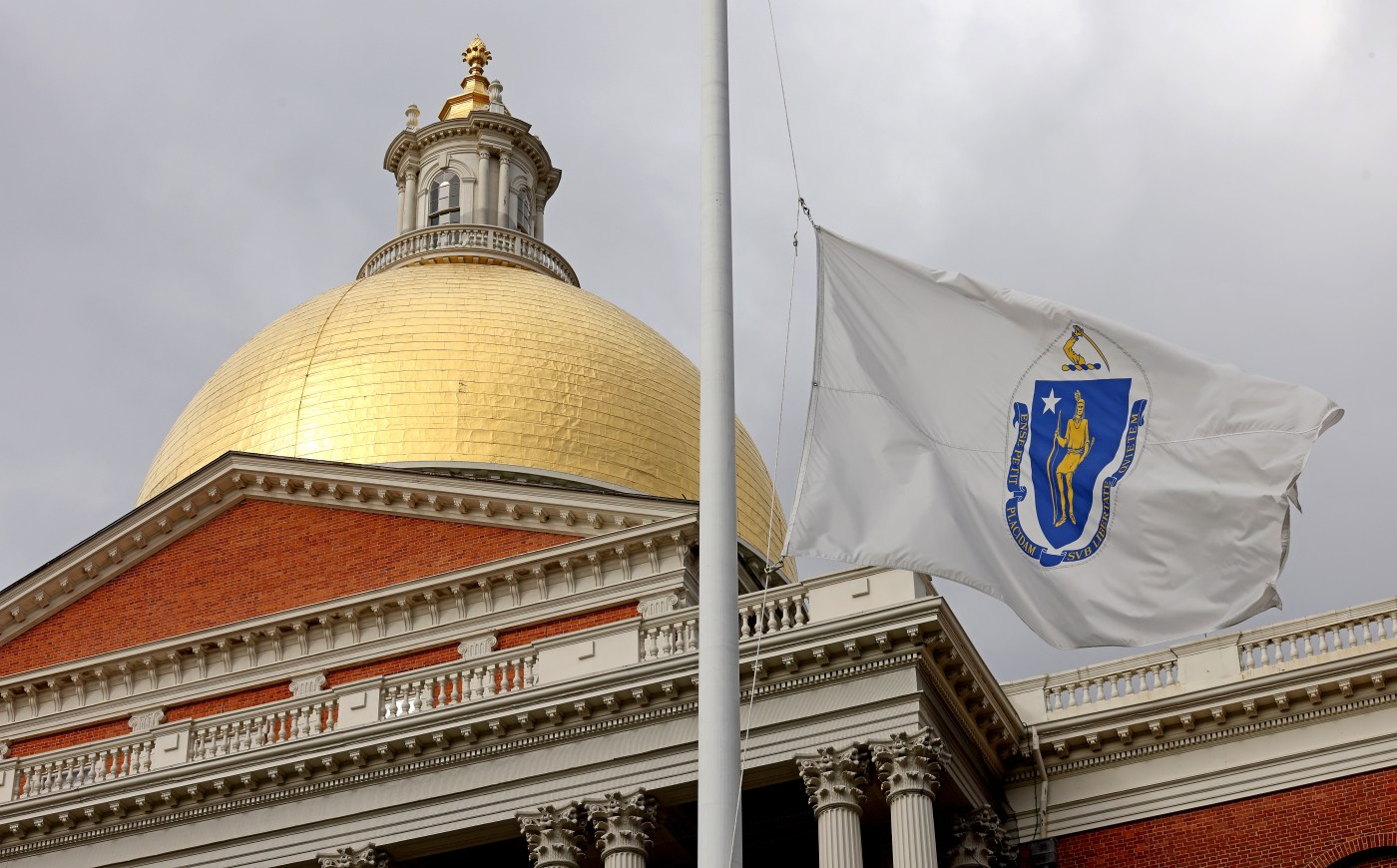
Lucas: State House musical desks and chairs

Eddie Markey owes Mike Flaherty.
That is because Flaherty, the longtime well-respected South Boston legislator who died last week, helped, inadvertently or not, launch Markey’s successful political career.
Flaherty, 89, was buried on Monday.
Markey, 79, is seeking reelection to the U.S. Senate.
It all began a while ago (1975) when both were members of the Massachusetts House of Representatives: Flaherty, as a veteran member (elected in 1967), and Markey, 29, a fresh-faced newcomer from Malden seeking to make a name for himself.
Flaherty was chairman of the House Committee on the Judiciary, appointed to the position by the late House Speaker Tom McGee, a tough-talking former U.S. Marine combat veteran of Iwo Jima in WWII.
McGee also named Markey to the committee even though he did not know who he was.
The Democrat-controlled House back then was made up of an unwieldy 240 members, not the 160 it is today, and McGee did not ordinarily know every Democrat in the chamber.
In any event, Markey, seeking attention, angered McGee over a bill dealing with abolishing part-time district court judges.
McGee, so the story goes, got Flaherty to kick Markey off the Judiciary Committee and allegedly had his desk moved out of the committee office suite into the hallway.
It was no big deal at the time, and nobody paid much attention to the event.
Back then, though, rank-and-file legislators like Markey had no office to be thrown out of.
Before the reduction of the size of the House went into effect in 1978, regular members of the House had no offices.
Part of the appeal in eliminating 80 House seats — at least for the Massachusetts League of Women Voters, which pushed the proposal — was that all legislators would be provided office space, staff, and full-time pay for a part-time job.
Before the House cut, members of the House worked from their desks in the House chamber or from committee hearing rooms.
They made and received phone calls from telephone booths in the House lobby. But they were accessible to constituents because there were more of them. When the daily House session ended, they went home.
Now legislators are so staffed up and shielded in their offices that you are lucky to get a return call, let alone talk to one in person.
The 160-member House also became more manageable, though. Members are now so in hock to the leadership that no one dares to question decisions made by House and Senate leaders. In return, docile members are granted office space, staff, parking spaces, stipends and protection from having to take stands on controversial issues.
Quite often these days, decisions on major pieces of legislation are not made after debate on the House floor, but quietly behind closed doors.
There is no room for rebels in the modern Massachusetts Legislature.
Which is why Markey stood out.
Months after Markeys run in with McGee and Flaherty, U.S. Rep. Torbert Macdonald of Malden and the then 7th Congressional district died.
Markey was the first to announce for the seat in a special election that attracted a dozen Democrat candidates.
Not to be outdone, Markey and a television crew went to the State House one quiet weekend to film a television ad. They found a desk and a chair sitting in an empty hallway and filmed Markey standing in front of it.
He appeared to have just been thrown off the committee and not months before.
Looking like a young Clint Eastwood, Markey said in the ad: “The bosses may tell me where to sit. No one tells me where to stand.”
It was a master stroke. He won the election and never looked back.
When I asked McGee and Flaherty about it one time, Flaherty smiled, McGee chuckled and said, “Hey, good luck to the kid.”
Veteran political reporter Peter Lucas can be reached at: peter.lucas@bostonherald.com
Michael Flaherty Sr. (Family photo)


More Stories
Maduro’s capture disrupts Caribbean holiday travel, hundreds of flights canceled
By MATT O’BRIEN and JOSH FUNK, Associated Press The U.S. military operation that captured Venezuelan President Nicolás Maduro and flew...
Capture of Maduro and US claim it will run Venezuela raise new legal questions
By LISA MASCARO, JOSHUA GOODMAN and BEN FINLEY, Associated Press WASHINGTON (AP) — The Trump administration’s capture of Venezuela’s president...
Capture of Maduro and US claim it will run Venezuela raise new legal questions
By LISA MASCARO, JOSHUA GOODMAN and BEN FINLEY, Associated Press WASHINGTON (AP) — The Trump administration’s capture of Venezuela’s president...
Your Money: A simple financial health check for any age
Bruce Helmer and Peg Webb When people hear the phrase “financial health,” they often picture high income, a perfectly balanced...
Ouster of Maduro government sparks celebrations among Venezuelans in South Florida
By VANESSA A. ALVAREZ, TIM REYNOLDS and BRUCE SCHREINER, Associated Press DORAL, Fla. (AP) — Revelers chanted “liberty” and draped...
Ouster of Maduro government sparks celebrations among Venezuelans in South Florida
By VANESSA A. ALVAREZ, TIM REYNOLDS and BRUCE SCHREINER, Associated Press DORAL, Fla. (AP) — Revelers chanted “liberty” and draped...