
NYCHA to Replace Gas Stoves in 100 Apartments Under Energy-Efficiency Pilot Program

Dozens of public housing apartments will get plug-in induction ranges as part of the initiative, which aims to eventually shift 10,000 NYCHA homes off the use of polluting fossil fuel appliances.
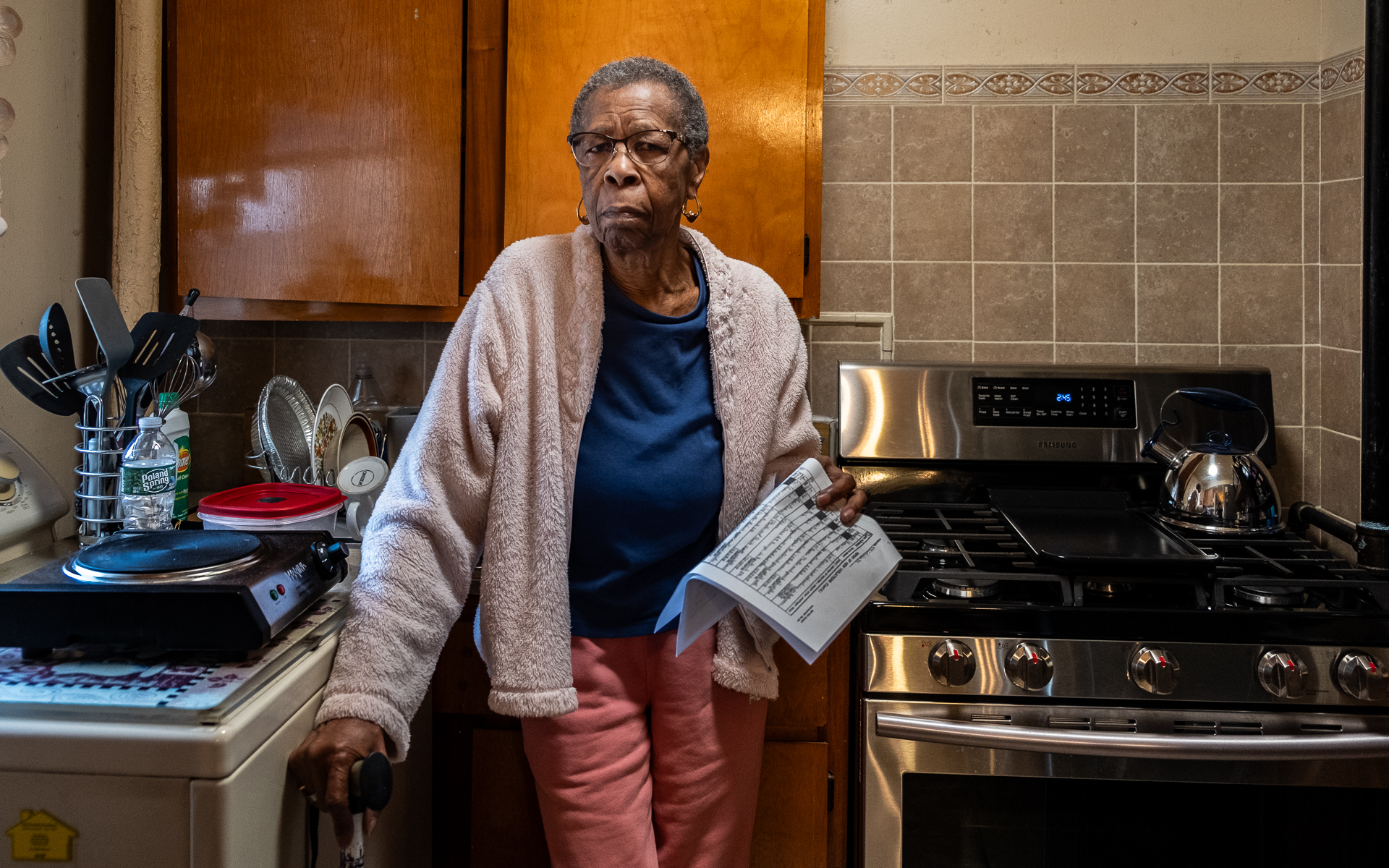
Agnes Winn, 91, a resident at NYCHA’s Red Hook West Houses, during a months-long cooking gas outage in 2024. Officials say converting to electric stoves will eliminate the service disruptions many tenants are used to. (Adi Talwar/City Limits)
For many NYCHA tenants, gas service outages are far too common. On Monday, the housing authority reported 79 such disruptions across its more than 300 developments—breakdowns that can last for months at a time, forcing tenants to cook on hot plates or turn repeatedly to takeout.
But officials are pursuing a solution they say will help avoid that hardship: swapping out gas stoves for energy-efficient induction ranges at 100 NYCHA apartments, with a goal of expanding the upgrades to 10,000 public housing units in the coming years.
The $32 million plan was first announced in 2023 by NYCHA, the New York Power Authority and the New York State Energy Research and Development Authority, which asked appliance manufacturers to submit proposals for non-gas powered stoves that could be installed at scale across the housing authority’s aging buildings.
The winning submission came from Copper, a California-based company which designed a battery-equipped induction stove that plugs into a standard 120-volt outlet. That means the units can be used in existing NYCHA kitchens without the need for major electrical upgrades.
“We can help these buildings avoid a lot of infrastructure cost,” said Copper CEO Sam Calisch.
That applies to both the initial installation and ongoing maintenance. “These buildings, they’re paying a lot to maintain these old gas systems. And very frequently these gas systems have problems. They have to be tested, they leak,” he said.
Repairing gas pipes can require tearing down walls—work that can get complicated in older properties, where asbestos or lead paint might lurk—as well as result in outages for tenants.
“We can come in and be an extremely affordable option relative to that, and also allow the building to retire that gas infrastructure at the same time,” Calisch said. Since the stoves are partly powered by battery, they can also work even in the case of a power outage, he added.
One of Copper’s existing induction stove models. The
company will design 100 ranges for NYCHA as part of
the pilot program. (Photo courtesy of Copper)
There are other benefits to moving off of gas. Buildings account for roughly 70 percent of New York City’s greenhouse emissions, and NYCHA has 2,411 of them across 335 developments. Gas stoves are also a leading source of indoor pollution, releasing chemicals like methane and nitrogen dioxide into homes that can exacerbate respiratory ailments like asthma.
In another earlier pilot program, NYCHA and environmental advocates swapped out gas stoves for electric ones in 20 public housing apartments in The Bronx and saw improved air quality as a result, news site The City reported in 2023.
NYCHA has not yet specified which of its developments will see the first 100 induction stoves installed during the pilot phase. “Pilot units will be chosen based on anticipated need for gas riser work that could be averted through use of the stoves, resident leadership support, and operational feasibility,” a spokesman for the housing authority said in an email.
The initiative is modeled off another pilot program that seeks to replace fossil fuel-burning boilers at NYCHA properties with 30,000 eco-friendly electric heat pumps that can both heat and cool apartments. An initial 72 were installed at the Woodside Houses starting in 2023.
The changes at NYCHA are playing out amid broader debate over how to decarbonize New York’s housing stock in the face of climate change. The city has already banned the use of gas infrastructure in newly constructed buildings, starting with smaller properties in 2024 and expanding to all other new builds in 2027.
A similar statewide ban, dubbed the All-Electric Buildings Act, passed the legislature in Albany in 2023, but has faced major pushback from the fossil fuel industry. It was set to take effect in January, but is now on hold, after Gov. Kathy Hochul agreed to delay its implementation for at least a year.
To reach the editor, contact Jeanmarie@citylimits.org
Want to republish this story? Find City Limits’ reprint policy here.
The post NYCHA to Replace Gas Stoves in 100 Apartments Under Energy-Efficiency Pilot Program appeared first on City Limits.


More Stories
Reform UK becomes first British political party to launch its own podcast
Reform UK is venturing into podcasting with a weekly show that will offer listeners behind-the-scenes access to Nigel Farage and...
Labour’s tax uncertainty is pushing Britain’s wealthiest towards the exit
The majority of Britain’s ultra-wealthy individuals are actively weighing up whether to leave the country, driven not so much by...
Barclays bets on the high street once more with new branches and the return of the bank manager
Barclays is charting a decisive U-turn on the high street, with plans to open new branches across the country and...
Amazon bets on Whole Foods to salvage its troubled UK grocery ambitions
Amazon is dusting itself off for another tilt at Britain’s fiercely competitive grocery sector, this time by converting its abandoned...
OpenAI’s flagship UK data centre hits the buffers in blow to Starmer’s AI ambitions
OpenAI’s much-trumpeted plans to build a major data centre in the north-east of England have ground to a halt, dealing...
Explosion Proof PTZ Cameras — Full 360° Intelligence in Explosive Zones
In a standard office building, a blind spot in your surveillance coverage is an inconvenience. In an oil refinery, a...