
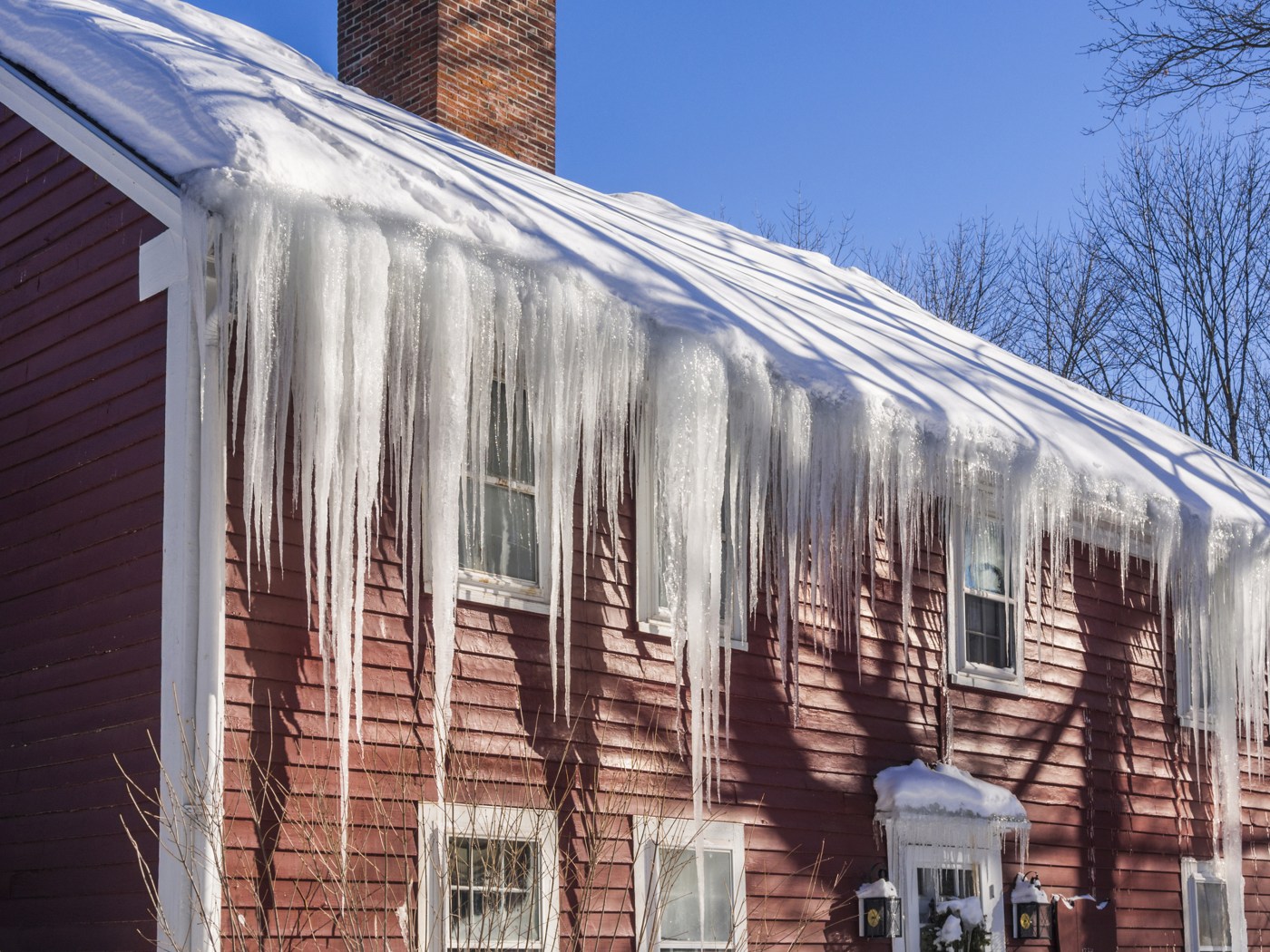
Frozen gutters? Here’s what you can do

Frozen gutters are more than just a winter nuisance; they’re a warning sign. When you see those long, gleaming icicles hanging from the eaves, it usually means water is backing up somewhere it shouldn’t. Left alone, that ice can warp gutters, tear them off the house, or even trigger roof leaks and full-blown ice dams. The good news: You have options for prevention, and a few choices for dealing with frozen gutters once they arrive.
Before anything else, fight the temptation to hack away at the ice with a hammer, shovel or anything else from the garage. Every spring, gutter pros shake their heads at the dents, cracks and bent panels caused by well-meaning homeowners. Ice is stubborn, and brute force causes far more damage than it prevents.
Once your gutters are frozen solid, the reality is that your best solution may be patience. There are services that can thaw gutters using steam or hot-water equipment, but expect to pay a few hundred dollars for something that may only provide temporary relief. If the temperatures stay low or you’re dealing with a chronic freeze point, the ice can return within days.
For a long-term fix, look at heating systems designed specifically for gutters and downspouts. These systems use cables or panels to warm the metal just enough to keep water flowing. They’re effective and reliable, and priced accordingly. Depending on the size of your home and layout of the gutter system, installation usually runs between $500 and $1,000.
Skip the salt and chemical shortcuts. Melting products that work on driveways can corrode roofing materials, stain gutters and wash harmful runoff into your yard. They’re not recommended by roofers, gutter installers or landscapers.
If water has already crept under the shingles or you see signs of leaks inside the house, call a pro immediately. Once moisture gets past the roof surface, you’re in a race against time to prevent further damage.
The best strategy to prevent frozen gutters is the simplest: Keep your gutters clear. Hire a professional gutter cleaner twice a year (usually once in spring and once in fall) to remove debris that traps water. Downspouts clogged with leaves or twigs are the primary cause of winter freeze-ups. A clean pipe allows water to fall straight through before it can solidify.
Next, take a look at the attic. Homes with warm, poorly insulated attics are prime candidates for ice dams. Heat escaping upward melts snow on the roof, and that water refreezes right at the colder gutter line. A contractor can evaluate your insulation and ventilation and help prevent these freeze-thaw cycles.
Finally, remember that none of this is DIY territory. Working on ladders or rooftops in winter conditions is dangerous, even for experienced pros. Whoever you hire, whether for cleaning, insulation work or thawing, should carry the appropriate state or local licensing along with both liability and workers’ compensation insurance. If they don’t, you could be legally and financially responsible for injuries on your property.
Tweet your home care questions with #AskingAngi and we’ll try to answer them in a future column. Visit at angi.com./Tribune News Service


More Stories
US court rules against Pentagon in killer AI dispute
The Department of War had ordered contractors to drop Anthropic after it refused to allow military use of its technology...
Which Interior Flooring is Best?
Where do you start when choosing new flooring? When shopping for new flooring a good place to start is to...
Petrol set to top £1.50 a litre as Iran war drives fuel price surge
UK drivers are bracing for a sharp rise in fuel costs, with petrol prices expected to exceed £1.50 per litre...
Dyson hit by £440m sales drop as Trump tariffs bite
Dyson has reported a £440 million drop in annual sales after being hit by US trade tariffs, although the group...
Octopus Investments to cut 20% of staff as AI reshapes asset management
Octopus Investments is set to cut around a fifth of its workforce as it accelerates the adoption of artificial intelligence,...
Next to invest £300m in UK logistics as new warehouse set to deliver £2.5bn boost
Next has unveiled a major expansion of its UK logistics network, committing more than £300 million to new warehouse infrastructure...