
St. Paul Public Schools spent $125,000 on campaign for referendum vote

On Election Day, a majority of St. Paul voters approved a special school district tax levy that will cost some $37 million per year for the next decade, adjusted annually for inflation.
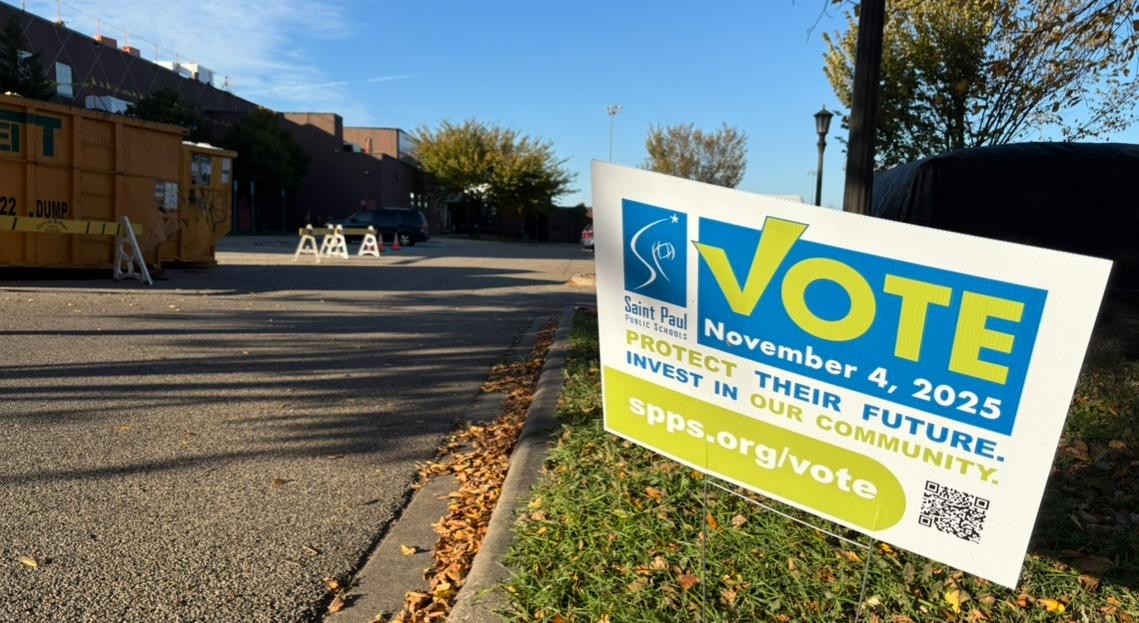
To help convince residents to vote on the $1,073-per-student tax levy, St. Paul Public Schools hired a consultant known for promoting public education and public health organizations, printed its own lawn signs, recruited student volunteers to record robo-call messages and filmed campaign-like YouTube testimonials featuring parents, students and teachers.
The school district effort — which cost taxpayers about $125,000 — rolled out on top of and separately from independent expenditures in direct support of the levy, by the “Vote Yes for Strong Schools” campaign led by parents and staffers.
Missing from either effort was more than passing mention of another 10-year tax levy, approved by voters in 2018, which also is costing taxpayers some $18.6 million per year. The 2018 levy is slated to continue through the 2028-2029 school year and can be extended for another decade by vote of the school board around the beginning of that school year.
Officially, school districts are not allowed to spend district funds to promote a ‘Yes’ vote on referendums, according to the state Attorney General’s Office, but they are required to send out mailers laying out how much money will be raised by the levy and what it will be spent on.
Getting the word out
School district officials have said they conferred with in-house general counsel and the Minnesota School Boards Association on their additional efforts, such as robo-calls and yard signs printed on school district printers, to make sure they had complied with the letter of state law.
About $48,000, or more than a third of their $125,000 in expenditures, were spent on the requisite mailers. “Protect their future,” read the school district lawn signs and levy literature. “Invest in our community.”
The attorney general has ruled that school boards may spend “reasonable amounts” of district funds to “impartially place pertinent facts” before voters, according to the Minnesota School Boards Association. St. Paul Public Schools currently has a budget of approximately $1 billion.
Dr. Stacie Stanley (Courtesy of St. Paul Public Schools)
“And so when you think of $126,000, it’s money and I get that,” said SPPS Superintendent Stacie Stanley. “It’s not 10%, it’s not 50%, it’s not 70% of the budget.”
The district’s informational campaign was about ensuring residents have the information they need to make an informed decision when they vote and no “Vote Yes” materials were distributed by the district, officials said.
“I always say as a superintendent, there are two things that you never want to happen: You never want a referendum to pass and have somebody say, ‘I didn’t even know you guys were doing that,’’ Stanley said. “And likewise, you never want a referendum to fail and have someone say, ‘I wish that you would have come and spoken with me because if you would have, I definitely would have voted for that … I didn’t have the information that I needed.”
Guidelines
School districts and other public agencies are allowed to distribute factual, impartial information on a levy, such as the size of a levy proposal and how the money will be spent. By statute, districts must send voters a mailer with those details.
The school board determines what a reasonable amount of money would be to spend on informing voters.
According to the state school board association, which provides referendum guidelines to school boards, whatever “access” is provided to vote yes groups must also be provided to vote no groups. While there is no statutory prohibition against sending students home with informational materials, the association encourages district officials to “carefully weigh the perception of this practice.”
Board members and staff can use their personal time and money to support or oppose a district question, but cannot advocate one way or another while they are being paid by the school. District officials made sure staff knew that any advocacy work for or against the referendum needed to be outside of work hours, Stanley said.
A total of $124,791 was spent on referendum activities, including mailers, yard signs, radio and television ads, supplemental pay for teachers featured in materials and a consultant. Some funds went for advertising the referendum on TV channels or radio stations targeting Hmong, Somali and Spanish-speaking residents.
“We have to really be culturally responsive about how we’re reaching out and it requires translations, it requires more than just community meetings,” Stanley said. “It requires us really reaching out to our communities through organizations that are trusted, that they’ll listen to.”
Where the money went (rounded up)
• Required mailers: $48,280.
• Supplemental pay for teachers: $255.
• Radio advertising: $17,470.
• TV: $7,500.
• Referendum video/video consulting: $10,000.
• Facebook advertising: $2,491.
• Printing (flyers, postcards, yard signs): $25,370.
• Consultant: $13,425.
The school district also encouraged staff to distribute lawn signs to their neighbors. Materials that were provided to staff, such as signs or staff communications, all directed to spps.org/vote and the same information provided in mailers, and no “vote yes” materials were being distributed by the district, according to district spokesperson Erica Wacker.
Stanley and other district staff also spent time getting the word out on the referendum, attending Rondo Days, Hmong International Freedom Festival, and presenting to the Midway Chamber of Commerce, St. Paul College and the African American Leadership Council, among others.
“So we were going to make certain that our major groups of individuals, that we had outreached to them,” Stanley said.
Statewide
Statewide, 45 school districts had operating levy referendums on the ballot this year. Of those, 31 were approved by voters. The amount of money per-pupil provided by the approved levies ranged from $275 to $2,700. The highest per-pupil amount was approved for Granada Huntley-East Chain Public Schools in Martin County.
Tom Sager, the district’s executive chief of financial services for the district, estimates that around 80% of levy funds will go toward district wages based on how district revenue is typically distributed. Around 8% of the district’s budget goes to administrative services.
“And the interesting thing about that 8% … we compare and pressure test that against well, what else is that — what are other people spending? And we’re actually below the state average in other districts like us in that administrative support,” Sager said. “So that kind of keeps us where we want to be.”
Related Articles
St. Paul sues over $900,000 financial literacy contract with ‘BlackFem’ vendor
Joe Soucheray: Ho, ho, ho, merry TIFness!
St. Paul school board votes to keep Hmong language, culture school at current campuses
After encounter with St. Paul school security, 11-year-old found with pellet gun in backpack
Minnesota survey takes stock of students’ health: better mental health, but late-night screen time common
The district approved a $1 billion budget for the 2025-2026 school year in June. Of its overall budget reductions, 74%, or $11.5 million, came from cuts in central office departments – 8% of the district’s total budget — including Schools and Learning, administration and operations and financial services, human resources and equity, strategy and innovation.
“I (held leadership posts) in other districts and I know we are very lean with our administration,” Stanley said.


More Stories
Pope Leo XIV urges the faithful on Christmas to shed indifference in the face of suffering
By SILVIA STELLACCI and COLLEEN BARRY VATICAN CITY (AP) — Pope Leo XIV during his first Christmas Day message on...
Americans facing a tough job market in 2025 won’t get a break next year
By Jarrell Dillard, Bloomberg News This year was a difficult one for Americans looking for work. Forecasters don’t see much...
Doctor’s orders? ‘Belly laugh at least two to five days a week’
By ALBERT STUMM, Associated Press Melanin Bee curves her spine like a stretching cat as she lets out a maniacal,...
3 recipes that will get dinner on the table in less than 45 minutes
By Nicole Hvidsten, The Minnesota Star Tribune December seems to fly by at a record pace. In addition to the...
Deck your garden with boughs of holly, a plant rich in symbolism and evergreen beauty
By JESSICA DAMIANO, Associated Press No doubt you’ve seen your share of hollies this month — in wreaths and boughs...
Boston firefighters knock down heavy fire on Christmas, 3 residents displaced
City firefighters knocked down a heavy blaze in Dorchester on Christmas morning. Firefighters responded to 699 Washington St. — a...