
Gaskin: Why it mattered that a Black man led the MCCA

After watching what happened with Marcel Vernon, the former CEO of the Massachusetts Convention Center Authority (MCCA), it will be hard to take Black leadership in Boston seriously.
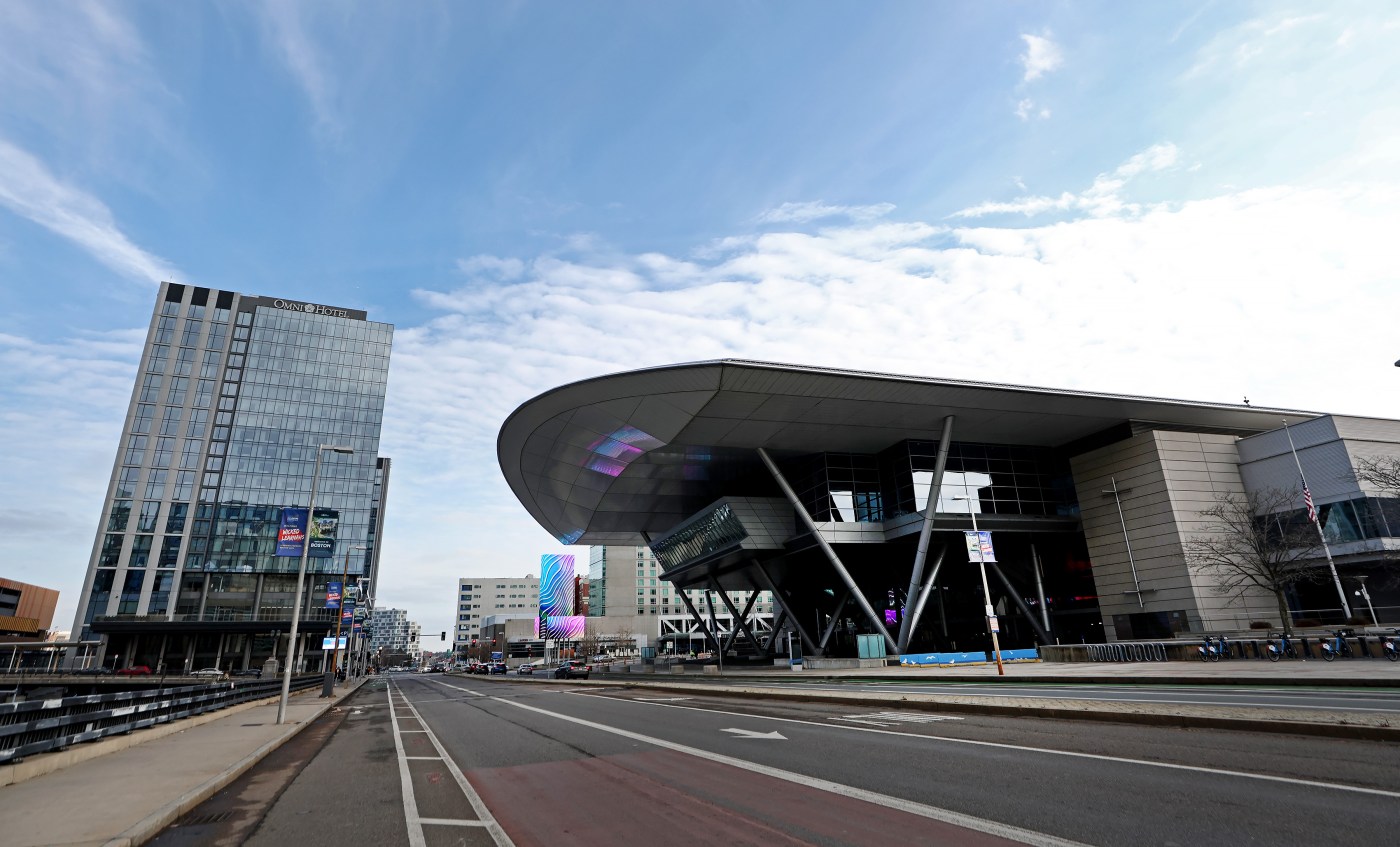
For those unfamiliar with the MCCA, it owns and operates the Thomas M. Menino Convention and Exhibition Center, the John B. Hynes Veterans Memorial Convention Center. MassMutual Center in Springfield, and the Lawn on D. It also owns and manages the Boston Common Garage, Lot on D in the Seaport, and the Springfield Civic Center Parking Garage.
The MCCA controls approximately 30 acres of land in the South Boston Waterfront area, the Authority also controls air rights, easements, and subsurface rights, giving it the power to plan, lease, develop, or monetize these properties over time. Using conservative Seaport development estimates, land in this area routinely supports projects valued at roughly $30 million per acre.
At that rate, 30 acres represents approximately $900 million in land value alone. With vertical development and air rights, the total value of projects supported by this land could easily exceed $2 billion to $3 billion. The MCCA has a roughly $137 million annual budget, generates an estimated $1.2 billion in annual economic impact, and supports nearly 11,500 full-time equivalent jobs across Massachusetts. This is one of the most significant economic engines in the Commonwealth.
Given the MCCA’s documented history of diversity failures, discrimination complaints, and lawsuits, it was nothing short of extraordinary that a Black man was hired to lead the Authority at all, but Vernon was pushed out because he welcomed transparency and independent investigations into misconduct that had already been documented and that predated his tenure.
That moment should have prompted immediate action from Boston’s Black political and civic leadership. Instead, there were no calls and no public statements from the Governor’s Black Advisory Council. Nothing from the Black and Latino Legislative Caucus. No coordinated response from a coalition of Boston’s civil rights organizations.
Crickets.
(BECMA did send a letter to the governor.) That silence sent a clear message: the Black community did not care enough to defend the position. And if the Black community did not care, why should the white power structure? Silence is not passive, it functions as consent. When no one speaks, no power is disrupted, no behavior is corrected. The silence doesn’t preserve unity, it preserves inequity.
What are all the Black people doing who sit on boards across this city? What about the people of color on the MCCA board itself? Board members oversee budgets, procurement, policies, and hundreds of employees.
It is no wonder Boston has yet to produce — or attract — a Black billionaire willing to take up residence here.
In Boston, Black leadership is symbolically celebrated, but not respected and supported in practice. Titles without solidarity do not build wealth. Board seats without collective action do not change outcomes.
What makes this episode even harder to dismiss is what Vernon was actually doing as CEO. His vision was for convention centers to serve as tools for economic development that benefit everyone. One of his actions was to create a Chief Procurement Officer and Supplier Diversity Officer role, designed specifically to ensure that small, minority-, and women-owned businesses had equitable access to MCCA contracting opportunities. The position focused on expanding inclusive procurement practices, strengthening statewide vendor outreach, and embedding transparency and accountability into the Authority’s sourcing and spending processes.
In addition, Vernon spearheaded a $580,000 partnership with the Black Economic Council of Massachusetts to support local vendors and expand their reach within the convention center ecosystem. These were structural changes aimed at correcting historic disparities that have long excluded underrepresented entrepreneurs from participating in large-scale public economic opportunities.
He worked to connect the MCCA’s economic impact to communities across the Commonwealth, from Springfield to Gateway Cities and smaller towns. Whether by bringing major conventions to western Massachusetts or by creating job pathways tied to large events, his focus was on statewide economic development, not just Boston-centric growth. This approach recognized a basic truth: the MCCA’s assets are public resources, funded and maintained by the people of Massachusetts.
Convention centers are not merely venues for global summits and massive expos. They are public infrastructure, and when led intentionally, they can serve as hubs for inclusive and sustainable economic growth. They can create jobs, foster small business development, and inject opportunity into communities that are too often left out of traditional economic development strategies. Under Vernon’s leadership, Massachusetts had the potential to set a national example for how public assets can be leveraged for broader public good.
We just came through an election cycle filled with mind-numbing debates about trivial issues. No one asked candidates for mayor or city council a fundamental question: What is your commitment to Boston’s Black agenda? We did not ask because we do not have a Black agenda. We did not even ask candidates what they believed Boston’s Black agenda should be, leaving no framework for accountability once the election was over.
This failure was evident again in the debate over White Stadium. White Stadium is a renovation project rumored to cost $300 million. The real failure was the absence of a unified demand from Black leadership that, if the project moved forward, it follows the Massport model — a model that ensures meaningful participation, enforceable commitments, and shared economic benefit. That is how leverage is exercised. That is how wealth is built.
In Boston, we had a Black leader overseeing billions in public assets and an institution generating $1.2 billion in annual economic activity. And when he was pushed aside for inviting accountability, we blinked.
Until that changes, every future panel on Black wealth will ring hollow. Because when power finally showed up, Boston did not know how — or did not care enough — to defend it.
Ed Gaskin is Executive Director of Greater Grove Hall Main Streets and founder of Sunday Celebrations
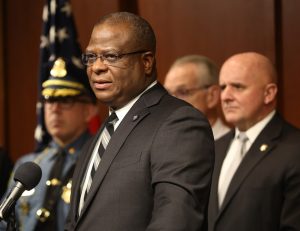
Marcel Vernon (Courtesy photo)

More Stories
Chalamet scores another hit with ‘Marty Supreme’
There’s an argument to be made that Marty Mauser (Timothée Chalamet), the protagonist of Josh Safdie’s “Marty Supreme,” could be...
Today in History: December 25, Northwest Airlines passengers foil underwear bomber
Today is Thursday, Dec. 25, the 359th day of 2025. There are six days left in the year. This is...
2025 Honda Prologue SUV is a win for EVs
Stacking up in Grasso’s Garage recently has been a slew of EV SUVs. From the EV9 by KIA and the...
‘Stranger Things’ cast reflects on special connection
A true phenomenon, Netflix’s massively popular “Stranger Things” is shutting down for good with its final four episodes. Christmas Day...
Palaggi: The season to remember we’re still one nation
Every year around this time, the noise starts to drop. The pace eases a bit. Families gather, neighbors reconnect, and...
‘Song Sung Blue:’ Tale of Neil Diamond tribute act is a gem
If you do not know the story of Lightning & Thunder, you’d be forgiven for assuming the saga of the...