
‘AI Can’t Climb a Utility Pole’—Experts Warn of ‘Silver Tsunami’ in US Utilities

By Mary Prenon
Older employees have been the fastest-growing age group in the U.S. labor force for more than 20 years, particularly in the utilities sector, according to a recent report from the Census Bureau. Experts warn that the sector could be facing a “silver tsunami,” with many employees retiring and too few younger workers to step in.
Workers aged 55 and older made up 24 percent of the U.S. workforce in 2022, up from 10 percent in 1994, according to the report.
In the utilities sector, 80 percent of companies had at least a quarter of their employees aged 55 and older, up from 35 percent in 2006. In contrast, only about 10 percent of companies in the accommodations and food services sector had at least a quarter of their workers aged 55 and older.
Andrew Crapuchettes, CEO and founder of Red Balloon, a national online job board, told The Epoch Times that the high number of employees aged 55 and older in the utilities industry could pose a problem when they begin to retire.
Utilities Not on Young People’s Radar
“There’s a silver tsunami happening in utilities,” he said. “Young people are less attracted to that field because it doesn’t appear exciting to them, but it could be a real issue if there’s not enough of them to replace retiring workers. We need people skilled in power generation and distribution.”
Crapuchettes has spoken with many young job seekers who told him that work in the utilities industry was “not even on their radar screen.”
“Younger people want jobs that seem more exciting, and they are often influenced by what they see on social media and TV,” he noted. “They don’t realize the opportunities in the utilities industry.”
The industry typically encompasses gas, electric, and water companies, and more recently, solar and wind turbine firms.
Crapuchettes said that starting salaries in these industries are often higher than many white-collar positions.
“There are actually a lot of interesting opportunities in this industry, and it’s such an important one,” he said. “The industry involves everything that makes our modern world work.”
According to Zip Recruiter, average starting salaries for utility workers are around $41,000 nationally, but can reach more than $50,000, depending on location. Starting positions include field technicians, line workers, substation technicians, and plant operators, in addition to more skilled jobs such as utility engineers, as well as operational and administrative staff.
A recent report by the Deloitte Research Center for Energy & Industrials shows that the demand for electricity alone is expected to rise 26 percent by 2035—much of it fueled by the continuing growth of artificial intelligence.
For 2026, the report indicates that the challenge for utility firms will be providing uninterrupted capacity to stressed areas of the grids while trying to maintain customer affordability.
Preparing for Wave of Retirements
In order to augment the utility workforce, the Deloitte report indicates, many companies may begin to rely on AI to facilitate efficiency.
“AI copilots trained on manuals and incident logs can guide technicians in real time, boosting first-time fix rates,” the report states.
In addition, AI could be used to streamline compliance, finance, and customer service by automating repetitive tasks and increasing transparency, it said.
“In 2026, utilities are likely to expand AI-assisted analytics in control rooms, widen adoption of gen AI copilots across operations and formalize oversight frameworks—with human oversight remaining central,” the report states.
Crapuchettes acknowledged that many utility firms are already considering introducing or upgrading AI into the workforce. An executive working with a firm providing equipment to utility firms recently told Crapuchettes that utility executives are worried about finding enough qualified people to fill positions when senior employees retire. As a result, these executives are asking about AI capabilities that could help to streamline issues such as power outages.
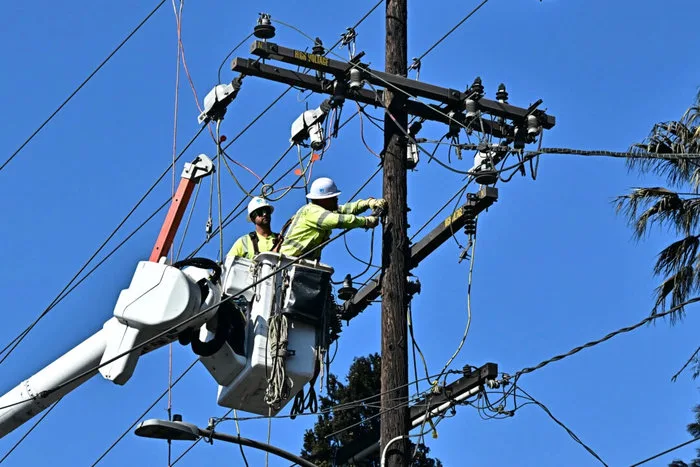
“While AI can’t climb a utility pole, it can provide the technology needed to more quickly identify power outage areas in rural communities,” Crapuchettes said. “Currently, the cost of just trying to find the outage could take a day, and then they have to figure out how to fix it. In this case, AI won’t replace anyone, but it will help to save time and money.”
Still, he said the utilities industry as a whole needs people and must start embracing better branding to attract more qualified employees.
“It’s just like selling a product—you have to be in front of your potential customers and be seen as a great place to work,” he said. “I think utility firms need to lean into this and upgrade their marketing plans.”
Alexis Arnold, senior manager of corporate communications at New York State Electric and Gas (NYSEG), told The Epoch Times that NYSEG is also evaluating ways to introduce new technology and is already planning for what could be a wave of retirements.
NYSEG serves more than 1.1 million customers across upstate New York and is a subsidiary of Avangrid, which is headquartered in Orange, Connecticut, and operates eight electric and natural gas utilities throughout New York and New England.
“Like many companies in the energy sector, NYSEG is mindful of the challenges posed by an aging workforce,” Arnold said. “We’ve invested in training programs, apprenticeships, and partnerships with local institutions to build a strong talent pipeline and ensure continuity of expertise.”
In addition, the company maintains a formal succession plan for critical roles throughout the company, so it can prepare for future workforce needs.
“Each position varies and lists specific requirements,” Arnold said. “Many roles do include on-the-job training to build skills and experience.”
‘Skills Cliff on the Horizon’
Edward Hones, managing attorney at Hones Law in Seattle, Washington, has been an employment lawyer for many years. He told The Epoch Times that the surge in senior employees in the utilities industry is not surprising.
“Utilities demand deep institutional knowledge, strong safety awareness, and technical precision, so older workers remain invaluable far longer than in other fields,” he said. “The challenge is that as this experienced cohort eventually retires, there’s a real skills cliff on the horizon.”
Hones agrees that many utility companies have yet to begin aggressively investing in a succession plan, apprenticeships, or partnerships with local trade schools.
“When the workforce pipeline goes dry, you don’t just get staffing shortages, you get regulatory compliance risks, increased safety incidents, and costly service disruptions,” he added.
As a result, he said, utility firms that don’t do their due diligence now could find themselves unprepared for the future.
Hones also recommends programs such as formalized mentoring, as well as modernizing job roles and recruitment messaging to attract younger employees. Additionally, he noted, these firms should avoid any age-based hiring or restructuring practices.
“Balancing respect for senior workers with proactive talent development isn’t just good ethics,” he noted. “It’s the only way to keep critical infrastructure running safely and sustainably in the decade ahead.”
Other Industries Facing Aging Workforce
In addition to utilities, manufacturing and wholesale trades also saw large increases in the share of workers at companies where at least a quarter of employees were aged 55 and older, rising from just 14 percent in 2000 to more than 40 percent in 2022, according to the Census Bureau report.
An October report from the American Association of Retired Persons (AARP) found that, in addition to those occupations mentioned by the Census Bureau, a high percentage of employees aged 50 and older can also be found in public administration, business, and health care services.
The report found that among the employees aged 50 and older without a high school diploma, employment was highest in the wholesale, retail, manufacturing, mining, and construction industries. Among older people with a bachelor’s degree, employment was highest in professional services, health care, and financial industries. It noted that the health care service industry leads employment for older workers in both metro and non-metro areas throughout the nation.
The AARP report found the national median age for school bus drivers to be 56, with shuttle drivers at 54, judges and judicial workers at 53.7, and accountants at 50.1.
Conversely, just about 10 percent of total employment in the accommodations and food service sectors was at companies where at least a quarter of the employees were over the age of 55. A little more than 14 percent of all retail trade employment is at similar firms. Additionally, the Census Bureau found that startup firms are also typically staffed with younger workforces.


More Stories
Monthly Payments for Homes Increased 1st Time in 6 Months
By Naveen Athrappully The median monthly mortgage payment in the United States hit $2,742 for the four weeks ending March...
Trump’s 3D Chess: How President Trump Is Checkmating China and Russia by Toppling Their Oil Proxies in Venezuela, Cuba, and Iran
By Stephen Zogopoulos, USNN World News In the rarefied world of grand strategy, true masters don’t play on a flat...
Iran Vows Lasting Grip on Strait of Hormuz After War
By Tom Ozimek Iran has signaled that it intends to exert lasting control over the Strait of Hormuz—the world’s most...
Trump Signs Memo to Pay All DHS Employees During Shutdown
By Troy Myers President Donald Trump on Friday signed a memorandum directing the Department of Homeland Security (DHS) to pay...
Best Photo Editing Apps in 2026: Features, Pricing, and Limitations
Finding the best photo editing app in 2026 has become difficult. With several Android and iOS editing tools available in...
In the Mud Season 3: Release Date, Cast, Trailer, and Spoiler
If you have already watched the first two seasons of In the Mud, then you must also be curious about...