
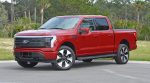
Ford Ends F-150 Lightning Production and Bets on Hybrids

For a moment, the F-150 Lightning looked like the electric truck that could finally pull the pickup world into the EV era without asking buyers to change their habits. It was an F-150 first, EV second, with familiar styling and the kind of real-world tricks that made sense for work and weekend duty. Now, Ford is officially moving on, ending production of the current all-electric Lightning and redirecting its effort toward hybrids and a next-step “extended-range” truck that brings gasoline back into the picture.
Ford’s new plan keeps the Lightning idea alive, but not in the pure battery-electric form that launched all the hype. Instead, the next version is expected to use electric motors to drive the wheels while a gas engine acts as a generator to recharge the battery when needed. That setup is aimed squarely at the pain points that have followed electric pickups since day one: long-distance driving, towing range, charging convenience, and the reality that big-battery trucks are expensive to build and even harder to make profitable.
It’s a sharp turn from the early Lightning pitch. When Ford unveiled the truck in 2021, the attention-grabbing starting price of about $40,000 helped make it feel attainable. In the real market, pricing drifted far north of that, with recent model years starting around the mid-$50,000 range depending on trim and configuration. What didn’t change was the Lightning’s coolest party trick: using its battery like a rolling power station, with outlets for tools, tailgates, and even home backup power in the right setup.
And to be fair, the Lightning wasn’t a flop in the way internet hot takes might suggest. It collected major awards, grabbed headlines, and for stretches it was the best-known electric truck in America. The larger problem was the segment itself. Electric pickups have struggled to meet the expectations people attach to a full-size truck, especially when towing chops a big chunk out of range. Add in reported quality headaches and the fact that Ford has acknowledged it was losing money on each truck, and the math starts to look bleak fast.
There’s also a bigger backdrop here that automakers can’t ignore. The federal policy environment has been shifting, and when regulations and incentives change, product plans change with them. Ford has pointed to regulatory uncertainty as part of the broader landscape behind this decision, which matters because EV programs are often justified not just by demand, but by compliance targets and the financial levers that help close the affordability gap.
The interesting twist is what Ford does with all the battery capacity it ramped up to support big EV volume. Instead of letting those investments sit idle, Ford is pushing into stationary energy storage, building batteries meant to support the electric grid and large industrial customers like data centers. Meanwhile, the company is still talking about smaller, more affordable EVs ahead, including a targeted roughly $30,000 midsize electric truck down the road. If you’re a truck shopper, the takeaway is simple: the future is still electrified, but for Ford’s best-selling nameplate, the near-term path looks a lot more hybrid than fully electric.
Ford also confirmed that the nameplate will return next as a range-extender plug-in hybrid rather than a full battery-electric truck. In Ford’s new setup, the wheels are still driven by electric motors, but a gasoline engine will act as an onboard generator to replenish the battery for longer trips and towing, with Ford claiming a combined range of more than 700 miles. The next-gen Lightning is also expected to keep its exportable power functionality for running tools and powering a home during outages, though Ford has not yet shared a launch timeline or which gas engine will be used.


More Stories
China wholesales Full Year 2025: Geely overtakes VW, Toyota, places Xingyuan at #1. Domestic brands at 65% share
This content is for members only. Visit the site and log in/register to read.
China wholesales Full Year 2025: Geely overtakes VW, Toyota, places Xingyuan at #1. Domestic brands at 65% share
This content is for members only. Visit the site and log in/register to read.
Manual Transmission Take Rates in 2025 Prove the Stick Shift Still Has a Pulse
Motor1 did something we wish more outlets would do: they went straight to the source and asked automakers how many...
Car AC Compressor Repair Kit: How to Fix Common Air Conditioning Failures
The AC compressor is the critical element of an automobile’s air conditioning system that must carry the entire load. It...
Corvette ZR1X Just Redefined Straight Line Speed as America’s Quickest Production Car
Chevrolet just put a serious exclamation point on the C8 era by releasing validated acceleration numbers for the 2026 Corvette...
New Mercedes S-Class Facelift Brings Starry Lights and Stronger Power
Mercedes-Benz is kicking off 2026 with a big promise for its flagship sedan: the S-Class is about to receive the...