
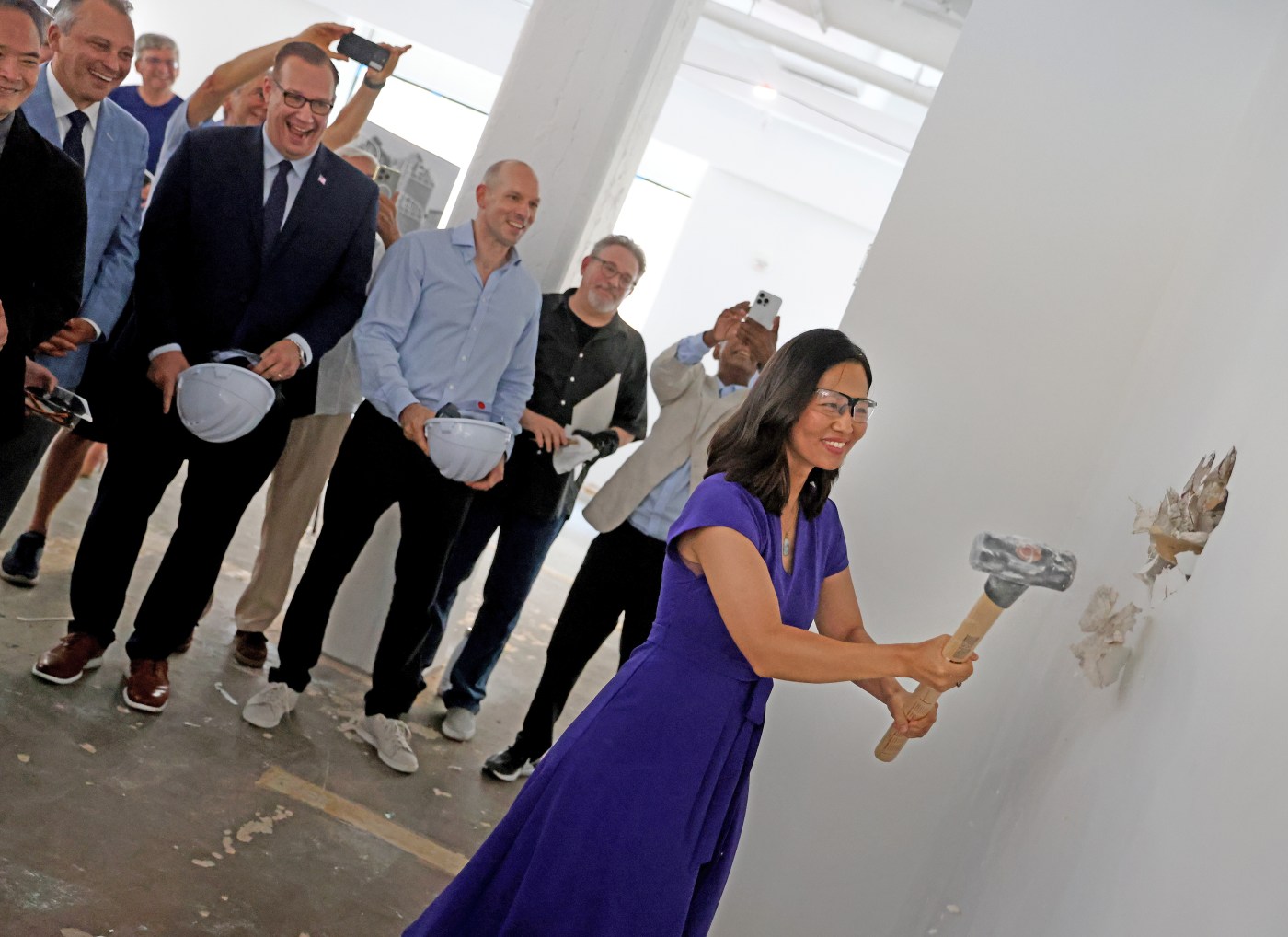
Boston Mayor Wu extends office to residential conversion program for year, aims to build 1,000 new homes

Boston Mayor Michelle Wu said the city is extending a program that aims to revitalize the downtown by converting vacant office buildings into housing projects for another 12 months.
The city’s office to residential conversion program, which has received 22 applications to build 1,517 new units of housing across 27 buildings since its launch in October 2023, was due to expire at the end of this month, but will instead continue for another year, the mayor announced on Friday.
“As Boston continues to take action to drive down housing costs, the office to residential conversion program is critical to building a more affordable Boston for all residents,” Wu said in a statement. “By expanding the program and building a pipeline of over 1,500 new units of housing, we are building the foundation for a stronger and more vibrant downtown and neighborhoods.”
By extending the program, Chief of Planning Kairos Shen said the city aims “to attract another thousand units to the program in the next year, and continue to catalyze a more vibrant, residential community in our downtown with thousands of new residents in the heart of our city.”
City officials said 284 of the 1,517 new homes that have been pitched through the application process would be income-restricted, “far exceeding” initial city goals for affordable housing.
Four projects totaling 236 units are under construction, and one of the first buildings to apply for the program at 281 Franklin St. has been fully tenanted, meaning that a total of 251 units are under construction or completed, according to the mayor’s office.
City officials said the program allows applicants to take advantage of an expedited city approval process. The Boston Planning Department typically completes its review process for office to residential conversion projects “in just six months.”
The program provides a 75% tax abatement for 29 years as an incentive to developers to convert vacant office space into residential units, including student and workforce housing.
It seeks to convert vacant office buildings into new homes for residents, with an eye toward revitalizing the downtown in a post-pandemic remote-work-oriented world.
The city received a $15 million infusion in state cash for the program last year, to fund up to $215,000 per affordable unit with a cap of $4 million per project. Gov Maura Healey’s administration awarded another $7.4 million to help to fund two planned projects, at 31 Milk St. and 15 Court Square, in June.
While the mayor’s decision to extend the office to residential program was accompanied by supportive statements from participating developers and downtown stakeholders, Wu’s approach to increasing the city’s affordable housing stock has drawn criticism in the past.
Related Articles
Boston city councilor pushes for state audit of federal grant funds after misuse by city program
Battenfeld: President Trump opens new front in war with Mayor Michelle Wu
HUD launches federal investigation into Boston’s alleged DEI housing discrimination
Boston sued by Judicial Watch for withholding public records tied to Mayor Wu’s pro-immigration rally
Boston City Council backs calls for Mayor Michelle Wu to provide updated cost for White Stadium
Boston City Councilor Ed Flynn said in July that it is time “prioritize the city’s future with a temporary rollback” of its inclusionary development policy, which sets aside a certain percentage of units in new developments as affordable, “to be reviewed in 3-5 years, depending on economic conditions.”
“It’s time to have the courage to finally acknowledge today’s reality,” Flynn said in a statement at the time. “A higher percentage of affordable units may be noble and with the best of intentions to address our affordable housing crisis for working families. But, in these conditions, if we’re producing less housing, we’re also getting less affordable units for residents and families who qualify.”
Developers now have until the end of next year to apply for the office to residential conversion program, but must commit to pulling a full building permit and starting construction by the end of 2027 to benefit from the program.
More Stories
NBA y FIBA avanzan con planes para nueva liga en Europa, pero llevará tiempo asegura Silver
Por TIM REYNOLDS El comisionado de la NBA, Adam Silver, reafirmó el jueves que la liga, en asociación con FIBA,...
Chris Stapleton adds second show at Mystic Lake Amphitheater
Due to what promoters call “incredible demand,” country star Chris Stapleton has added a second show on July 30 at...
Meet New York State’s New Top Tenant Advocate
“What was so powerful about the rent freeze campaign is that we reached scale in New York City,” said Sumathy...
Joan Beringer was excellent for the Timberwolves in Milwaukee. That doesn’t mean he’ll play Friday.
Joan Beringer was excellent in his first meaningful minutes for Minnesota on Tuesday in Milwaukee, tallying 13 points and five...
Massachusetts Senate kills Boston Mayor Wu’s tax shift plan, approves alternative ‘tax shock’ bill
Boston Mayor Michelle Wu’s tax shift bill was killed again in the state Senate, this time as an amendment to...
FBI offers $100,000 reward for Minneapolis vandalism, theft info
The FBI is offering a reward of up to $100,000 for information leading to the recovery of stolen government property...