
Trump Says US Has Seized Oil Tanker Off Coast of Venezuela

By Jack Phillips
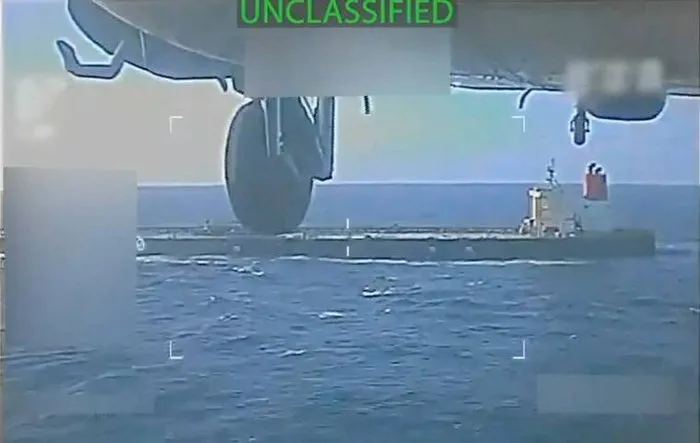
President Donald Trump said on Dec. 10 that the United States seized an oil tanker off the coast of Venezuela in what appears to be an escalation in the administration’s campaign against the country over drug trafficking.
“We’ve just seized a tanker on the coast of Venezuela, a large tanker, very large, largest one ever seized, actually,” Trump said at the White House, adding that “other things are happening” in the area.
Trump said he would discuss the situation further in the future.
When a reporter asked Trump about the tanker, he said it “was seized for a very good reason” and that information about who owns the tanker will be provided later.
The move is a new development in the administration’s pressure campaign against Venezuelan President Nicolás Maduro, alongside U.S. military strikes against suspected drug smuggling boats since September.
The U.S. military has built up its largest presence in the region in decades and launched a series of deadly strikes on the drug-smuggling boats in the Caribbean Sea and eastern Pacific Ocean.
In a statement, the Maduro regime responded to the seizure by accusing the United States of “blatant theft.”
The Venezuelan government said it would “defend its sovereignty, natural resources, and national dignity with absolute determination,” and that it would denounce the seizure of the tanker before international bodies.
Earlier this month, Trump said that land attacks would be carried out in Venezuela, but he hasn’t offered any details on the location or when they might begin.
On Nov. 29, Trump warned in a post on Truth Social that airspace above and surrounding Venezuela should be considered “closed in its entirety,” leading to multiple canceled flights.
“We’re going to start doing those strikes on land, too,” Trump told reporters during a Cabinet meeting when he was asked about land strikes. “You know, the land is much easier … and we know the routes they take. We know everything about them. We know where they live. We know where the bad ones live. And we’re going to start that very soon, too.”
Maduro has said that he believes the U.S. government is aiming to overthrow his government and is seeking to take over its vast oil reserves. In a recent interview about the U.S. military presence in the region, the Venezuelan leader said: “Peace. Yes. War. No. Never, never war.”
Oil exports are Venezuela’s main source of revenue. The country has had to deeply discount its crude to its main buyer, China, because of growing competition with sanctioned oil from Russia and Iran.
In the midst of the strikes, the Trump administration released a national security strategy that says that Washington seeks to “restore American pre-eminence” in the Western Hemisphere, with the aim that it should remain “reasonably stable and well-governed enough to prevent and discourage mass migration to the United States.”
It also seeks to ensure that governments in the hemisphere cooperate with the United States against cartels, narco-terrorists, and other transnational criminal organizations, as part of an effort to again enforce the Monroe Doctrine, an early 19th-century declaration by President James Monroe to establish the U.S. sphere of influence in the Americas.
The administration has already designated Salvadoran and Venezuelan gangs, Mexican drug cartels, Haitian gangs, and others as foreign terrorist organizations. In mid-November, the State Department designated Venezuela’s Cartel de los Soles as a terrorist organization and accused Maduro of effectively running the organization.
Reuters contributed to this report.
More Stories
Best Photo Editing Apps in 2026: Features, Pricing, and Limitations
Finding the best photo editing app in 2026 has become difficult. With several Android and iOS editing tools available in...
In the Mud Season 3: Release Date, Cast, Trailer, and Spoiler
If you have already watched the first two seasons of In the Mud, then you must also be curious about...
US Deployments Fuel Speculation of Ground Combat Against Iran
By Ryan Morgan The U.S. military has deployed several thousand additional infantry troops to the Middle East in recent weeks,...
Remote-Job Postings Rise 20 Percent Sequentially in First Quarter: Report
By Mary Prenon While many American companies, both large and small, have called employees back to the office over the...
Acting Attorney General Blanche Rejects Speculation About Bondi’s Departure
By Jack Phillips Interim Attorney General Todd Blanche dismissed speculation that Pam Bondi left her position as attorney general in...
US Fighter Jet Downed Over Iran, One Crew Member Rescued, Search Ongoing
By Tom Ozimek Search-and-rescue efforts were underway in southern Iran on April 3 after an American fighter jet was shot...