
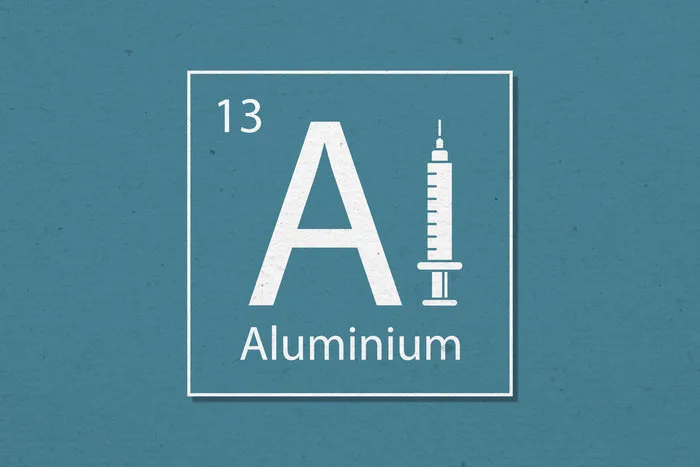
CDC Advisers Turn Focus to Aluminum in Vaccines

By Zachary Stieber
A common adjuvant in vaccines is under scrutiny by a panel that has initiated multiple changes to U.S. vaccine recommendations this year.
The Advisory Committee on Immunization Practices (ACIP) started looking at aluminum salts, an adjuvant in many vaccines recommended by U.S. authorities, members said on Dec. 5.
“Infants receive multiple aluminum-containing vaccines in a single visit under the current schedule,” Dr. Evelyn Griffin, one of the members, said during a presentation she made to colleagues.
“Experimental and clinical data suggest that intramuscular injected aluminum and aluminum salts can persist at the injection site, then migrate via immune cells to liver, spleen, and other organs including the brain,” she added later.
She cited several papers, including a 2019 paper that noted aluminum has been found in brain tissue, and a 2014 paper that said aluminum salts have been shown to impact the central nervous system.
Christopher Shaw, a researcher with the University of British Columbia who coauthored the latter paper, told The Epoch Times in an email that he welcomes investigation of human exposure to aluminum from all sources, including vaccines.
“I am fairly confident that if aluminum adjuvants were removed from pediatric vaccines, the incidence of autism would decline appreciably,” said Shaw, who holds a PhD in neuroscience.
Some organizations say that aluminum-containing vaccines are safe. The Pharmaceutical Research and Manufacturers of America, a trade group of vaccine manufacturers, says on its website that the amount of aluminum in vaccines is within the limits established by federal authorities and that studies have shown the body “efficiently processes and eliminates aluminum from vaccines.”
ACIP advises the Centers for Disease Control and Prevention (CDC) on vaccines. The CDC has issuedmultiplechanges to its vaccine recommendations this year based on advice from the panel.
The CDC, following advice from ACIP, told vaccine manufacturers earlier in the year to take out thimerosal, a mercury-based preservative. That decision only applied to influenza vaccines, because thimerosal was removed from other vaccines years ago.
Acting against aluminum salts—placed in vaccines to boost the impact of the shots beginning in the 1930s—could shake the vaccine industry, as they are part of 24 immunizations, including vaccines against hepatitis B, diphtheria, tetanus, whooping cough, pneumococcal disease, and human papillomavirus.
“If you don’t have an aluminum adjuvant, you’re going to have to have another substitute,” Dr. Peter Hotez, dean of the Baylor College of Medicine National School of Tropical Medicine, told a recent briefing. Hotez, who declined to appear at the ACIP meeting because he thinks ACIP is no longer employing evidence in its decisions, added later: “If you now have to substitute a different adjuvant, that’s five to seven years of research and development, tens of millions, hundreds of millions of dollars. Who pays for that? Well, the companies aren’t going to do it.”
Standard immunizations are prepared at a pediatric office in Coral Gables, Fla., on Sept. 12, 2025. On Dec. 5, the Advisory Committee on Immunization Practices said it has begun reviewing aluminum salts, an adjuvant in many U.S.-recommended vaccines. Joe Raedle/Getty Images
President Donald Trump and top administration officials have recently spoken against aluminum.
“Aluminum adjuvants are designed to increase the immune response and to hyperactive your immune system,” Health Secretary Robert F. Kennedy Jr., who selected all of the ACIP members after removing the prior advisers, told an event in November. He said the adjuvants cause inflammation and may lead to the development of allergies.
Kennedy and others have highlighted a 2023 paper from researchers with the CDC and other institutions that found an association between exposure to aluminum from vaccines and persistent asthma, although the researchers said additional investigation was needed due to a potential for confounding.
Danish researchers said in a separate study published this year that they found no links between exposure to aluminum-containing vaccines and disorders such as autism, although corrected supplementary data indicated an increased risk of Asperger’s syndrome with higher aluminum exposure. The journal that published the study has declined calls from critics, including Kennedy, to retract the paper.
‘We Don’t Know’
Dr. Robert Malone, another ACIP member, said during the ACIP meeting that studying individual vaccines may not reveal any problems, but there could be cumulative risk due to children receiving dozens of vaccine doses if they follow recommendations. He said he was talking about aluminum salts.
“That is a risk for which we do not have adequate data,” he stated. “I think we can all agree on that. … We don’t know whether there is cumulative risk associated with this component of multiple pediatric vaccines that are administered essentially concurrently.”
Griffin said her presentation, which summarized findings from a subset of ACIP members who flagged aluminum as a possible safety concern while reviewing the childhood vaccination schedule, was motivated in part by the position that “appropriate testing was not performed” when adding aluminum-containing vaccines to the vaccine schedule.
A child receives a vaccination at a center in Los Angeles on Oct. 24, 2025. Dr. Tracy Hoeg told ACIP members that children in the United States receive 5.9 milligrams of aluminum from vaccines by age 2 and 8 milligrams by adulthood—much higher than in Denmark. Patrick T. Fallon/AFP via Getty Images
Some members are also concerned about small children receiving aluminum, which results in higher dose-per-kilogram of weight, and indications that injected aluminum accumulates in body tissue, she said.
The Food and Drug Administration says on its website that “aluminum adjuvant containing vaccines have a demonstrated safety profile of over many decades of use and have only uncommonly been associated with severe local reactions.”
The agency has said elsewhere that aluminum can pose risks to young children, including stating in a 2003 document discussing aluminum in deodorants that “young children and children with immature renal function are at a higher risk resulting from any exposure to aluminum.”
Dr. Tracy Hoeg, acting head of the FDA’s Center for Biologics Evaluation and Research, told ACIP that children in the United States are exposed to 5.9 milligrams of aluminum from vaccines by the time they turn 2, and 8 milligrams before they become adults. That’s greater than the 1.4 milligrams by age 2 and 2.9 milligrams throughout childhood for Danish children.
“We need to admit that we may not know what the side effects of doing this, especially given all at once, could be,” Hoeg said.
No concrete action has been taken on aluminum as of yet. Dr. Kirk Milhoan, ACIP’s new chair, said he plans on creating a new workgroup that would figure out “whether aluminum is causing a role in the adverse reactions … that we’re seeing in children.”
“There are certainly valid hypotheses of aluminum impacting the immune system that can cross into the brain and potentially cause adverse neurodevelopmental or psychiatric effects,” Dr. Joseph Hibbeln, another ACIP member, said during the meeting. He questioned whether there is enough human data at present and said there may need to be randomized, controlled trials comparing vaccines with and without the adjuvant.
“The Advisory Committee on Immunization Practices (ACIP) is independently reviewing the full body of evidence on adjuvants and other vaccine components to ensure the highest safety standards,” a spokesperson for the Department of Health and Human Services (HHS), the parent agency of the CDC and FDA, told The Epoch Times in an email. “HHS remains focused on rigorous scientific review, transparency, and ensuring the continued safety and effectiveness of the U.S. vaccine supply.”
Members of the CDC Advisory Committee on Immunization Practices (ACIP) attend a meeting at the Centers for Disease Control and Prevention headquarters in Atlanta on Dec. 4, 2025. Elijah Nouvelage/Getty Images
Current Standards
Regulators do not directly approve aluminum and other adjuvants, but consider them part of the vaccines they clear or reject.
Most approved vaccines with aluminum contain between 0.2 and 0.8 milligrams. Under federal regulations, each dose of a vaccine can generally contain no more than .85 milligrams, or 850 micrograms.
FDA officials said in a 2002 paper that the limit was primarily set based on data from three clinical trials that compared vaccines with an aluminum adjuvant to vaccines without the adjuvant.
“Although there are only a few clinical trials in which a given batch of vaccine, with and without adjuvant, has been tested in comparable populations, aluminum adjuvants have been used in vaccines for many decades, and have been proven to be safe,” the officials said. They noted that there are side effects, such as skin inflammation, and said it would be impractical to produce separate batches of vaccines with and without aluminum, and that removing aluminum from the vaccines could sacrifice enhanced immune responses.
Guillemette Crépeaux with the Université Paris-Est Créteil and other researchers said in a study published in August that the limit “appears to be justified by historical precedent and not by rigorous scientific investigation corresponding to current vaccination schedules,” in part because officials did not base the limit on any toxicity or safety testing.
“Even if they had, the studies we found, dating from 1947 and 1952, describe vaccine preparations using an aluminum salt that is no longer used,“ Crépeaux, who holds a PhD in neurotoxicology, told The Epoch Times in an email. “Security of current exposure of the U.S. population, and especially of very young children, has never been investigated.”
HHS declined to say whether it is or would reevaluate the aluminum limits.
“In general, the FDA does not comment on specific studies, but evaluates them as part of the body of evidence to further our understanding about a particular issue and assist in our mission to protect public health,” an HHS spokesperson told The Epoch Times in an email.
The Food and Drug Administration logo is seen in this illustration taken on May 13, 2025. Under federal regulations, each dose of a vaccine can generally contain no more than 0.85 milligrams of aluminum. Dado Ruvic/Illustration/File Photo/Reuters
Robert Mitkus and other FDA researchers said in a separate paper in 2011 that the aluminum an infant receives if their parents follow the vaccination schedule is significantly less than minimal risk levels of aluminum established by the HHS’ Agency for Toxic Substances and Disease Registry.
“We conclude that episodic exposures to vaccines that contain aluminum adjuvant continue to be extremely low risk to infants and that the benefits of using vaccines containing aluminum adjuvant outweigh any theoretical concerns,” Mitkus, who holds a PhD in toxicology, and co-authors stated at the time.
The organization Physicians for Informed Consent said that a re-analysis of the calculations used in the paper determined it featured a math error. When corrected, the aluminum safety limit from the agency is close to the levels of exposure children face from vaccines, it said. An email requesting comment from Mitkus was returned as undeliverable.
“It would be most helpful if ACIP would conduct an independent review and/or re-analysis of the FDA’s landmark Mitkus paper (2011) as it appears to contain a math error which has given the FDA and other institutions a false sense of security about the safety of aluminum adjuvants in vaccines,” Dr. Shira Miller, the organization’s president, told The Epoch Times in an email. “In the meantime, aluminum-containing vaccines for infants and children under 2 years old could be moved to shared decision-making based on the FDA’s previous warnings about the risks of aluminum toxicity in infants and children.”
Former ACIP Member Says Aluminum Safe
Dr. Yvonne Maldonado, one of the ACIP members removed by Kennedy, and other researchers said in a review released on Dec. 3 that studies demonstrate aluminum adjuvants are well-tolerated by nearly all vaccine recipients, that aluminum is slowly absorbed and efficiently cleared by kidneys, and that there is no link between vaccines with the adjuvants and problems such as allergies.
“Our comprehensive review of the scientific evidence found no credible link between aluminum-adjuvanted vaccines and autism, Alzheimer’s disease, allergic disease, or autoimmune disease,” Maldonado told The Epoch Times in an email. “Large-scale studies, including recent analyses of over 1.2 million children, consistently demonstrate safety.”
Health Secretary Robert F. Kennedy Jr. (C) answers questions at the White House on Sept. 22, 2025. Kennedy recently criticized aluminum adjuvants, saying they cause inflammation and may contribute to allergies. Andrew Harnik/Getty Images
Maldonado, a professor of pediatrics at Stanford University, also said that the safety of aluminum adjuvants is not an open question, so no new studies are necessary.
“Deliberately withholding vaccines from children to re-investigate settled safety questions would be unethical and would place children at unnecessary risk of serious, preventable diseases like pneumococcal pneumonia, tetanus, and diphtheria,” she said. “Science advances through monitoring, improved methods, and new questions—not by endlessly re-litigating questions that have been repeatedly answered.”
When Maldonado was an ACIP member in 2024, she voted to advise the CDC to recommend additional doses of vaccines against COVID-19, including Pfizer’s shot. She received money from Pfizer in 2024 and has previously been paid by Merck. Those companies manufacture vaccines containing aluminum.
Dr. Cody Meissner, who currently sits on ACIP, said during the recent meeting that clinical trials “obviously have demonstrated there’s no association between vaccines and the development of autism.” He said that neither ACIP nor the CDC should spend additional time on the subject.


More Stories
Typical US Homeowners Stay 12 Years in Their Homes—20 Years in Los Angeles
By Mary Prenon U.S. homeowners stayed in their houses for about 12 years as of 2025—the longest median time since...
DOT Granting $100 Million to Improve Transportation in FIFA World Cup Host Cities
By Naveen Athrappully The federal government will invest $100.3 million to enhance public transportation in cities hosting the 2026 FIFA...
Israel Launches Fresh Strikes on Tehran, Beirut, Hits Nuclear Development Facility
By Guy Birchall The Israel Defence Forces (IDF) said on March 4 that it launched a fresh wave of strikes...
How Operation Epic Fury Unfolded
By John Haughey The Pentagon had been choreographing a prospective massive attack on Iran since 1980, but it wasn’t until...
US Arranging Charter, Military Flights for Americans in the Middle East
By Savannah Hulsey Pointer The U.S. State Department is looking to help Americans in the Middle East find a way...
New Target CEO Forecasts Turnaround to Retailer’s Lackluster Sales in 2025
By Rob Sabo Target Corp. reported on March 3 slumping sales in the fourth quarter of fiscal 2025, but its...