
Boston City Council backs calls for Mayor Michelle Wu to provide updated cost for White Stadium

The Boston City Council unanimously backed a resolution that calls for the Wu administration to release updated cost estimates for the city’s taxpayer-funded half of a public-private plan to rehab White Stadium for a professional soccer team.
The Council voted, 12-0, Wednesday for a resolution put forward by Councilor Julia Mejia “in support of demanding updated cost estimates for the White Stadium project” — a figure the mayor during her reelection campaign committed to disclosing by the end of the year but has not yet provided.
“This resolution is to ensure that the City Council and the people of Boston know the exact financial commitment the city is being asked to take on,” Mejia said. “The last public estimate was over $100 million, and we have every reason to suspect that the number has changed as construction costs continue to rise.
“Yet no updated cost breakdown has been presented to this body or the public. We cannot govern responsibly without real numbers. We cannot ask residents to trust a project with a price tag that is still unclear, and we cannot move forward with a proposal of this scale without a full transparent process that lets us know what the city is on the hook for.”
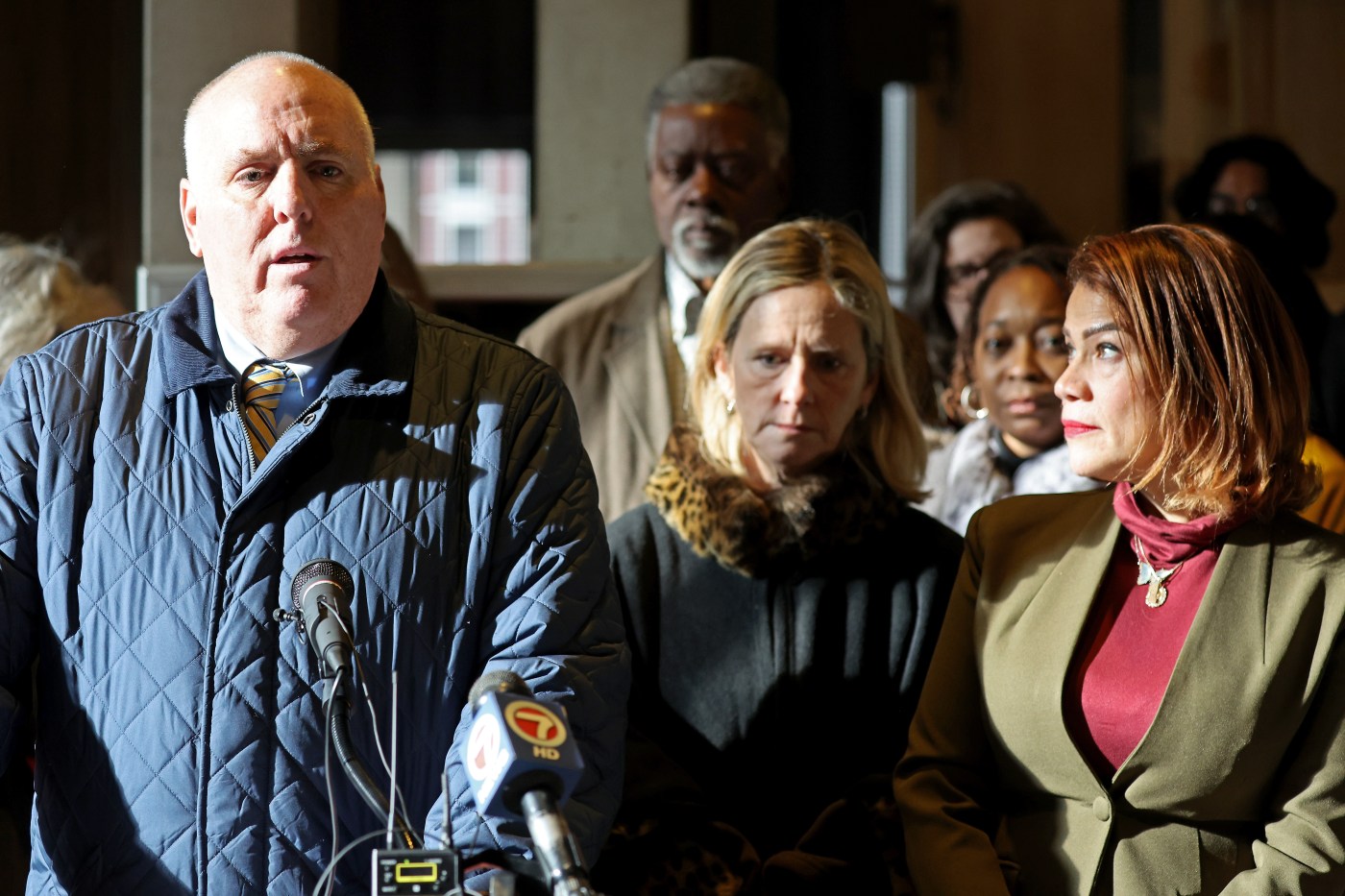
Mejia held a press conference with opponents of the White Stadium project and Councilors Ed Flynn and Erin Murphy, who co-sponsored the resolution, ahead of the day’s Council meeting.
Flynn said the resolution’s request was for the city to provide “basic and transparent information on how much the White Stadium plan is going to cost the residents.”
“I think residents do want to know how much it will cost and what impact that will have on taxes in the city,” Flynn told the Herald. “I support the development of White Stadium, but I don’t want to see it privatized.”
Melissa Hamel, a Jamaica Plain resident who attended the press conference and is part of a group of Franklin Park neighbors who have joined with the Emerald Necklace Conservancy in suing the city to stop the plan, said she was happy that the Council passed the resolution, but was “skeptical” that the city administration would follow suit and release updated cost projections.
“For me, as a taxpayer who’s lived in Boston for over 40 years and paid their taxes happily, I’m outraged that they want to continue to pursue this,” Hamel told the Herald. “For me to spend $100 million-plus … for a project that would primarily benefit a private enterprise, it’s just insanity to me.”
Hamel said the situation was particularly fraught given that the resolution was taken up by the Council on the same day it voted to set tax rates that will bring a projected 13% tax increase for the average single-family homeowner next year.
“For them to take money that is designated for the Boston Public School children and the facilities to spend it on a project that really primarily benefits wealthy investors who don’t even live in our community is insulting to me, and then to find out that I’m going to have to pay more taxes, 13%, to fund these projects is just outrageous,” Hamel said.
“The city is already too expensive for most people to live in,” she added.
Mayor Michelle Wu in July laid out a timeline for the city to release an estimate for what the roughly $200 million and counting public-private plan would cost taxpayers by the end of the year, but the final price tag has still not been disclosed.
Flynn said he anticipated that, based on the mayor’s stated timeline, the Council would have already had those figures by its last meeting of the year on Wednesday.
Wu’s office on Tuesday did not specifically respond to Mejia’s comments in her resolution — where she wrote that the city’s “significant fiscal pressures” heighten “the need for accurate cost estimates before committing substantial public resources” — but did provide a partial cost update which appears to mirror estimates that have been provided since last year.
“As the mayor outlined earlier this year, the complete bid packages for White Stadium were published in October. Under the timeline laid out by Massachusetts public construction laws, the responses will be evaluated and awarded in early 2026,” the mayor’s office said in a statement.
“As of Dec. 9, the city’s project expenditures include $12 million on demolition and construction, and an additional $76 million in subcontracts have been awarded,” Wu’s office said. “After more than 40 years of failed starts, White Stadium is being rebuilt as a state-of-the-art facility for BPS student-athletes and the community, open year-round. We are excited to be underway.”
The project has doubled in cost since it was announced by the city and its private partner, Boston Unity Soccer Partners, and the mayor said last summer that costs would likely increase again due to federal tariffs driving up expenses for steel and other construction materials.
The last estimated cost to taxpayers was $91 million, which was revealed late last year by the Wu administration and represented a significant jump from the city’s initial projection of $50 million for its half of the contentious project.
Related Articles
Boston City Council votes to set tax rates, homeowners to see 13% tax increase
Boston city councilor demands White Stadium cost update from mayor amid budget crunch
Boston Mayor Wu’s tax battle intensifies ahead of City Council vote to set residential tax hike at 13%
‘Unacceptable’: Boston homeowners to see 13% tax hike next year, state certification confirms
Editorial: City Hall can’t afford to miss another security lesson
Josh Kraft, who challenged Wu for mayor before dropping out of the race two days after his 49-point loss to her in the September preliminary election, revealed an internal city document last June that showed the cost to taxpayers was projected to climb as high as $172 million.
Wu acknowledged the potential cost cited in the internal City Hall document, but described it as a “worst-case scenario.”
The mayor has declined to provide an updated cost estimate in recent months for the city’s plan to rehab White Stadium into the home of a new professional women’s soccer team, Boston Legacy FC, which will share the facility with Boston Public Schools student-athletes and the public as part of a city lease agreement.
Councilors who support the mayor’s White Stadium plan said that while they continue to take issue with “misinformation” that the project is opposed by most of the community, they opted to support the resolution because they found the request for updated cost estimates to be “reasonable.”


More Stories
Freedom Holding Corp.: Moody’s Rates Freedom Bank on Stability, Growth and Ecosystem Model
Moody’s assignment of a Ba3 rating with a stable outlook to Freedom Bank Kazakhstan serves not only as an assessment...
Why SME Growth stalls when Managers are promoted but don’t have support
It’s common for SMEs to experience a structural shift due to growth before their brand identity changes. Rather than an...
From Cafés to Kitchens: Why Are New Coffee Rituals Moving into Our Homes?
Gone are the days when, to enjoy a creamy cappuccino, you had to pick out an outfit, smooth out your...
Fuel price crisis risks pushing small firms to brink as pressure mounts on chancellor
The sharp rise in fuel prices triggered by the global energy shock has reached what campaigners describe as a “critical...
British Business Bank backs Dexory with £8.5m to scale AI warehouse tech
The British Business Bank has invested £8.5 million into Dexory, as part of a wider Series C funding round aimed...
Iran war drives up costs and disrupts supply for London’s food markets
The impact of the Middle East conflict is now being felt far beyond energy markets, with London’s food supply chain...